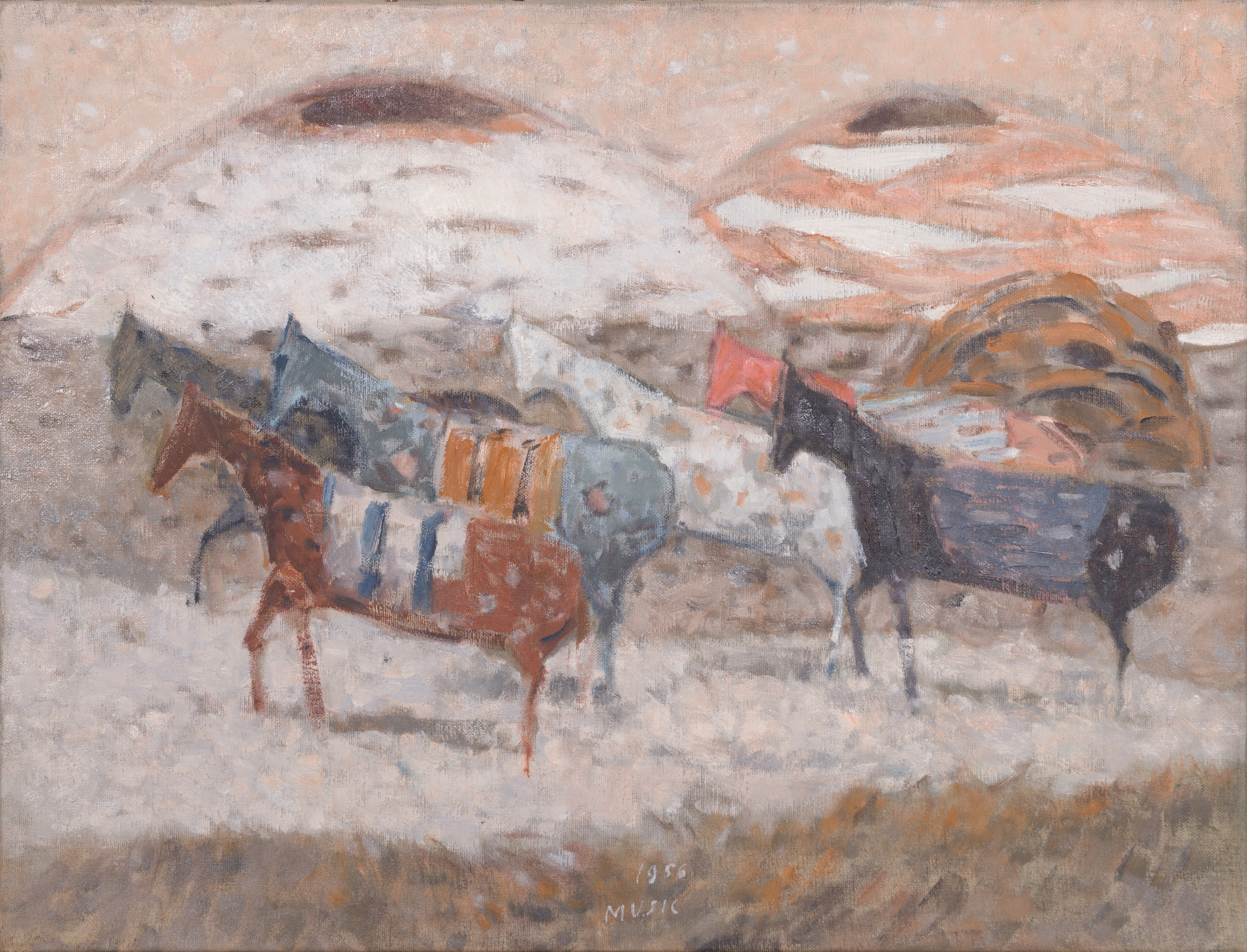
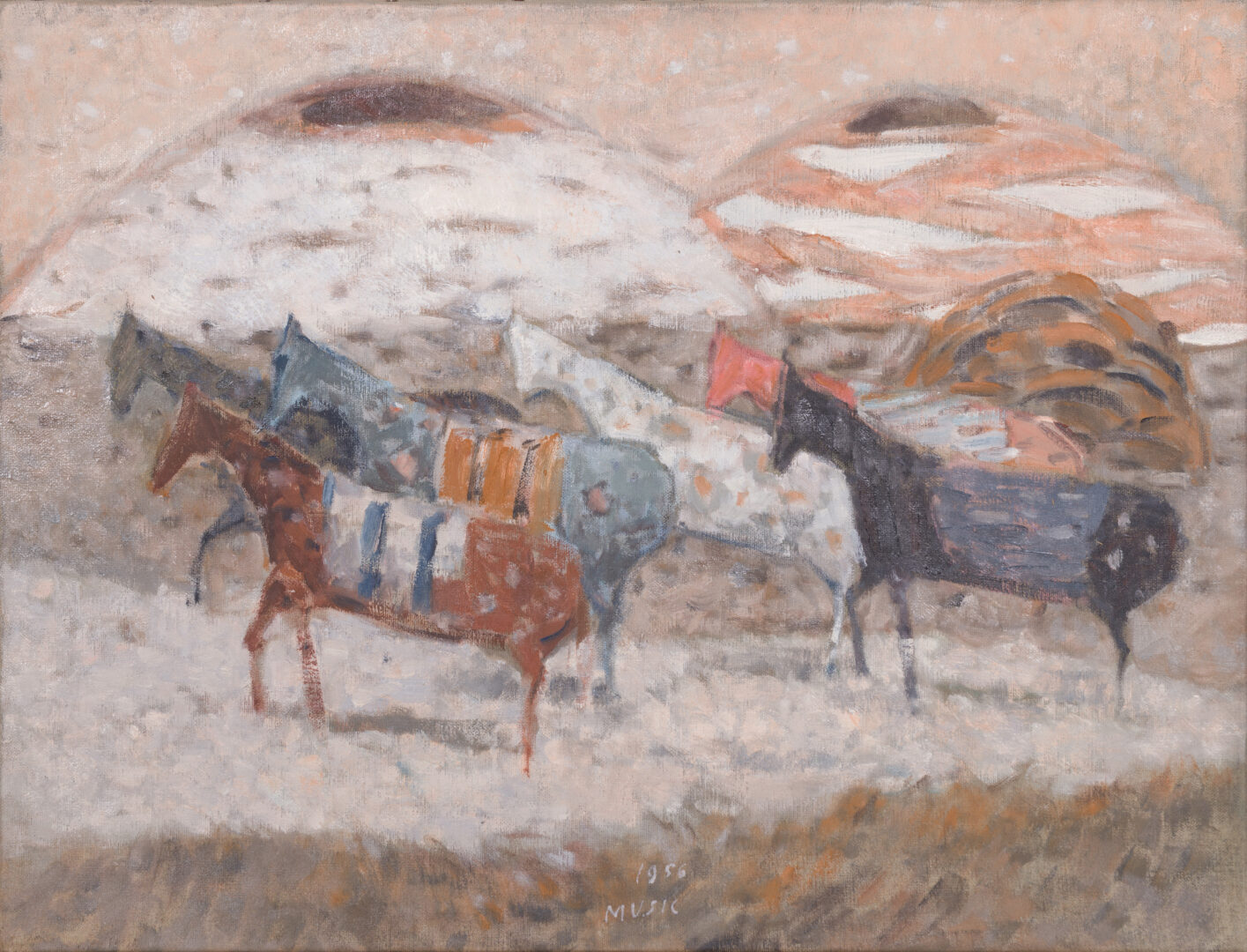
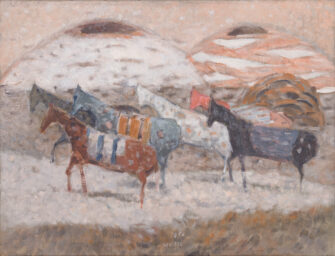
Zoran Music – Cavallini (Horses), 1956
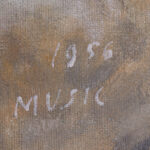
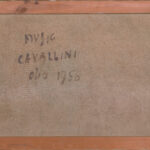
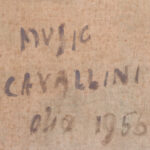
Details
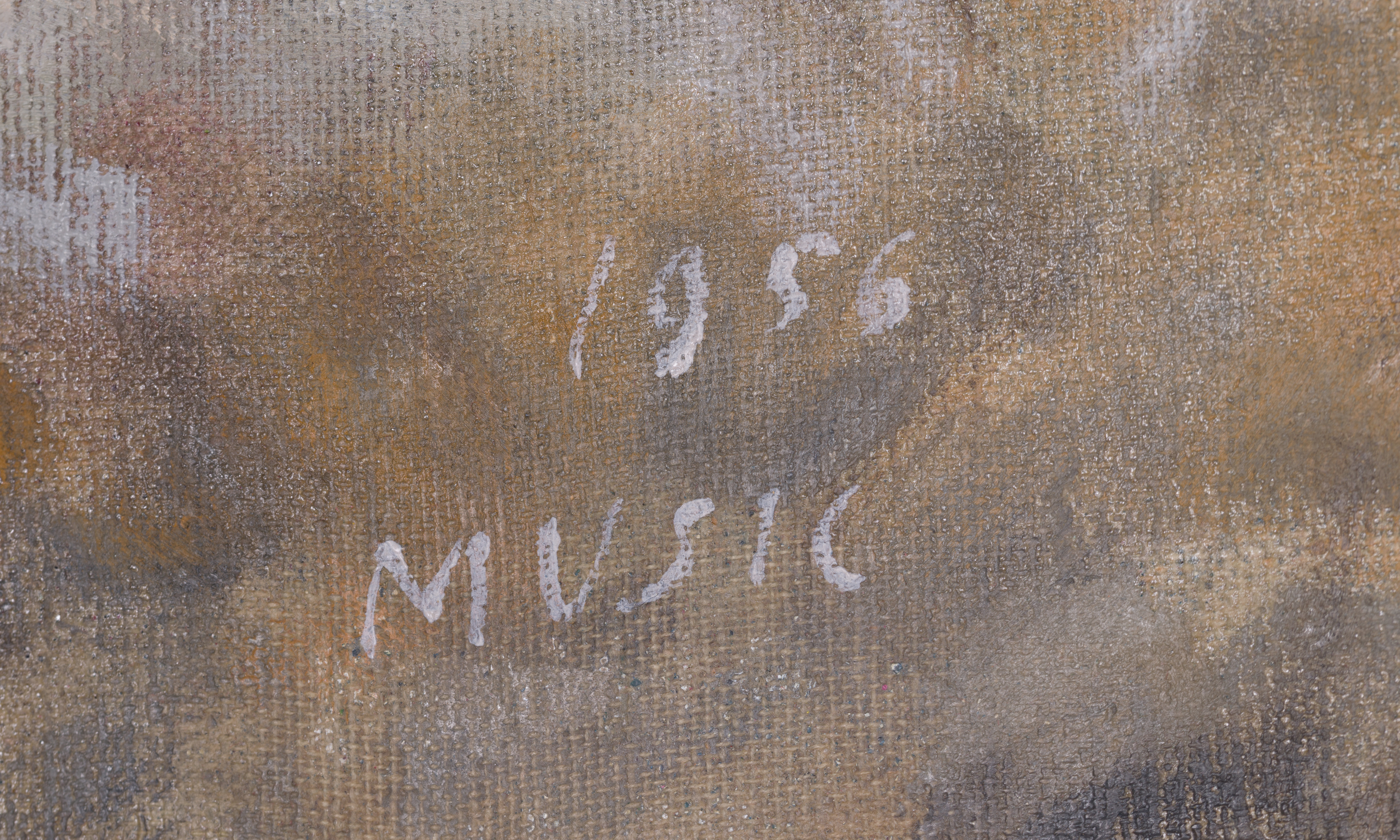
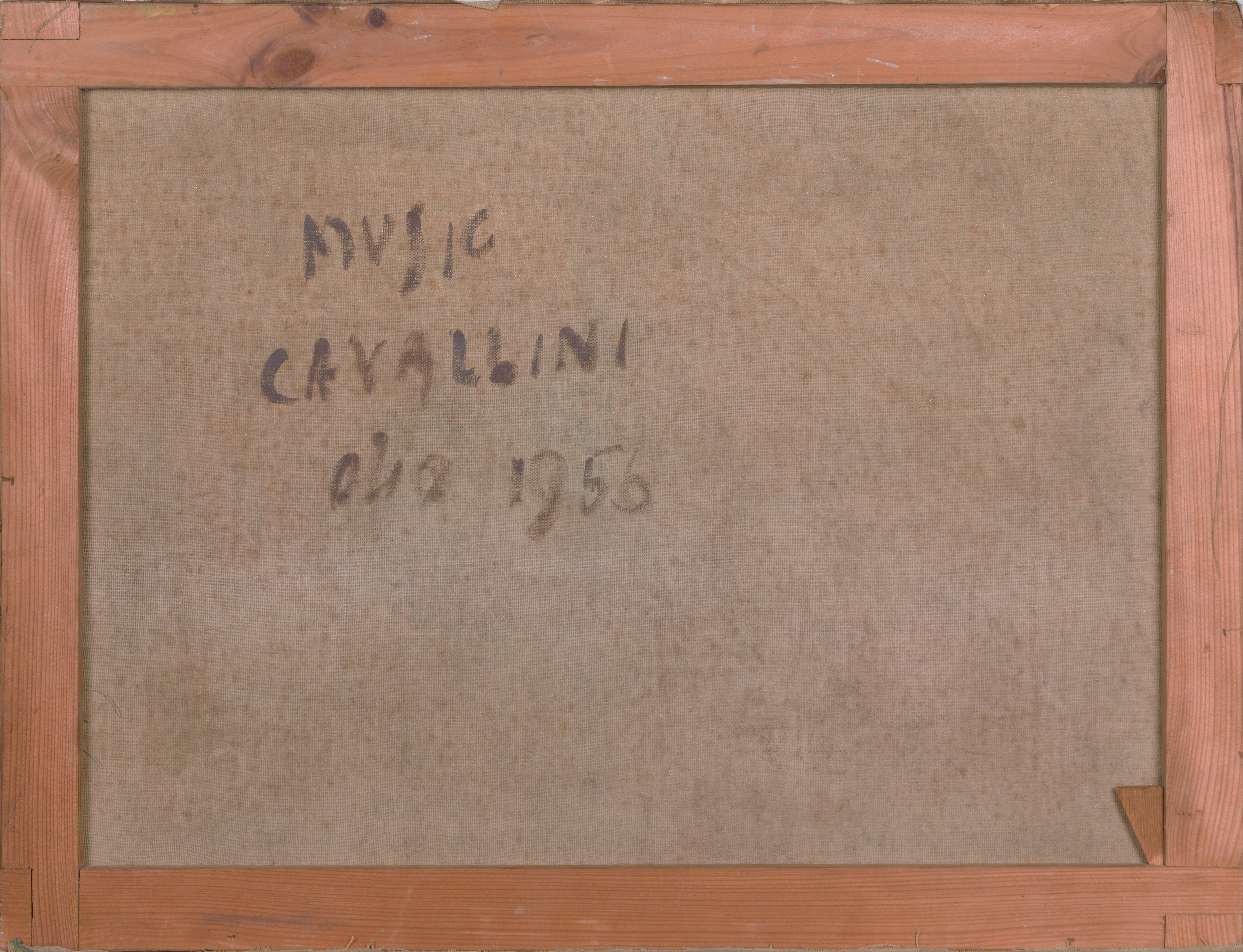
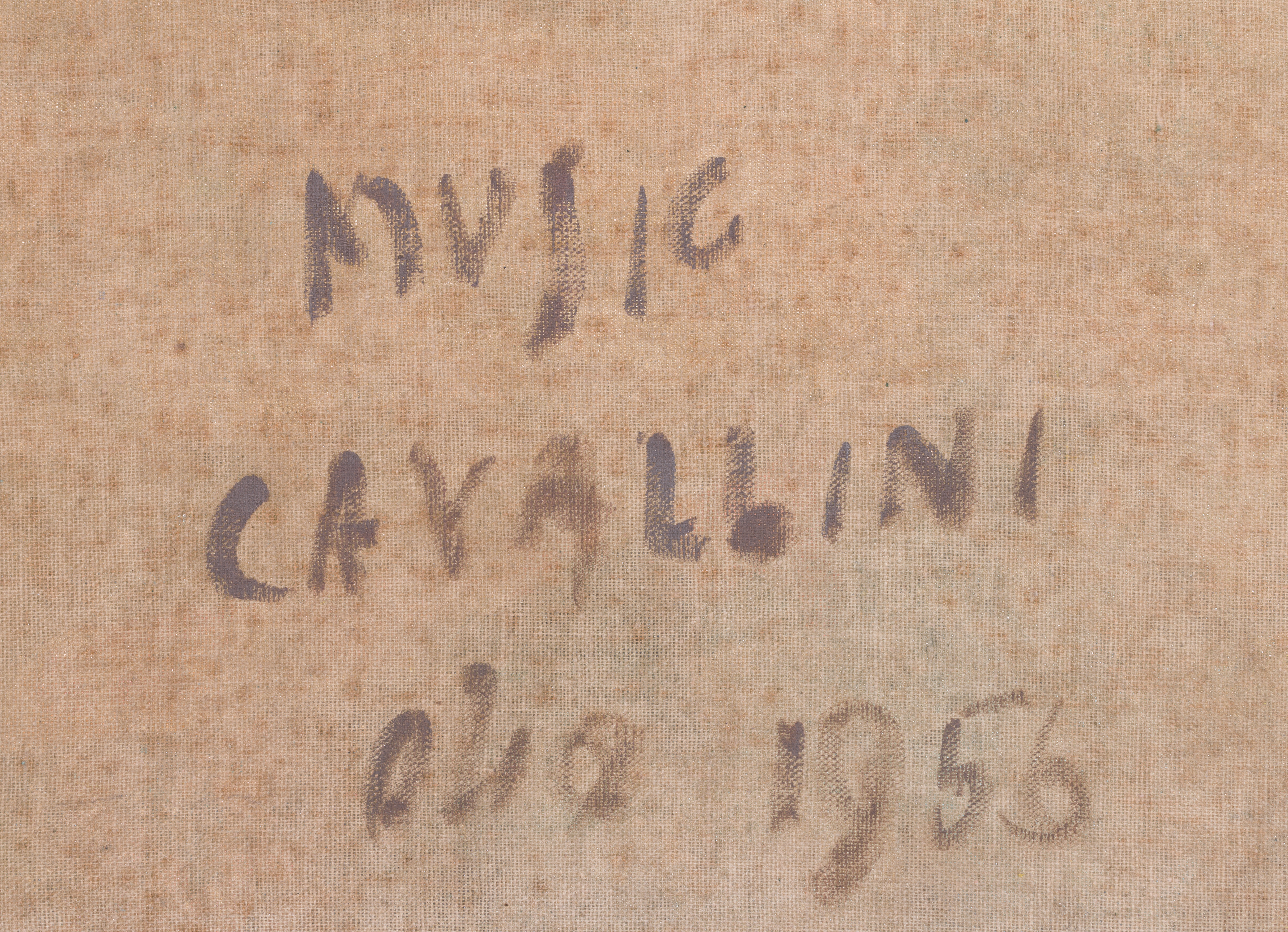
Signed and dated lower center “1956 MUSIC”; further signed, titled, and dated on the reverse.
This hauntingly beautiful oil on canvas is a prime example of Zoran Mušič’s iconic “Dalmatian Horses” series from the mid-1950s. The composition features a group of horses huddled against a backdrop of rounded, barren hills that evoke the parched landscapes of the Dalmatian coast. Mušič employs a subtle, earthy palette of dusty pinks, ochres, and cool greys, applied with a light, almost fresco-like touch.
The horses are rendered as simplified, rhythmic forms, their presence feeling more like an ancient memory than a literal representation. This period of Mušič’s work is deeply influenced by his survival of the Dachau concentration camp; after the horrors of the war, he sought solace in the silent, timeless beauty of the landscapes of his youth. The “Cavallini” become symbols of endurance and a quiet, primordial connection to the earth.
Provenance
Private collection, Paris, France.
Condition
Good vintage condition; the paint surface is stable with a delicate, dry texture characteristic of the artist’s technique; original wooden stretcher.
Conditions of Sale
All lots are sold as is. See Section 4 of our Terms and Conditions for return policy.
All inquiries must be made prior to bidding, as no further details can be provided after the sale.
By placing a bid, you confirm that you have read and agree to our Terms and Conditions in full.
Shipping
For shipments outside the EU, Spanish export tax may apply to certain higher-value artworks; no export tax applies within the EU. Any such tax is payable by the buyer. Please refer to our Shipping & Export Information page for further details.
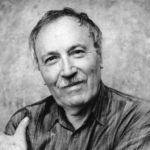
Zoran Mušič, a Slovenian-born artist, is celebrated for his evocative and deeply personal works that capture the fragility and resilience of the human spirit. Known for his haunting landscapes, delicate portraits, and abstract depictions of suffering, Mušič’s art often reflects his experiences during World War II and his time in the Dachau concentration camp. His unique style, marked by muted colors and fluid, almost skeletal forms, serves as a quiet but powerful meditation on memory, identity, and trauma.
Mušič’s paintings are intimate yet universal, inviting viewers to confront the sorrow and beauty of existence. His recurring themes of isolation, survival, and the human condition have cemented his legacy as one of the most poignant voices in post-war European art. Through his work, Mušič offers a profound exploration of endurance and hope, capturing both the darkness of history and the enduring light of humanity.
-
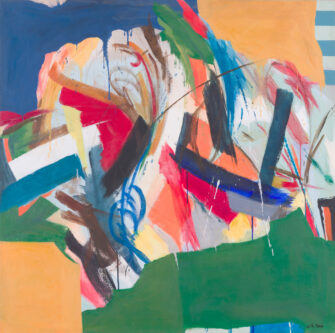
4: Wook-kyung Choi – Abstract Expressionist Composition
91.5 × 91.5 cm | 36 × 36 inSold for 5,000 € -
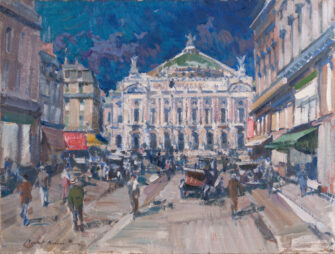
18: Konstantin Korovin – L’Opéra, Paris. Effet du soir
60 × 79 cm | 23.6 × 31.1 inSold for 180,000 €