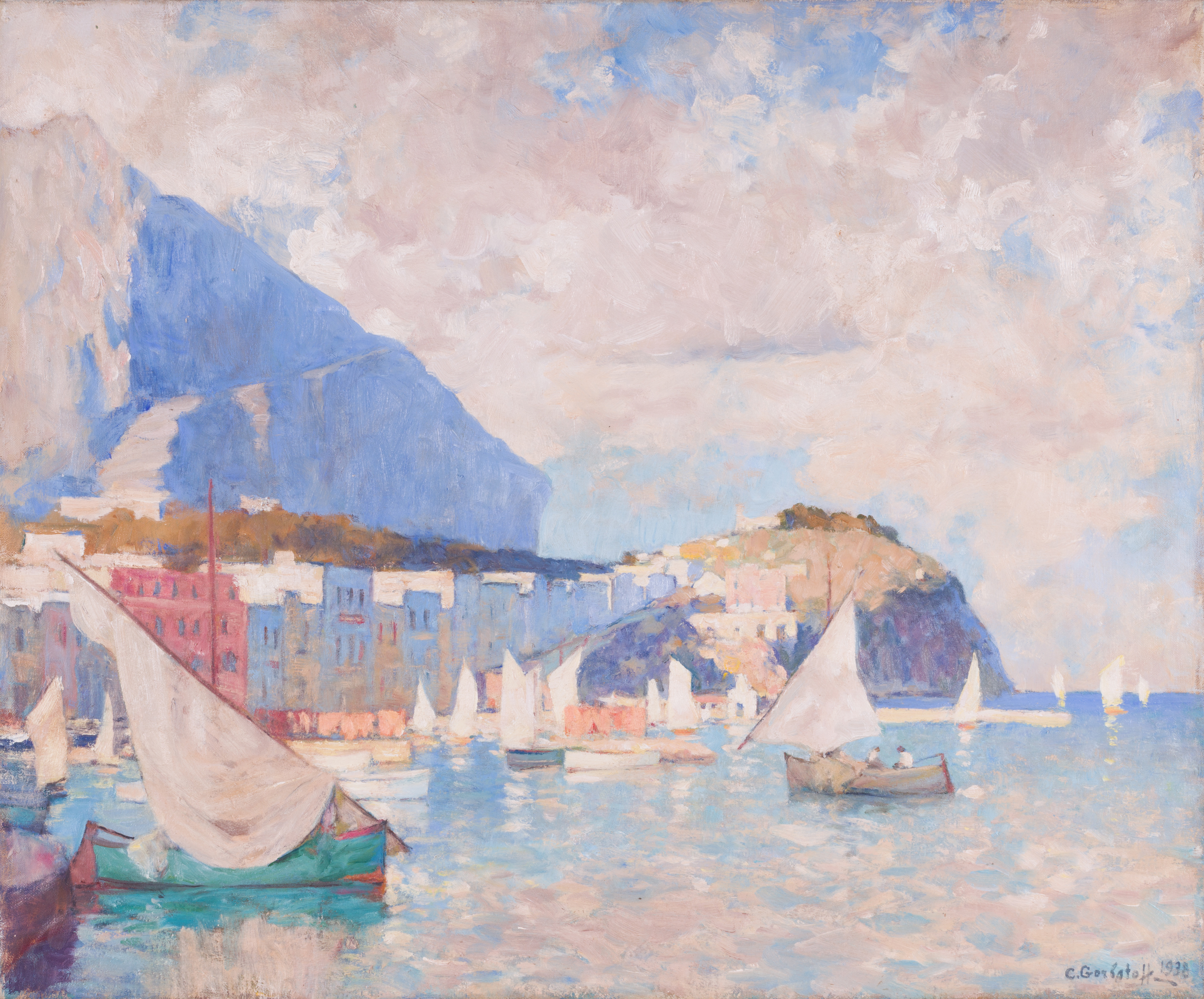
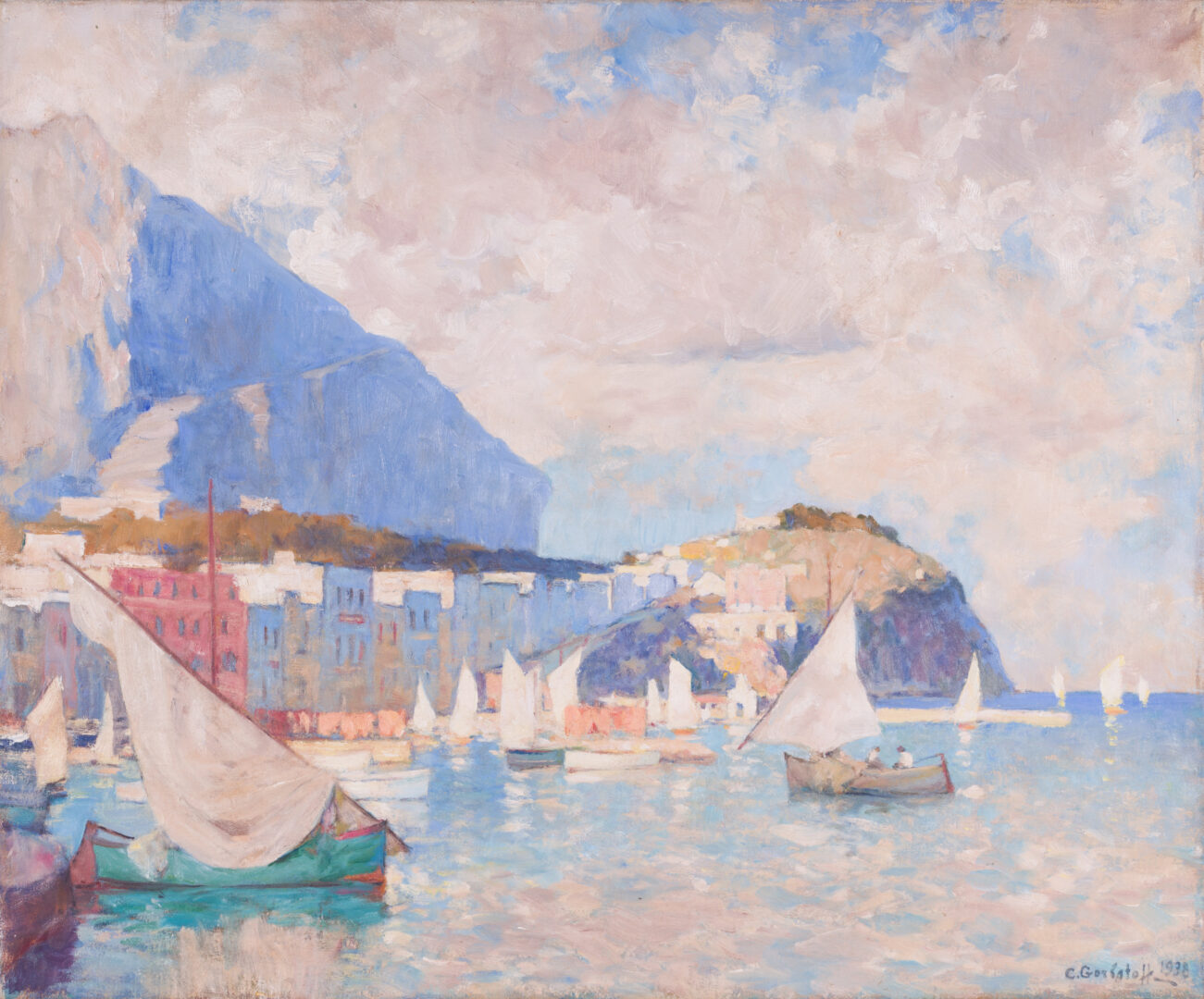
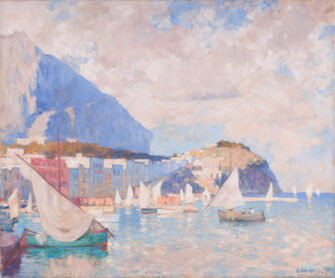
Konstantin Gorbatov — Capri Landscape, 1938
Live bidding available exclusively on:




Details
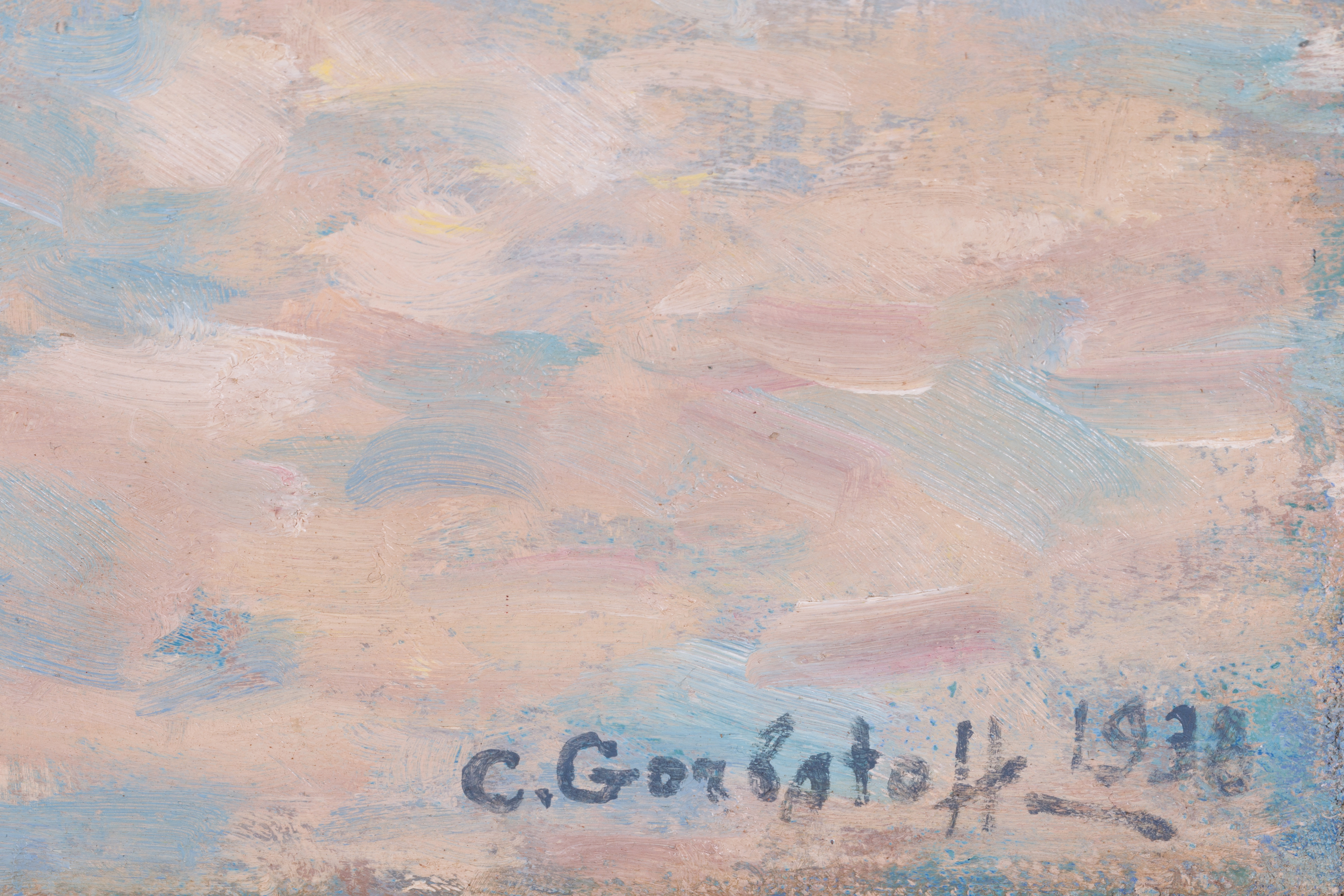
Signed and dated ‘C. Gorbatoff 1938’ (lower right).
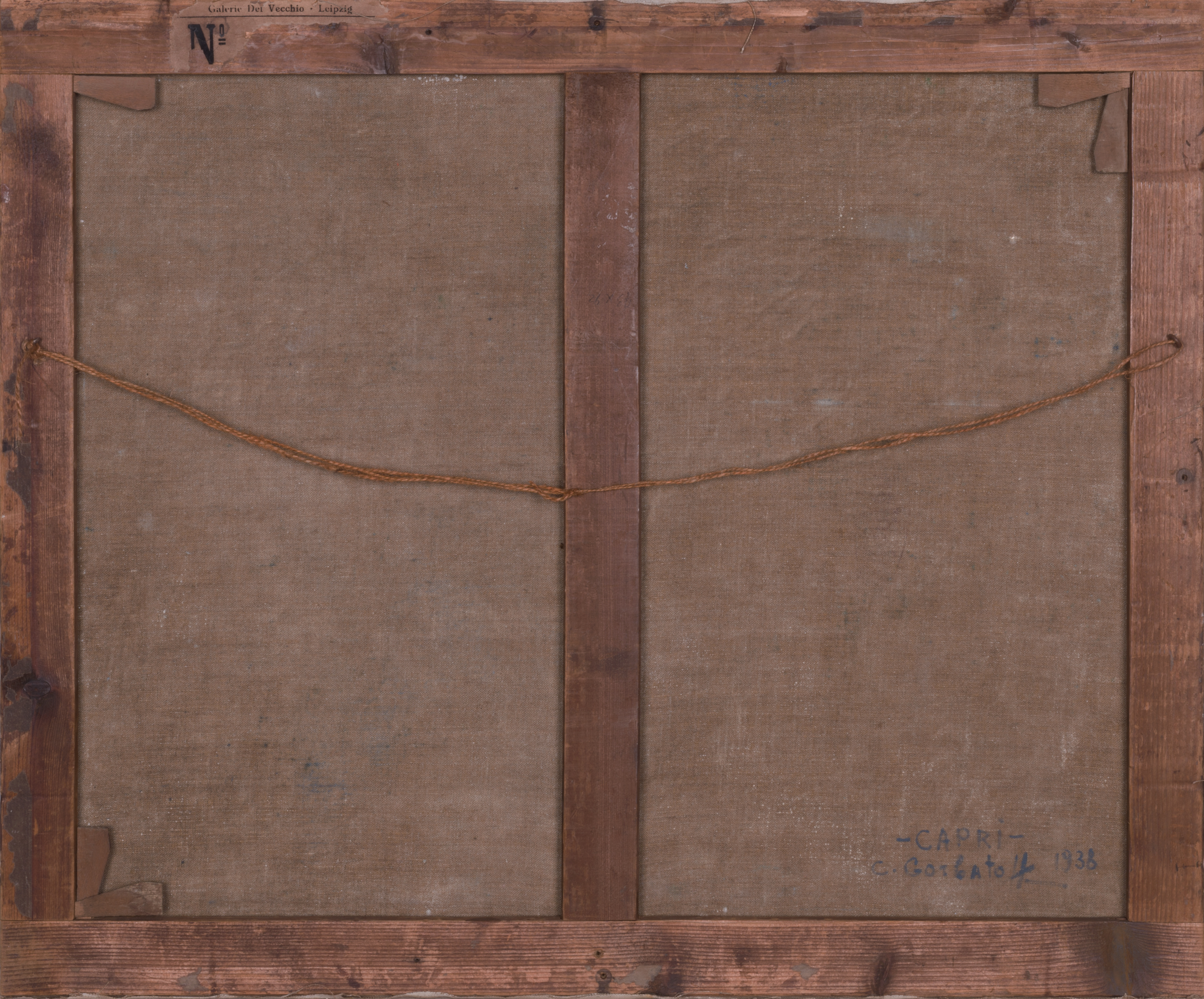
Signed, titled and dated ‘-CAPRI- C. GORBATOFF 1938’ (on the reverse of the canvas).
This 1938 landscape is a magnificent example of the Mediterranean period in the oeuvre of Konstantin Gorbatov. The artist masterfully captures the unique atmosphere of the seascape, where the soft pastel tones of the sky and clouds harmonize with the azure shades of the water and the majestic outlines of the mountains.
Through his use of light and a fluid, impasto brushwork, Konstantin Gorbatov transforms the view of the harbor and its sailing boats into an airy, near-impressionistic vision, characteristic of his finest works.
This landscape reflects Konstantin Gorbatov’s deep fascination with en plein air painting and his ability to capture the fleeting states of southern nature. The work not only demonstrates the artist’s technical mastery in conveying light and spatial depth but also serves as a poetic reflection of his travels across Europe during the 1930s.
Provenance
Galerie del Vecchio, Leipzig (label verso).
Private Collection, Germany.
Thence by descent to the previous owner.
Acquired from the above by the present owner.
Condition
Overall good condition. Please contact us to request a detailed Condition Report.
Conditions of Sale
All lots are sold as is. See Section 4 of our Terms and Conditions for return policy.
All inquiries must be made prior to bidding, as no further details can be provided after the sale.
By placing a bid, you confirm that you have read and agree to our Terms and Conditions in full.
Shipping
For shipments outside the EU, Spanish export tax may apply to certain higher-value artworks; no export tax applies within the EU. Any such tax is payable by the buyer. Please refer to our Shipping & Export Information page for further details.
Inquire about this lot
If you have any questions or would like more details about this artwork, please fill out the form below, and our team will get in touch with you promptly.
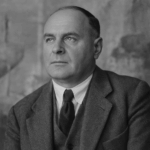
Born in Stavropol-on-Volga, Gorbatov studied civil engineering before turning fully to art, enrolling at the Imperial Academy of Arts in Saint Petersburg. In the 1910s, he traveled widely through Italy and Germany, eventually settling in Capri — a place whose sunlit palette deeply influenced his artistic language.
Gorbatov’s paintings from this period reveal a mastery of color, atmosphere, and architectural rhythm, often depicting Russian towns bathed in golden light. His use of expressive brushwork and vibrant tones places him among the leading colorists of his generation.
Following the Russian Revolution, Gorbatov emigrated permanently, first to Italy and then to Berlin. In exile, he remained deeply connected to Russian culture, becoming a central figure in the Russian émigré art community. While his works continued to reflect nostalgic visions of Russia, he also incorporated Mediterranean subjects and still lifes into his repertoire.
Despite hardships during World War II, Gorbatov continued to paint until his death in Berlin in 1945. Today, his works are held in major Russian and European museums, and his reputation has grown steadily on the international art market. Gorbatov’s legacy endures in his ability to merge memory, light, and national identity into radiant visual poetry.
Live bidding available exclusively on:
-
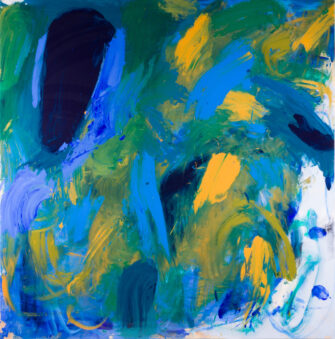
07: Rahim El — Abstract Composition “II” from the “Kairos” Series, 2024
154.5 × 153.5 cm | 60.8 × 60.4 in4,000 - 5,000 € -
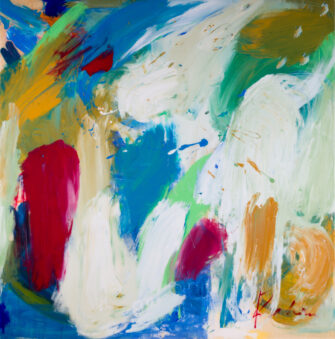
06: Rahim El — Abstract Composition “I” from the “Kairos” Series, 2024
154.5 × 153.5 cm | 60.8 × 60.4 in4,000 - 5,000 €