
Jan Zrzavý: the Painter Who Gave Czech Art Its Dream
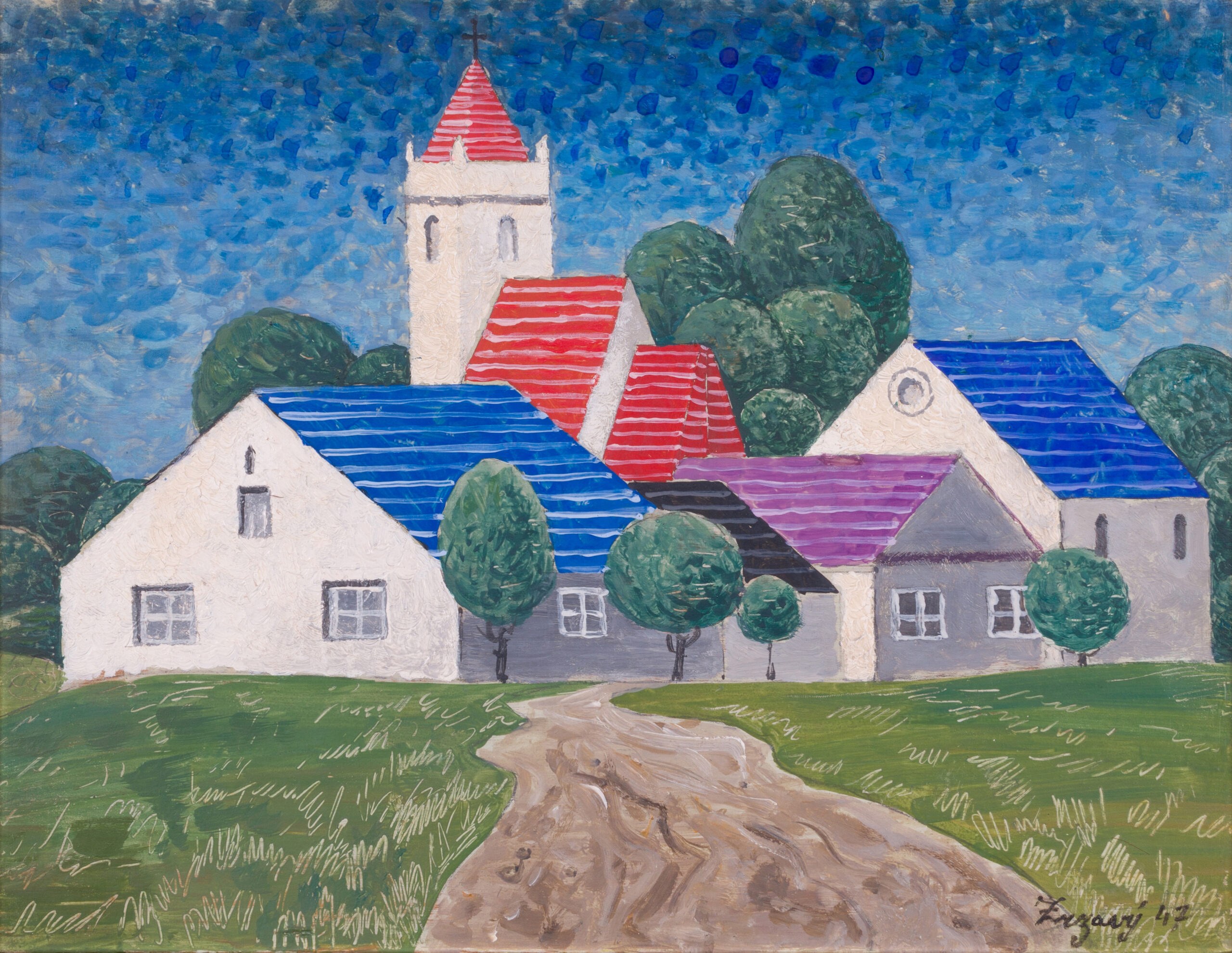
Jan Zrzavý (1890–1977), founder of Czech modern art: his highland little towns, Breton boats and luminous tempera technique, and the signed 1947 Městečko offered at Aurora & Athena.
Few painters have given a country an image of itself as quietly and as completely as Jan Zrzavý (1890–1977) gave Czech art. His white houses with coloured roofs, his Breton boats and his Venetian lagoons are known to every Czech schoolchild, yet outside Central Europe he is still a discovery. This autumn Aurora & Athena offers one of his signed and inscribed temperas, Pueblo pequeño of 1947, in the Maestros modernos: Arte del siglo XX sale — an occasion to look at the man who built a whole world out of a few rounded shapes and an inner light.
A self-taught visionary from the highlands
Zrzavý was born in Okrouhlice, in the Bohemian-Moravian highlands, the son of a village schoolmaster. He lasted a single year at the Prague School of Applied Arts before being expelled, and was largely self-taught. It made no difference: by 1910, at twenty, he had joined the artists’ group Sursum and was painting the visionary, simplified pictures — Cleopatra, Vale of Sorrow, Antikrist — that placed him, alongside Bohumil Kubišta and Emil Filla, among the founders of Czech modern art.
He absorbed Cubism from Prague’s avant-garde and the Italian primitives, Leonardo and Giotto from his travels, and fused them into a language entirely his own: pure, rounded volumes, contours softened until they glow, colour laid on in thin, luminous layers. After the First World War he belonged to the Tvrdošíjní — ‘the Stubborn Ones’ — and later to the Mánes Union of Fine Arts, but he never painted like anyone else.
Brittany, Venice and the little towns
From the 1920s Zrzavý divided his years between Prague, Brittany and Venice. The boats of Camaret and Île de Sein, painted for decades, became one of his signatures; so did the Venetian churches dissolving into the lagoon. After 1935 he returned to the highland villages of his childhood — Krucemburk, Okrouhlice, Vodňany — and the ‘little town’ entered his repertoire: white houses with red, blue and violet roofs gathered around a church spire, grass scratched into the paint stroke by stroke, a sky of dots.
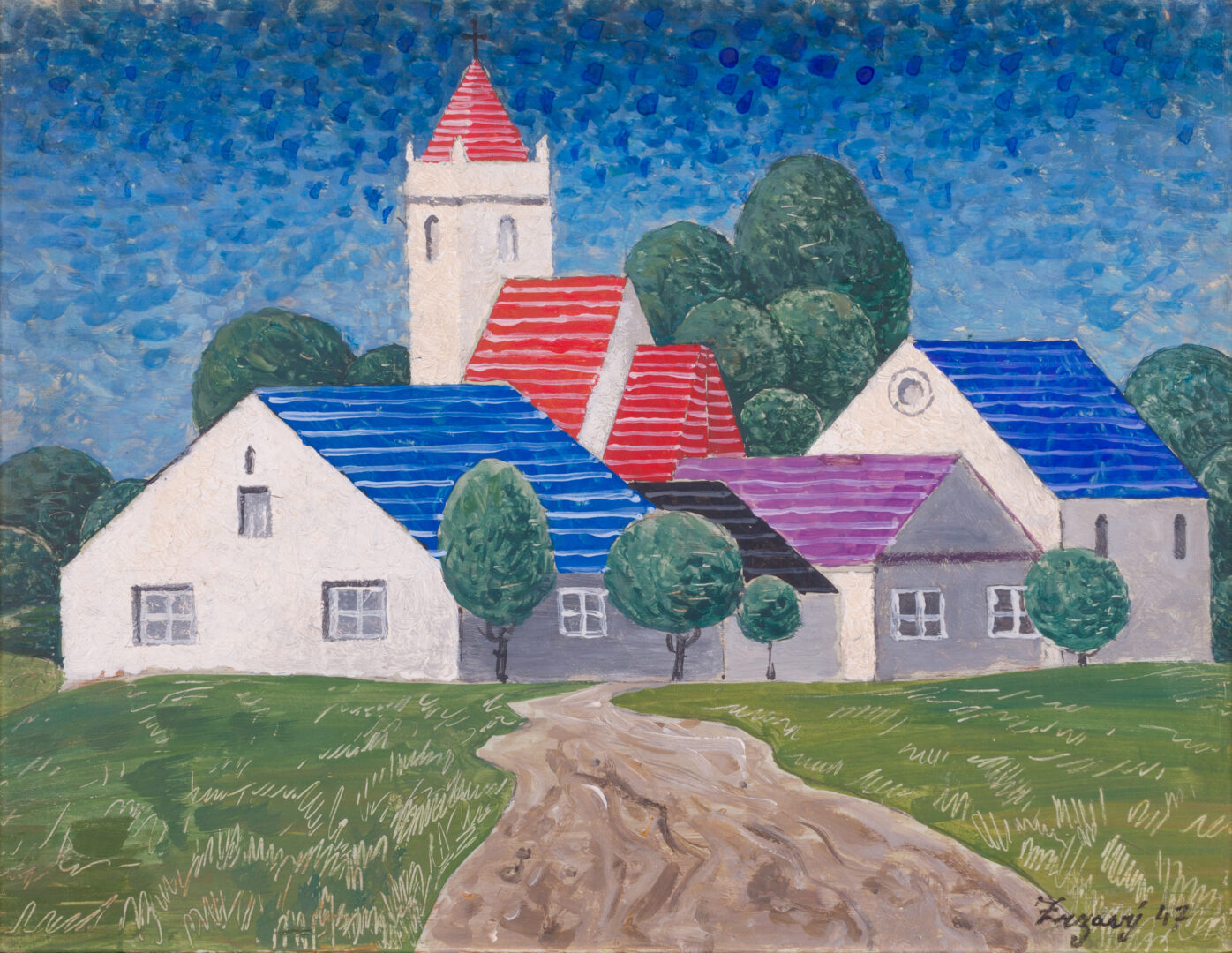
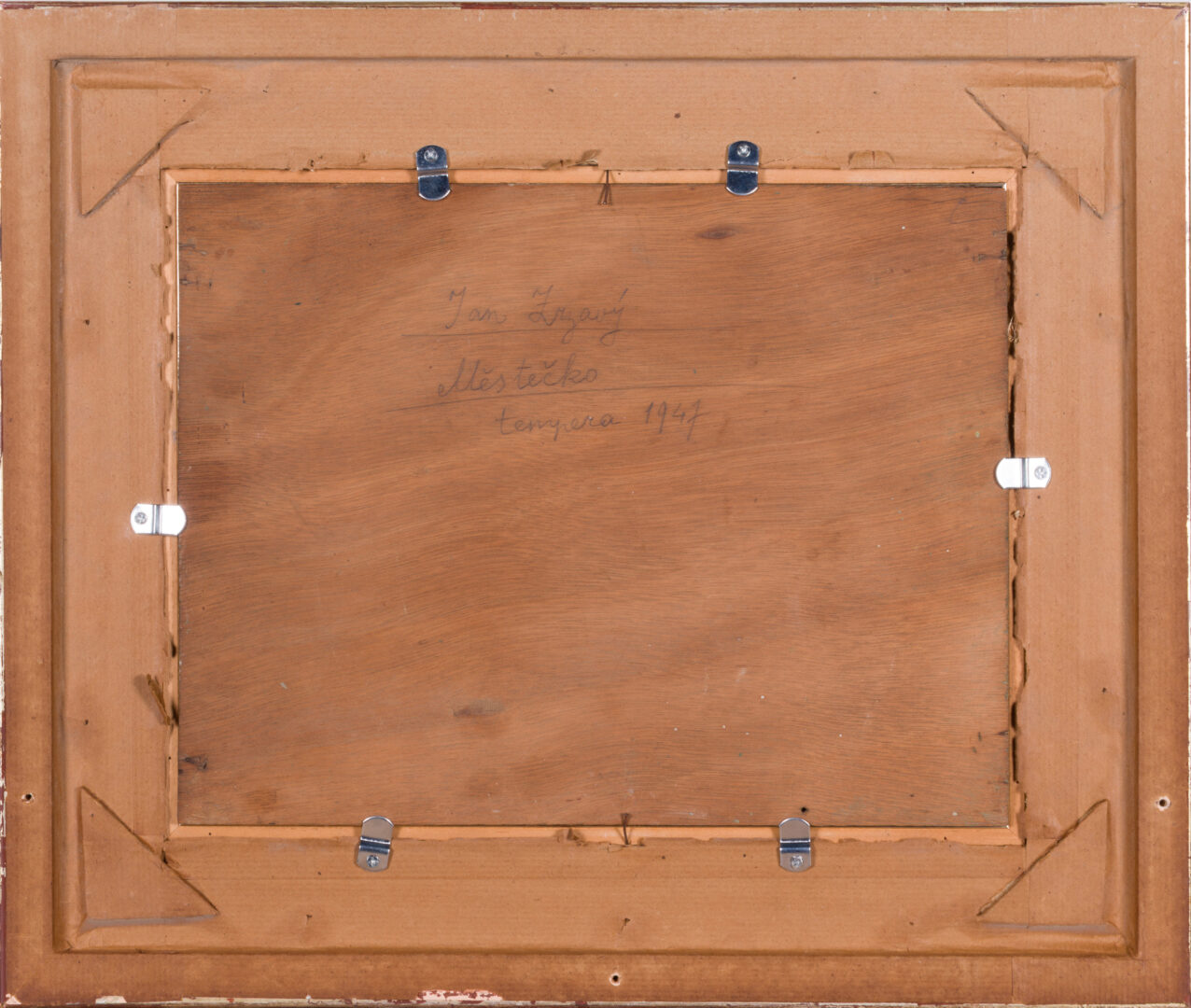
En tempera on board in our sale is exactly such a picture. It is signed and dated ‘Zrzavý 47’ on the front and inscribed by the artist on the reverse — ‘Jan Zrzavý / Městečko / tempera 1947’ — which is as complete a documentation as a small Zrzavý can carry. The sgraffito grass and the dotted sky are hallmarks of his tempera technique in these years.
Recognition and the market
Zrzavý was named National Artist in 1966 and is represented in the National Gallery in Prague, which gave him a major retrospective in 2015, and in Czech regional museums; a permanent display of his work is at Krucemburk, where he is buried. His paintings are among the most sought-after of any Czech artist at auction, with the highland landscapes and the Breton subjects leading the way, and the market for him remains largely Czech — which is why a signed, inscribed work appearing in an international sale is worth the attention of collectors elsewhere.
At Aurora & Athena
Pueblo pequeño is offered on 17 October 2026 with an estimate of 20 000 – 30 000 €. Full condition summary, photographs and bidding on the lot page; more on the artist on his artist page.
Disponible ahora
Próximos lotes de subasta
Artista en este artículo
Own a Work by Jan Zrzavý?
Los especialistas de Aurora & Athena ofrecen tasaciones gratuitas y pueden guiarle en el proceso de consignación para subasta o venta privada.
Obtén una valoración gratuita