
Jilali Gharbaoui: 5 Reasons His Art Captivates Collectors
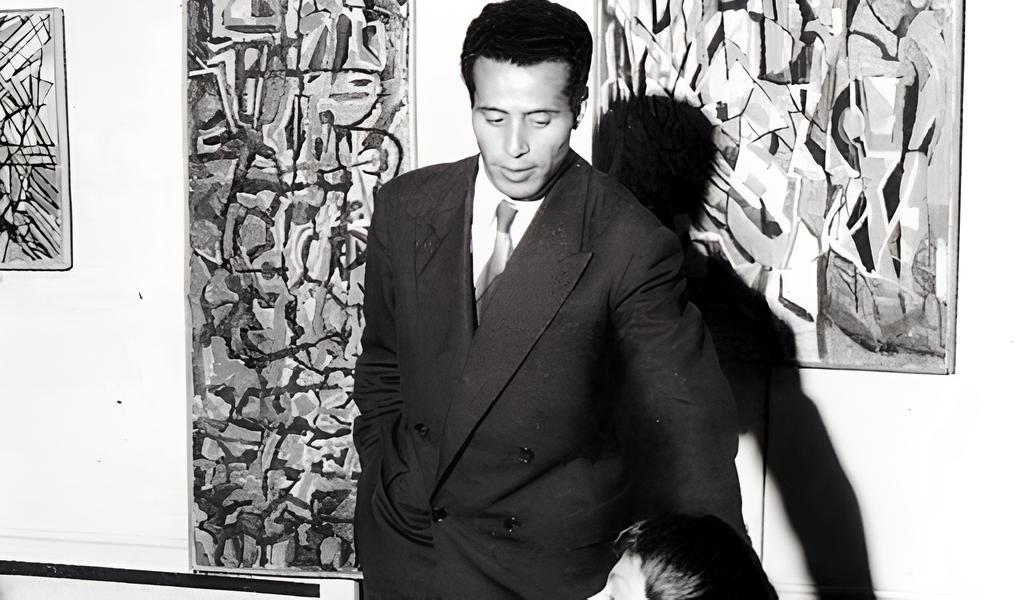
Explore the legacy of Jilali Gharbaoui, Morocco’s abstract visionary whose bold, emotional style redefined North African art. Discover his life and influence.
Table of Contents
Jilali Gharbaoui, the Moroccan artist who helped introduce abstract art to the Arab world, continues to gain recognition from collectors and institutions alike.
With Aurora & Athena’s November 8, 2025 Fine Art Auction featuring one of his rare early canvases — Untitled (1955) — his vibrant, emotional legacy once again comes into focus.
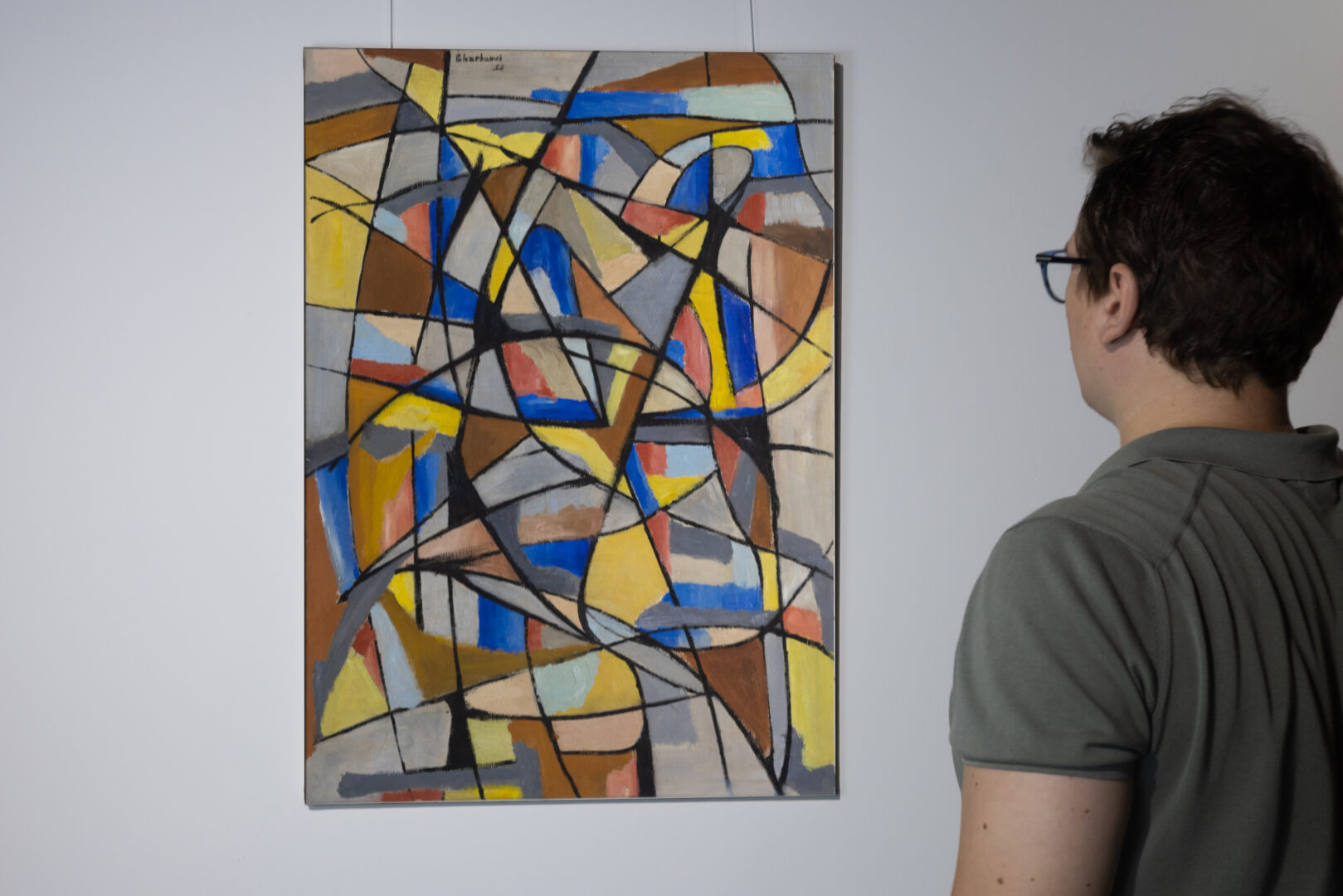
A pioneer of Moroccan modernism, Gharbaoui painted not what he saw but what he felt — turning color and gesture into a universal language of emotion.
Biography and Early Career: A Search for Expression
Born in Sidi Kacem, Morocco, in 1930, Jilali Gharbaoui grew up amid the turbulence of a nation on the brink of independence. Orphaned early in life, he developed an instinctive sensitivity that later shaped his artistic voice. Largely self-taught, he moved to Paris in the early 1950s, immersing himself in the post-war avant-garde.
Though he briefly attended the École des Beaux-Arts, Gharbaoui soon abandoned academic conventions, seeking his own path among the cafés and studios of Montparnasse. Influenced by Art Informel and Abstract Expressionism, he began painting not the external world but the inner one — the turbulence of thought, the conflict between order and chaos.
In Paris, he found both freedom and alienation. His art became a lifeline — a way to translate emotion into movement and color.
Artistic Vision and Style: Painting Emotion, Not Form
To stand before a painting by Jilali Gharbaoui is to witness an artist wrestling with his own spirit. His abstract compositions, fractured by thick black lines and filled with flashes of ochre, blue, and red, convey rhythm, energy, and emotional urgency.
Between Chaos and Structure
Gharbaoui’s brushwork oscillates between impulse and control. The intersecting forms in Untitled (1955) reveal an intuitive architecture — almost musical in its balance of dissonance and harmony. His use of color evokes both the Moroccan landscape and the European modernist palette, merging cultural identity with pure abstraction.
Beyond Geography
While connected to the Parisian art scene, Gharbaoui’s abstraction was distinct. It was not derivative of Western models but deeply personal — an exploration of emotion through gesture. His art embodied a dialogue between post-war European modernism and North African sensibility, making him a bridge between worlds.
Inner Turmoil and Human Depth
Behind the brilliance of Jilali Gharbaoui’s work lay profound inner conflict. The artist struggled with mental illness throughout his life, which deeply informed his creative process. His paintings became mirrors of psychological intensity — moments of clarity emerging from chaos.
Every line seems alive with tension; every patch of color pulses with restrained power. Gharbaoui once said he painted “to survive,” and his art remains a testament to that raw need for expression. Tragically, his life ended in 1971, when he was found dead in Paris at just 41 years old — leaving behind a small but extraordinary body of work that shaped Moroccan abstraction.
Alongside Ahmed Cherkaoui and Farid Belkahia, Jilali Gharbaoui is considered one of the founders of modern Moroccan art. His abstraction offered a new visual vocabulary for post-colonial identity — one rooted in emotion rather than representation.
Institutional Recognition
Today, his works are part of major museum collections, including the Mohammed VI Museum of Modern and Contemporary Art in Rabat and the Institut du Monde Arabe in Paris. Retrospectives have positioned him as a cornerstone of North African modernism, influencing later artists such as Mohamed Melehi and Chaïbia Talal.
Gharbaoui’s influence extends beyond Morocco — his bold embrace of abstraction paved the way for a generation of Arab artists to express freedom through form and color.
Market Value and Auction Presence
Because of his short life and limited output, paintings by Jilali Gharbaoui are rare. Over the last decade, his market has grown steadily, reflecting a broader global interest in Moroccan and North African modern art.
His larger oil works can reach €40,000–€80,000, while his drawings and mixed media pieces have also drawn strong results. At Aurora & Athena’s December 2024 Fine Art Auction, Gharbaoui’s Untitled (1960) — an expressive black-ink abstraction on paper — sold for €650, exceeding expectations and reaffirming collector enthusiasm for his work across mediums.
This momentum continues into 2025, as Aurora & Athena once again presents a rare oil painting from his early Paris years, underscoring both his historical importance and market vitality.
The November 8, 2025 Fine Art Auction: Untitled (1955)
At the upcoming November 8, 2025 Fine Art Auction in Barcelona, Aurora & Athena is proud to present Jilali Gharbaoui – Untitled, 1955, an important early oil on canvas measuring 91.5 × 65 cm.
Signed upper center “Gharbaoui 55”, the work vibrates with gestural energy — broad strokes of ochre, black, and blue colliding in a lyrical storm.
Gharbaoui doesn’t depict objects but sensations: movement, turmoil, and emotion distilled into color.
Estimated at €12,000–€15,000, this painting comes from a Private Collection in France and remains in good vintage condition.
It encapsulates the artist’s transition from figurative to lyrical abstraction, the language through which he expressed the “inner landscape of existence.”
Created during his formative Paris years, Untitled (1955) stands as a bridge between cultures and moments — between despair and transcendence — making it a highlight of Aurora & Athena’s November sale.
Connecting Past and Present: Aurora & Athena’s Vision
Aurora & Athena’s curatorial approach emphasizes cross-cultural modernism — uniting artists from Africa, Asia, and the Middle East whose work reshaped global art narratives. Following the July 2025 Fine Art Auction, which included modern masters such as Le Thi Luu and S.H. Raza, the November 2025 Auction continues this dialogue with Irma Stern, Georgette Chen, Nejad Devrim, and Jilali Gharbaoui.
Each of these artists, in their own way, painted the human experience beyond borders. For Gharbaoui, that meant turning the language of abstraction into an act of freedom — painting as resistance, painting as revelation.
Conclusion: Jilali Gharbaoui’s Enduring Legacy
More than fifty years after his death, Jilali Gharbaoui’s art still pulses with immediacy. His lines, colors, and gestures speak not of place but of emotion — a universal language of intensity and introspection.
From his expressive ink work Untitled (1960) sold at Aurora & Athena’s inaugural auction, to the powerful Untitled (1955) offered this November, collectors now have the chance to trace the evolution of an artist whose abstraction defined Moroccan modernism.
Gharbaoui’s art reminds us that even in chaos, beauty can emerge — and that the most profound form of order is emotion itself.
Market Value: What Gharbaoui’s Paintings Are Worth Today
Gharbaoui’s record was set in Paris in October 2015: Éclosion (“Hatching”) sold for over 2.5 million Moroccan dirhams (roughly $250,000) at Cornette de Saint Cyr — still the benchmark for his work and among the highest prices paid for a Moroccan painter of his generation.
As the first Moroccan artist to show at the Paris Biennale, his gouaches and abstract compositions from the 1950s–60s Paris years are the most sought after; demand has grown steadily as North African modernism has drawn wider international collector interest.
See Jilali Gharbaoui’s artist page at Aurora & Athena for his biography, catalogued works, and auction history as new pieces come to market.
Artists in this article

Considering Selling a Piece From Your Collection?
Aurora & Athena's specialists provide free valuations and can guide you through consignment to auction or private sale.
Get a Free Valuation