
Beyond Ink: Cheong Soo Pieng’s Experimental Approach to Art
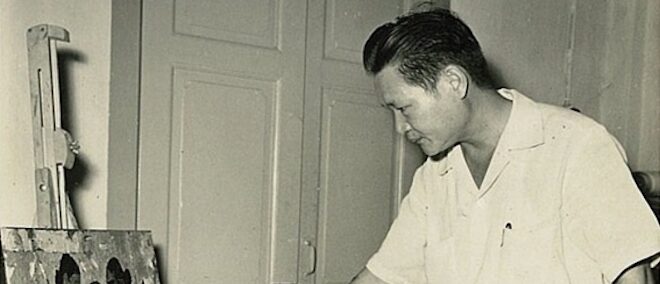
Discover the revolutionary art of Cheong Soo Pieng, a pioneer of the Nanyang Art Style. Explore his fusion of Chinese ink painting, Western modernism, and Southeast Asian influences that shaped 20th-century Asian art. Learn about his experimental techniques, iconic works, and lasting legacy in contemporary art.
Table of Contents
Few artists have defined and redefined an era like Cheong Soo Pieng. His artistic journey, spanning five decades, was a relentless pursuit of innovation, bridging the traditions of the East and the avant-garde movements of the West. From pioneering the Nanyang Art Style to pushing the limits of materials, form, and abstraction, Cheong’s influence remains profound in the contemporary art world.
Through his fearless experimentation with metal, lacquer, Masonite, and mixed media, he created a distinct visual language that continues to captivate collectors, scholars, and art enthusiasts alike. By dissecting Cheong’s career, we gain insight into not just an artist, but a visionary whose work transcends generations.
Key Takeaways: The Evolution of 20th Century Asian Art
- Pioneered the Nanyang Style, blending Chinese ink traditions, Western modernism, and Southeast Asian influences.
- Revolutionized artistic materials, experimenting with Masonite, lacquer, metal reliefs, and mixed media.
- Redefined spatial relationships in art, incorporating Cubist deconstructions and layered compositions.
- Expanded the boundaries of sculpture and painting, creating hybrid works that blurred artistic disciplines.
- Left a lasting impact on Southeast Asian modernism, influencing generations of artists and shaping Singapore’s art identity.
Introduction
Cheong Soo Pieng’s legacy transcends traditional artistic boundaries. A pivotal figure in Southeast Asian modernism, he revolutionized Singaporean and Malayan art by blending Chinese ink traditions, Western abstraction, and Southeast Asian influences. Though widely recognized for shaping the Nanyang art movement, his artistic contributions extended far beyond this. Through a constant experimentation with materials, techniques, and concepts, Cheong redefined the visual language of modern Asian art.
This article explores his artistic evolution, from his early influences to his trailblazing experiments with form, space, and material, and the lasting impact of his work on the global art scene.
Early Life and Influences
Born in 1917 in Xiamen, China, Cheong Soo Pieng’s artistic journey was shaped by the social and political turbulence of his era. He studied at the Xiamen Academy of Fine Arts and later at the Sin Hwa Academy of Fine Arts in Shanghai, where he was exposed to Western academic methods such as perspective drawing, anatomy studies, and oil painting techniques.
Simultaneously, he was deeply influenced by traditional Chinese ink painting and calligraphy, which later became integral to his artistic practice.
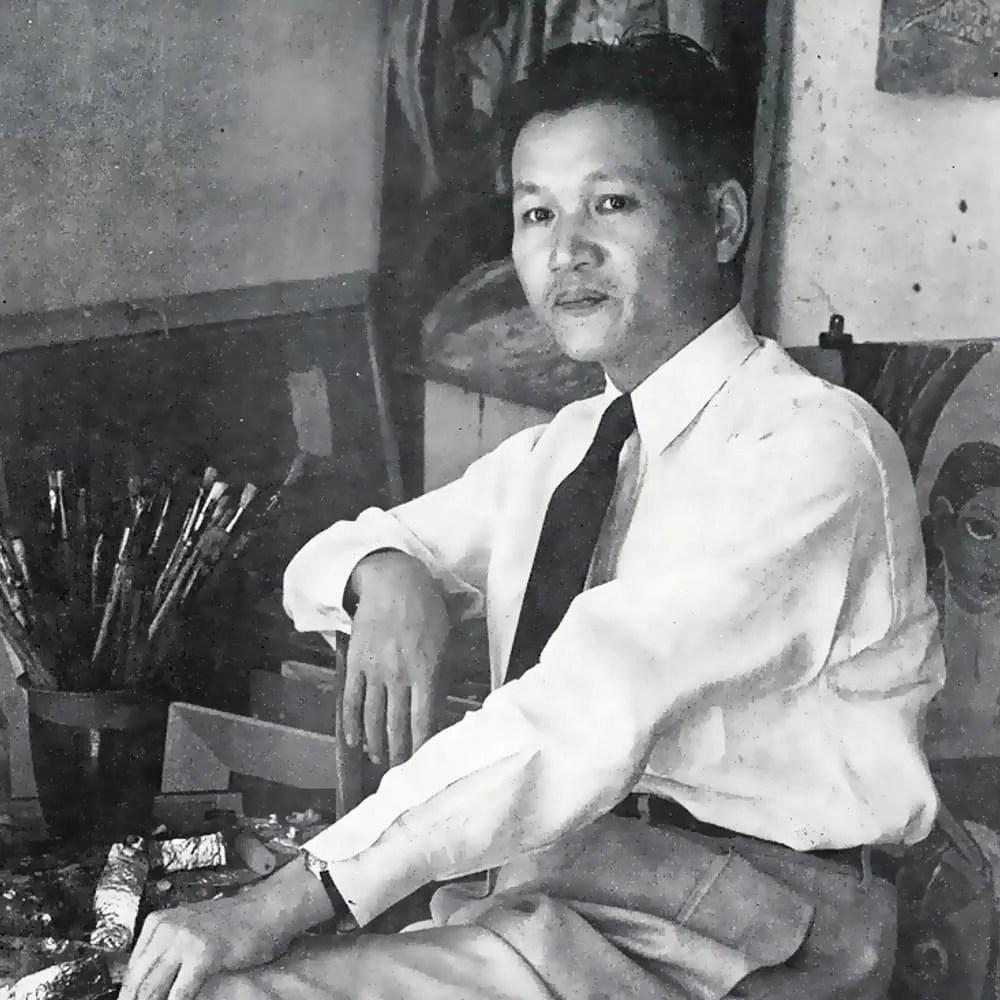
When Cheong arrived in Singapore in 1946, he encountered a vibrant and diverse cultural landscape. The tropical surroundings, rich ethnic diversity, and exposure to Malay, Indonesian, and Southeast Asian visual traditions inspired his signature fusion of East and West. This new environment provided the perfect foundation for his experimental approach to modernism.
The Nanyang Style and Artistic Evolution
Cheong Soo Pieng became a faculty member at the Nanyang Academy of Fine Arts (NAFA) in 1947, joining forces with fellow pioneers such as Chen Wen Hsi, Liu Kang, and Chen Chong Swee. Together, they forged the Nanyang Style, a distinctive art movement that blended:
- Western modernist techniques (Cubism, Fauvism, Expressionism)
- Chinese brushwork traditions
- Southeast Asian themes, motifs, and cultural identity
A defining moment in his career was the 1952 artist trip to Bali, where Cheong absorbed Bali’s traditional crafts, everyday life, and rich color palette. His paintings from this period feature:
- Flattened planes and elongated human figures
- Earthy, tropical color palettes
- Dynamic compositions influenced by Cubism and Expressionism
His iconic paintings, such as Malay Woman (1950) and Balinese Dance (1953), showcase his ability to reinterpret regional life through a modernist lens.
Experimentation with Form and Space
Unlike many of his contemporaries, who remained within traditional figurative painting, Cheong was unafraid to fragment and abstract his compositions. He continuously explored spatial relationships in his work, as seen in:
- Cubist-inspired deconstructions of the human figure
- Innovative use of grids and layered textures
- Hybridization of two-dimensional and three-dimensional effects
In his later ink paintings, Cheong reimagined the Chinese hanging scroll format, introducing geometric structures, bold lines, and modernist aesthetics while retaining its essence. His art constantly challenged conventional notions of space, movement, and perception.
Materials and Techniques that Redefined Art
Cheong’s relentless drive for innovation extended to his choice of materials. During the post-war years in Singapore, he had limited access to art supplies, leading him to experiment with unconventional materials such as:
- Masonite boards (a durable and affordable alternative to canvas)
- Layered textured papers and mixed-media collage techniques
- Lacquer painting techniques inspired by Vietnamese and Chinese traditions
By the 1960s, his exposure to European modernism led him to incorporate synthetic materials, pre-primed canvases, and layered transparency techniques. His fascination with materiality peaked in the late 1960s and 1970s, when he began creating metal reliefs using:
- Found objects like aluminum, nails, and screws
- Collaged elements that blurred the lines between painting and sculpture
- Textured surfaces that played with light, depth, and tactile engagement
His work in this period challenged notions of artistic permanence, material significance, and the relationship between industrial objects and fine art.
Sculpture and the Creative Studio
Cheong Soo Pieng’s venture into sculpture further underscores his versatility as an artist. His studio functioned as both a sanctuary and a laboratory, where he constantly refined his techniques and explored new frontiers in artistic expression.
His sculptures, such as Metal Relief Triptych, highlight his mastery of:
- Texture and depth in metalwork
- Fusing painting and three-dimensional forms
- Blending industrial materials with organic artistic sensibilities
Lasting Influence and Legacy
Cheong Soo Pieng’s contributions remain deeply embedded in Singaporean and Southeast Asian art history. His fearless approach to experimentation and cultural synthesis paved the way for new generations of contemporary artists. His influence continues to be celebrated in:
- Major museum collections, including the National Gallery Singapore
- Auction houses where his works fetch record-breaking prices
- Academic studies on the evolution of Nanyang modernism
Through his boundary-pushing artistry, Cheong elevated Southeast Asian modernism to the global stage, positioning Singapore as a key player in the international art market.
A Visionary Ahead of His Time
Cheong Soo Pieng was more than just a painter—he was a visionary who saw no limits in art. His fusion of Eastern and Western styles, fearless use of unconventional materials, and continuous reinvention of artistic form set him apart as one of the most influential figures in Asian modernism.
Frequently Asked Questions
Cheong Soo Pieng (1917–1983) was a pioneering Singaporean modernist artist known for shaping the Nanyang Style, which fused Chinese ink traditions, Western modernism, and Southeast Asian influences. His experimental approach to form, space, and materials left a lasting impact on the development of modern Southeast Asian art.
The Nanyang Style is a unique art movement developed in the mid-20th century that blended Western artistic techniques (Cubism, Expressionism) with Chinese brushwork and Southeast Asian themes. Cheong Soo Pieng was one of its main architects, incorporating elongated human figures, tropical color palettes, and dynamic compositions inspired by his travels in Bali, Malaysia, and Singapore.
Cheong was known for his innovative use of materials, including:
- Masonite boards as an alternative to canvas
- Lacquer painting, inspired by Vietnamese traditions
- Metal relief sculptures, using aluminum, nails, and industrial elements
- Layered textured papers and mixed-media collages
His fearless experimentation expanded the possibilities of Southeast Asian modernism.
Through his teaching at Nanyang Academy of Fine Arts (NAFA) and his pioneering use of diverse materials, Cheong inspired generations of Southeast Asian artists. His work encouraged younger artists to embrace cross-cultural experimentation and redefine Asian modernism.
Cheong’s works are exhibited in prestigious institutions like:
- National Gallery Singapore
- Asian Civilisations Museum
- Leading auction houses where his paintings fetch high prices
Collectors and art enthusiasts can explore galleries and private collections that specialize in Southeast Asian modernist art.
Discover and Collect Cheong Soo Pieng’s Masterpieces
Interested in owning a piece of Southeast Asian art history? Explore rare Cheong Soo Pieng paintings and sculptures available at leading auction houses and galleries today.
📍 Check out our upcoming catalog
📖 Read more about Southeast Asian modernism here!
Artist in this article
Own a Work by Cheong Soo Pieng?
Aurora & Athena's specialists provide free valuations and can guide you through consignment to auction or private sale.
Get a Free Valuation