
Bridget Tichenor Surrealist Painter: 7 Revealed Secrets of Her Extraordinary Legacy
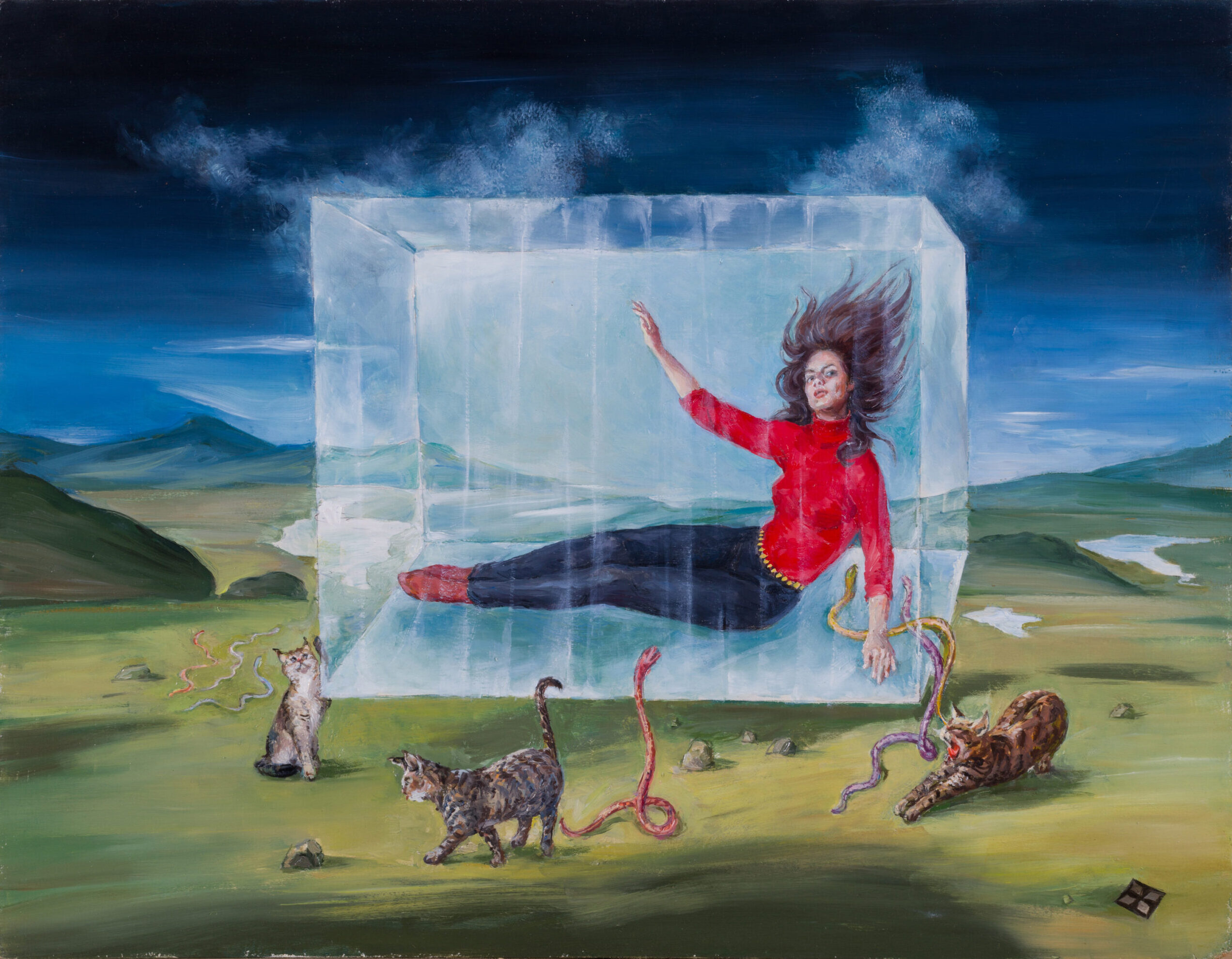
Discover Bridget Tichenor Surrealist Painter, the visionary who traded Manhattan high fashion for Mexican Magic Realism. Explore her life story, Renaissance tempera secrets, and the skyrocketing global demand for her extraordinary artworks.
Table of Contents
Bridget Tichenor Surrealist Painter stands as one of the most mesmerizing yet complex figures in twentieth-century modern art. Her extraordinary body of work bridges European aristocratic elegance, Manhattan high-fashion glamor, and deep Mesoamerican spiritual mysticism.
While mainstream twentieth-century art history frequently focused on male Surrealists, contemporary scholarship and the global art market have turned their focus toward female visionaries. Among these artists, Bridget Tichenor Surrealist Painter occupies a distinctive position defined by technical mastery, esoteric symbolism, and intense personal privacy.
This definitive investigation explores the seven revealed secrets of her life, her technical glazing methods, her masterpieces, and her market recognition.
The Dual Identity of Bridget Tichenor Surrealist Painter: Aristocratic Bloodlines and Esoteric Vision
The life story of Bridget Tichenor Surrealist Painter begins within the highest echelons of European society. Born Bridget Pamela Arkwright Bate on November 22, 1917, in Paris, France, her heritage placed her at the crossroads of international nobility, finance, and culture.
Her mother, Vera Nina Arkwright (later known as Vera Bate Lombardi), was a socialite connected to the Baring banking family and European royal courts. Vera served as Coco Chanel’s liaison to European royalty, shaping international high fashion between the World Wars.
Her father, Frederick Blantford Bate, was an American military officer and NBC war correspondent in Europe. Fred Bate maintained intimate ties with the Duke of Windsor and famously secured the broadcast scoop of the King’s abdication.
Growing up across France, England, and Italy, young Bridget spent her childhood in historic estates. She stayed at the châteaux of the Duke of Westminster, the palaces of the Savoia royal family in Rome, and the villas of the Agnelli family in Florence.
During her Italian residencies, her draftsmanship was mentored by Giorgio de Chirico, the founder of Metaphysical Art. De Chirico’s emphasis on spatial tension, architectural isolation, and hidden reality profoundly shaped her artistic development.
From Chanel Fashion Model to Vogue Editor in Manhattan
By the age of sixteen, Bridget Tichenor Surrealist Painter was living in Paris, modeling for Coco Chanel. Her physical presence and posture helped establish what fashion historians termed the classic “English Look”.
During this era, legendary avant-garde photographer Man Ray captured her image across Paris and New York. She refined her artistic training at the Slade School of Fine Art in London and the École des Beaux-Arts in Paris.
With the outbreak of World War II, her mother arranged her marriage to Hugh Joseph Chisholm in October 1939 to secure her departure from Europe. The arranged marriage was facilitated through society introductions by composer Cole Porter and his wife Linda.
| Life Phase | Primary Locations | Core Influences & Mentors | Key Milestones & Achievements |
|---|---|---|---|
| European Youth | Paris, London, Rome, Florence | Giorgio de Chirico, Coco Chanel, Man Ray | Metaphysical drawing mentorship; Chanel modeling; Slade School education |
| Manhattan Era | New York City, Plaza Hotel | Paul Cadmus, Reginald Marsh, Peggy Guggenheim | Fashion Editor at Vogue; 16th-century Italian tempera & glaze training |
| Mexican Sanctuary | Michoacán (Rancho Contembo), San Miguel | Leonora Carrington, Remedios Varo, Edward James | 30-year reclusive artistic phase; synthesis of Mesoamerican mysticism |
In New York, Bridget resided at the Plaza Hotel, wore haute couture by Hattie Carnegie, and worked as Fashion Editor for Vogue magazine. Photographers Irving Penn and George Platt Lynes frequently selected her as their subject.
Author Anaïs Nin recorded her fascination with Bridget’s striking appearance and reserved demeanor in her personal journals. Yet, despite her position in Manhattan high society, Bridget prioritized her studio practice above social prominence.
The Renaissance Glazing Mastery of Bridget Tichenor Surrealist Painter
In 1943, Bridget Tichenor Surrealist Painter enrolled at the Art Students League of New York. Studying under American realist painter Reginald Marsh, she formed close friendships with artists Paul Cadmus and George Tooker.
Her technical trajectory changed in 1945 when Paul Cadmus taught her 16th-century Italian Renaissance tempera and glazing formulas. This labor-intensive technique became the foundation of her mature painting style.
She prepared smooth, eggshell-finished gesso grounds over rigid Masonite panels. Over a monochromatic chiaroscuro underpainting, she applied dozens of thin, transparent oil glazes.
This glazing process created a jewel-like luminosity and depth. The resulting porcelain-smooth surface allowed her to render fine details with extraordinary precision.
During this period, her personal life shifted. In 1944, she began an affair with photographer Jonathan Tichenor. Following her divorce from Chisholm, she briefly shared an Upper East Side townhouse with art patron Peggy Guggenheim before marrying Tichenor in 1945.
The Sanctuary at Rancho Contembo: Mexican Mysticism and Reclusive Genius
In 1947, Bridget visited Mexico at the invitation of her cousin, the British collector Edward James. James had begun constructing his Surrealist garden, Las Pozas, in Xilitla.
Enchanted by Mexico’s landscape, ancient Mesoamerican heritage, and spiritual openness, Bridget decided to transform her life. In 1953, she divorced Jonathan Tichenor, relinquished her Manhattan career, and moved permanently to Mexico.
In 1953, she purchased Rancho Contembo, a remote property near Ario de Rosales in Michoacán. There, she constructed a two-story Tuscan-style villa using traditional local brick and adobe.
At Rancho Contembo, Bridget Tichenor Surrealist Painter lived and worked reclusively from 1958 until 1978. She built an extraordinary personal menagerie that included mastiffs, terriers, sheep, goats, monkeys, parrots, iguanas, and horses.
Her domestic animals served as living models for her paintings. The facial structures of her mystical creatures were based directly on her pets and farm animals.
She integrated these features with local Purépecha folklore, Mesoamerican mythic cycles, alchemy, and esoteric philosophy. Through this synthesis, she created a distinct visual language within Magic Realism.
| Element | Artistic Function & Esoteric Symbolism |
|---|---|
| Masks & Headpieces | Symbolize hidden identities, spiritual protection, and divine authority |
| Eggshells & Spheres | Represent cosmic creation, rebirth, alchemical transmutation, and fragility |
| Animal-Human Hybrids | Reflect ancestral spirits, nahualism, and unity across living species |
| Desert Landscapes | Evoke desolate, timeless planes suitable for internal spiritual transformation |
In Mexico, she joined an exceptional circle of women artists, including Leonora Carrington, Remedios Varo, and Alice Rahon, along with artist Pedro Friedeberg. In 1958, she participated in the First Salon of Women’s Art at Galerías Excelsior alongside her peers.
While sharing thematic interests in alchemy and mythology with Carrington and Varo, Bridget maintained a separate artistic identity. Her focus remained centered on precise execution, central figure symmetry, and quiet spiritual depth.
Masterpiece Analysis: The Visionary Works of Bridget Tichenor Surrealist Painter
The works produced by Bridget Tichenor Surrealist Painter during her Mexican years showcase her technical precision and complex iconography. The following pieces illustrate her artistic contribution.
The Dream of the Chrysalis
The Dream of the Chrysalis is a representative example of Magic Realism. The oil painting depicts a recumbent figure draped in an ornate red shroud resting upon a green plinth within a desolate, mountainous landscape.
Above the sleeping figure, three ethereal, comet-like heads with trailing white veils descend from a dark sky. Broken eggshells and a large sea snail shell lie scattered in the foreground, serving as symbols of spiritual birth and subconscious discovery.
Her application of translucent glazes gives the canvas a quiet luminosity. The painting exemplifies her interest in spiritual metamorphosis.
Artwork details for The Dream of the Chrysalis can be reviewed via the March 2026 Major Fine Art Sale at Aurora & Athena.
Domadora de quimeras (Tamer of Chimeras)
Created during her mature period in Michoacán, Domadora de quimeras portrays a serene female figure guiding fantastical hybrid beasts. The composition showcases her ability to blend animal anatomical features with spiritual forms.
The painting carries distinguished provenance, having belonged to Mexican cinema icon María Félix. Its sale at Christie’s Fine Art Auctions established Bridget’s standing among Latin American Surrealist masters.
Líderes (Leaders) and Los encarcelados (The Imprisoned)
In Líderes, Bridget presents a critique of earthly authority. The painting depicts a solemn procession of masked figures whose features combine avian, mammalian, and human elements. The work contrasts political power with inner spiritual truth.
Los encarcelados utilizes a vertical sculptural format. The artwork consists of four stacked wooden cages containing painted heads on Masonite, topped by a stone pyramid. The piece explores themes of psychological restriction and spiritual transcendence.
| Title | Year / Era | Medium & Dimensions | Key Symbols & Themes | Market & Museum History |
|---|---|---|---|---|
| The Dream of the Chrysalis | Circa 1960s | Oil on canvas 30 × 40.5 cm | Red shroud, comets, eggshells, sea snail | Offered in March 2026 at Aurora & Athena Fine Art |
| Domadora de quimeras | Circa 1950s–60s | Oil on canvas 50 × 75 cm | Hybrid chimeras, female tamer, esoteric control | Ex-collection María Félix; major landmark sale at Christie’s New York |
| Líderes | Circa 1960s | Oil on Masonite | Anthropomorphic masks, critique of power | Highlighted in LACMA’s landmark In Wonderland museum exhibition |
| Los encarcelados | Circa 1960s | Stacked wooden cages & Masonite | Wooden cages, enclosed heads, pyramid crest | Exhibited at Resnick Pavilion, LACMA; landmark Surrealist sculpture |
| ¿Será Cierto? | 1964–1965 | Oil on panel | Ovoid heads (“The Eggheads”), questioning illusion | Featured on Antiques Roadshow; early Mexican private collection |
Art Market Evaluation: Auction Growth and Institutional Recognition
For decades, the art of Bridget Tichenor Surrealist Painter remained known primarily to discerning private collectors and fellow artists. Her reclusive lifestyle at Rancho Contembo, combined with her disinterest in self-promotion, contributed to her absence from early twentieth-century art surveys.
However, over the past two decades, institutions and the global art market have undertaken a major reassessment of her output.
Exhibitions have played a central role in establishing her legacy. Her work was showcased in Women: Twentieth Century Artists in Mexico at the Museo de Arte Contemporáneo de México (MARCO) in 2008.
In 2012, she was featured prominently in In Wonderland: The Surrealist Adventures of Women Artists in the United States and Mexico, organized by the Los Angeles County Museum of Art (LACMA) and the Museo de Arte Moderno in Mexico City.
Later that year, the Museo de la Ciudad de México mounted a comprehensive retrospective featuring over one hundred paintings. Curated by Cristina Faesler, the exhibition confirmed her standing within Latin American art history.
In the international auction market, paintings by Bridget Tichenor have experienced steady price appreciation. Works offered through premier houses such as Sotheby’s Auction House and Christie’s routinely exceed initial estimates.
Collectors place high value on her small-to-medium easel paintings on Masonite and canvas. Collectors seek out these works for their technique, condition, and provenance.
| Auction House / Venue | Work / Subject | Estimated / Realized Value | Market Significance |
|---|---|---|---|
| Christie’s New York | Domadora de quimeras | High estimate realized | Set early international market benchmark for her major Mexican oils |
| Sotheby’s Modern Day Auction | Guía II (1983) | $40,000 – $60,000 USD | Demonstrated sustained demand for late-period works |
| Sotheby’s Modern Fine Art | Sin título (c. 1975) | $30,000 – $50,000 USD | Confirmed value appreciation for intimate canvas compositions |
| Christie’s Fine Art | Untitled (Masonite) | £80,000 – £120,000 GBP | Illustrated strong European market demand |
| Aurora & Athena Auctions | The Dream of the Chrysalis | Highlighted March 2026 Lot | Showcased her work within curated Surrealist auctions |
The Lasting Legacy of Bridget Tichenor Surrealist Painter
The life of Bridget Tichenor Surrealist Painter stands as a compelling narrative of self-determination and artistic devotion. She walked away from European aristocracy and Manhattan fashion prestige to pursue an independent artistic vision in rural Mexico.
In doing so, she built a body of work that synthesizes classical Renaissance technique with Mesoamerican spiritual symbolism.
Her paintings invite viewers into a quiet world of ancient wisdom, mythic metamorphosis, and dream imagery. As museums and private collectors continue to reexamine female Surrealists, Bridget Tichenor’s legacy remains secure.
Her position as a master of Magic Realism is established across scholarship and the global art market. She remains a pivotal figure for collectors seeking original mid-century art.
For further details regarding available original works and upcoming sales, explore the Bridget Tichenor Artist Profile at Aurora & Athena.
Available Now
Upcoming auction lots
Bridget Tichenor (1917-1990)
Bridget Tichenor (1917-1990)
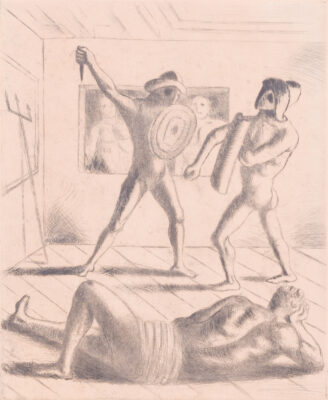
After Giorgio de Chirico (1888-1978)
Artists in this article

Considering Selling a Piece From Your Collection?
Aurora & Athena's specialists provide free valuations and can guide you through consignment to auction or private sale.
Get a Free Valuation