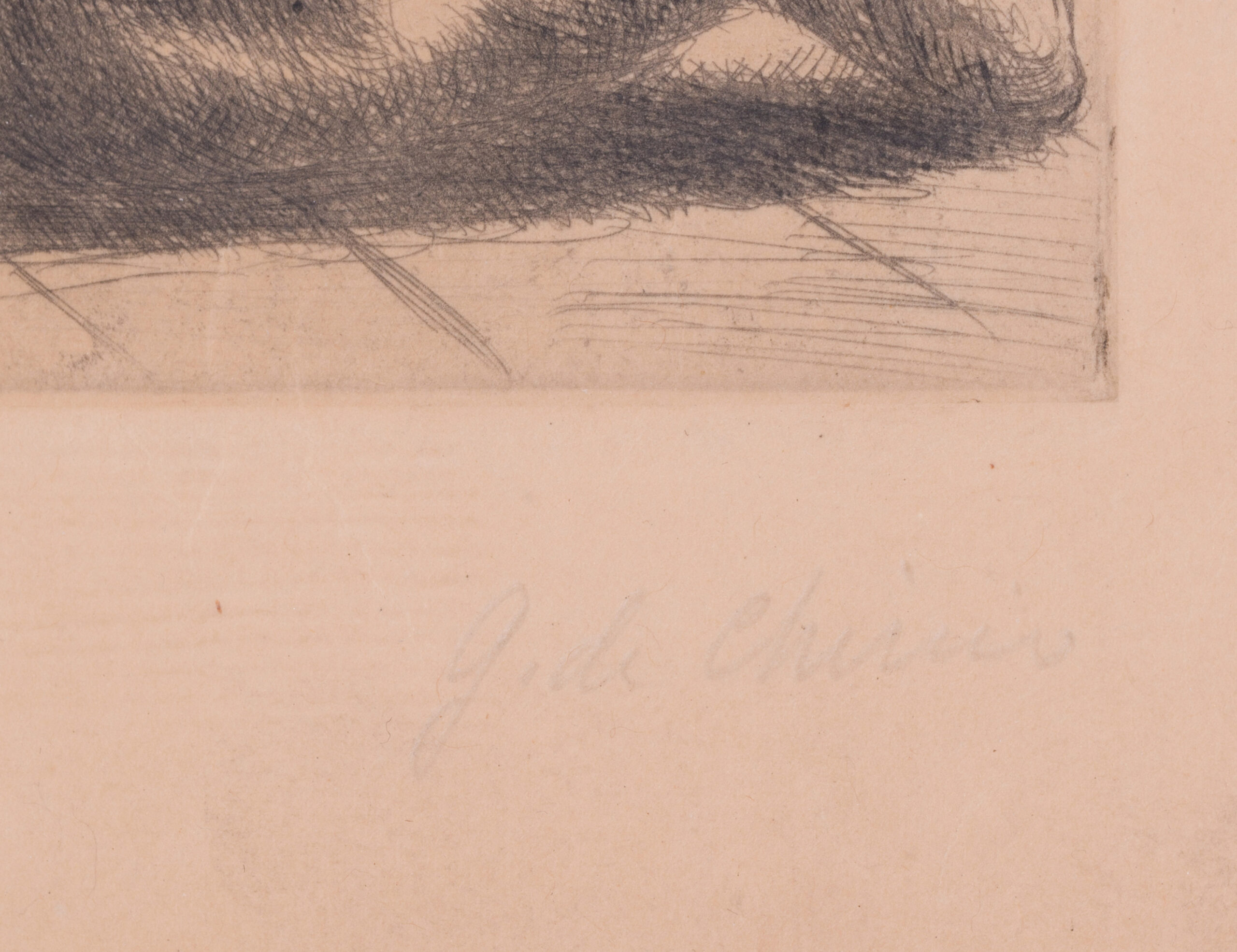
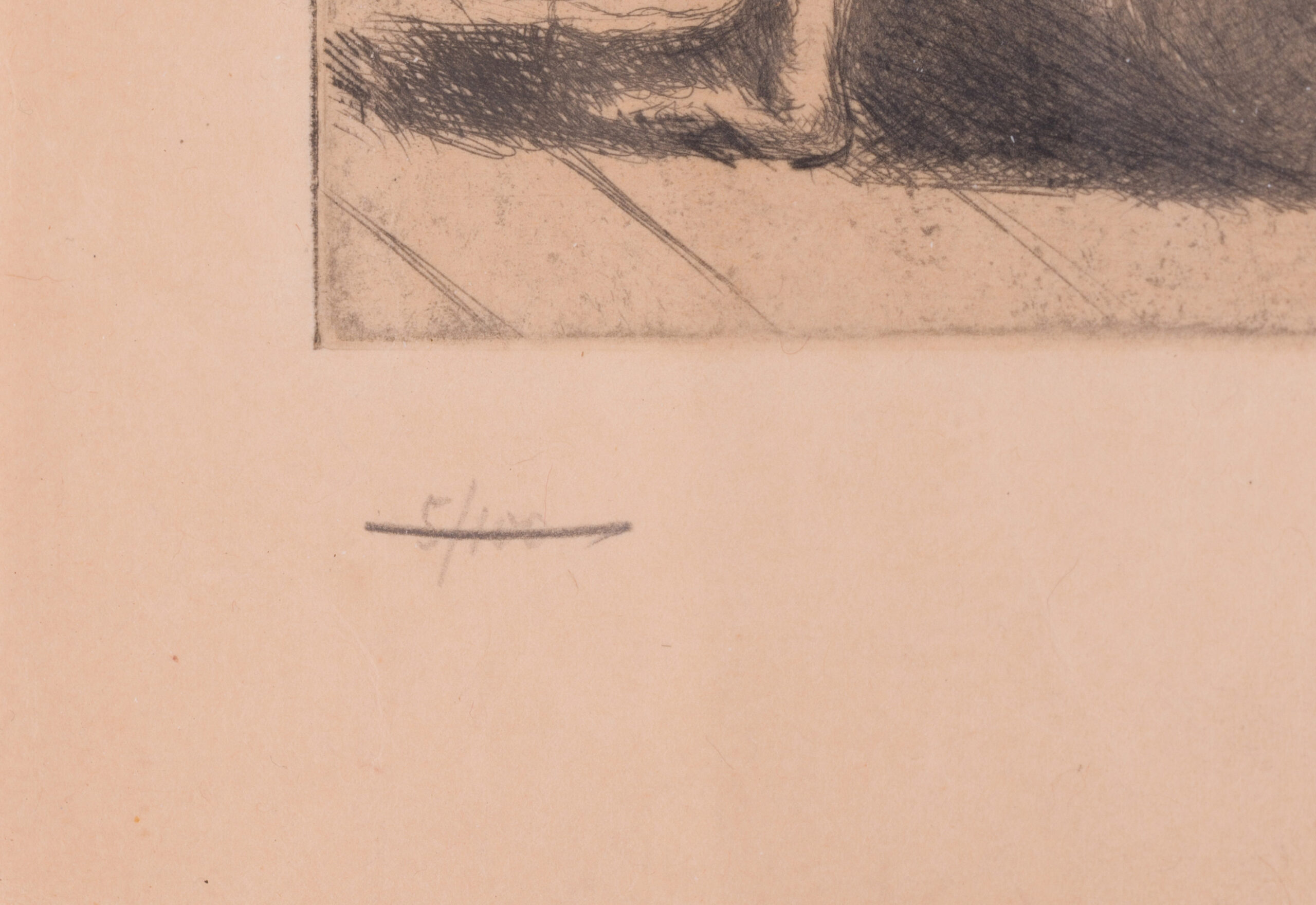
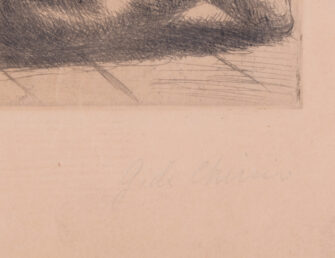
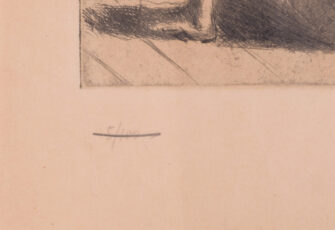
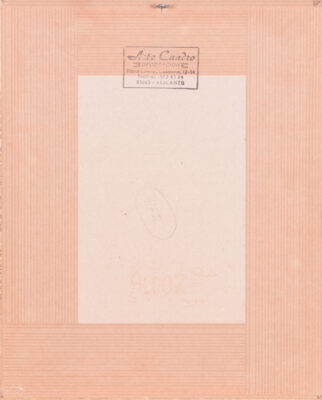
Bears a pencil inscription ‘G. de Chirico’ at the lower right and a further pencil inscription at the lower left. The inscription has not been verified as the artist’s own signature: this is a reproduction after de Chirico, and the inscription is not offered as, and should not be read as, a signature by Giorgio de Chirico. Framer’s stamp ‘Arte Cuadro, Alicante’ on the reverse.
Sizes:
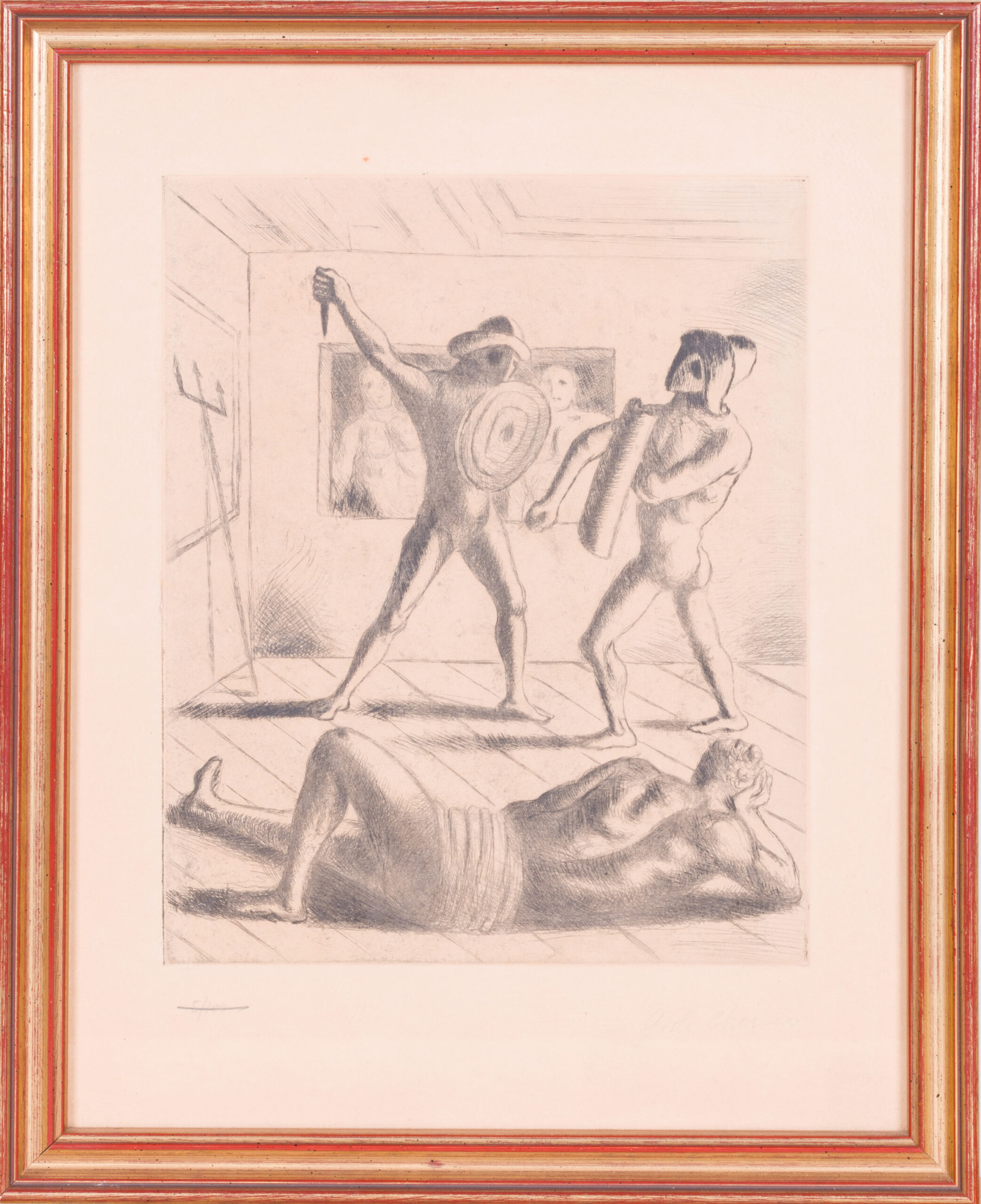
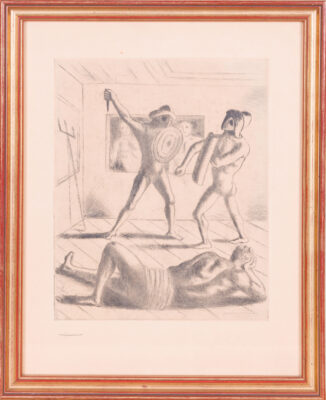
Frame: 27 × 21 cm | 10.6 × 8.3 in
Artwork: 24 × 18 cm | 9.4 × 7.1 in
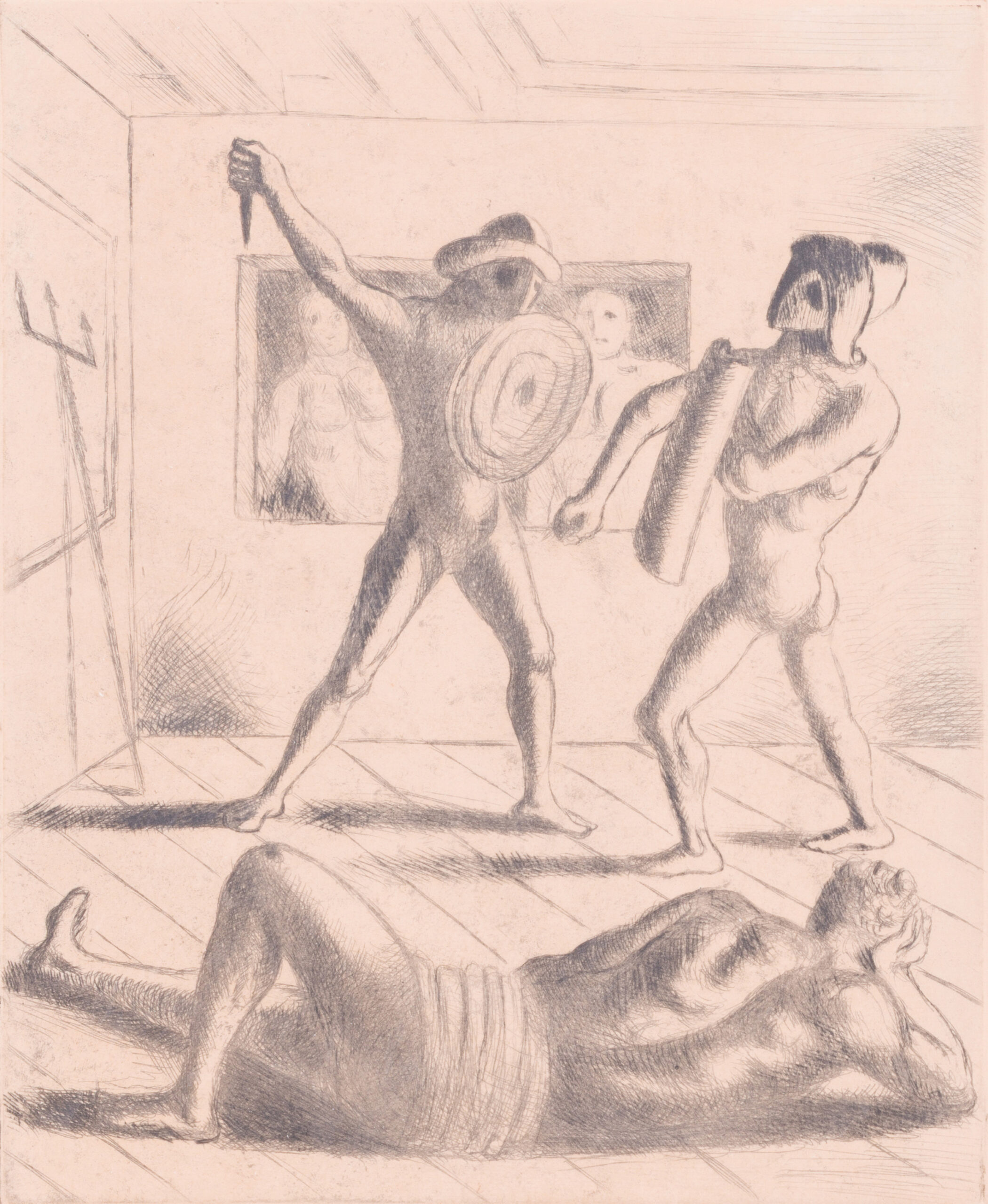
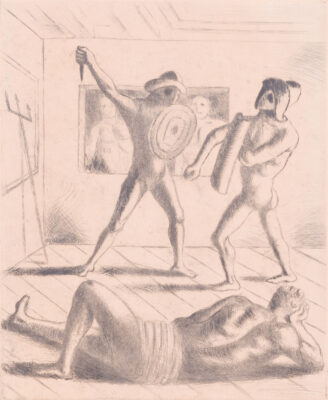
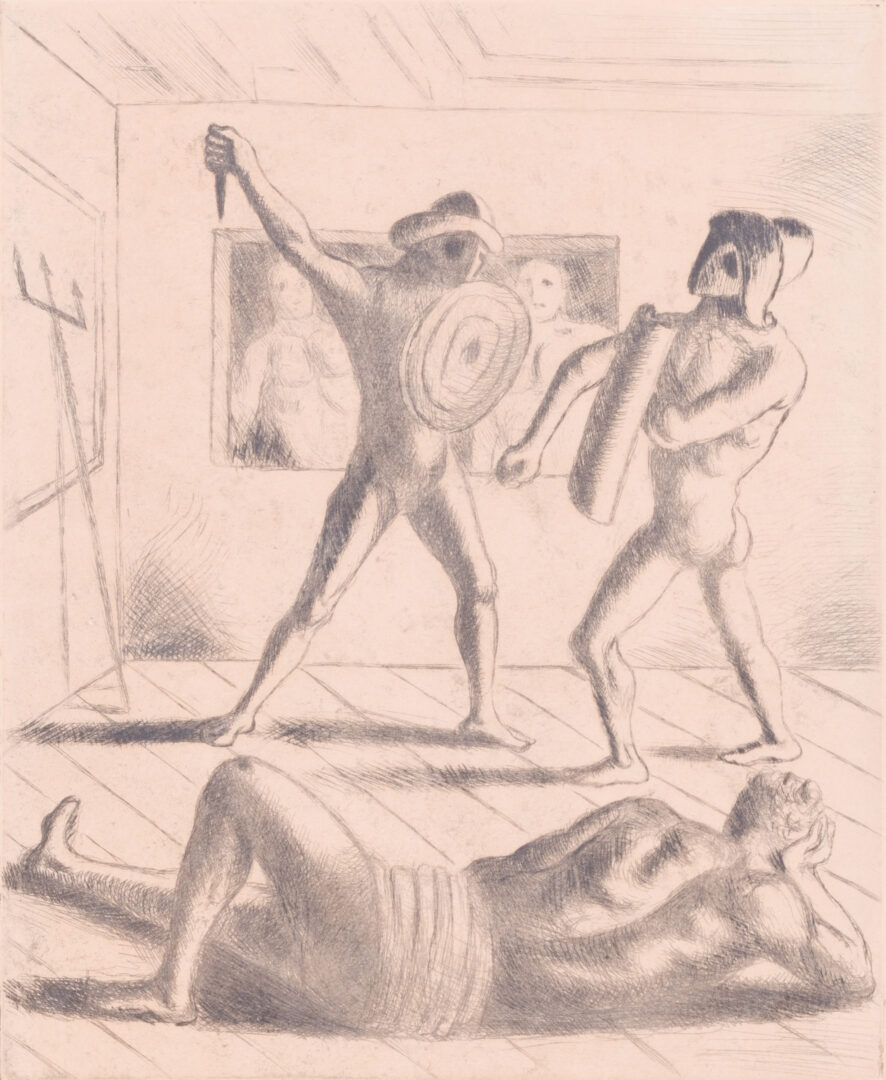
Three gladiators fight in a bare, box-like room while a fourth lies fallen in the foreground; through an opening at the back, other figures look on. The composition, the deliberately archaic anatomy and the theatrical, airless setting all belong to the gladiator cycle that Giorgio de Chirico painted and drew between 1927 and the mid-1930s for the collector Léonce Rosenberg and for his own increasingly classical programme.
The print is offered after Giorgio de Chirico’s etching ‘Combattimento di Gladiatori,’ one of the plates he made for Jean Cocteau’s Le Mystère Laïc (Paris, 1928), reproducing that composition rather than being from the artist’s own hand. It bears a pencil inscription ‘G. de Chirico’ at the lower right and a further pencil inscription at the lower left, and on the reverse the stamp of a framer in Alicante. The inscription has not been verified as de Chirico’s own signature and is not offered as one: the work is catalogued as after de Chirico, and the inscription is recorded only as a mark found on the sheet.
Framed under glass.