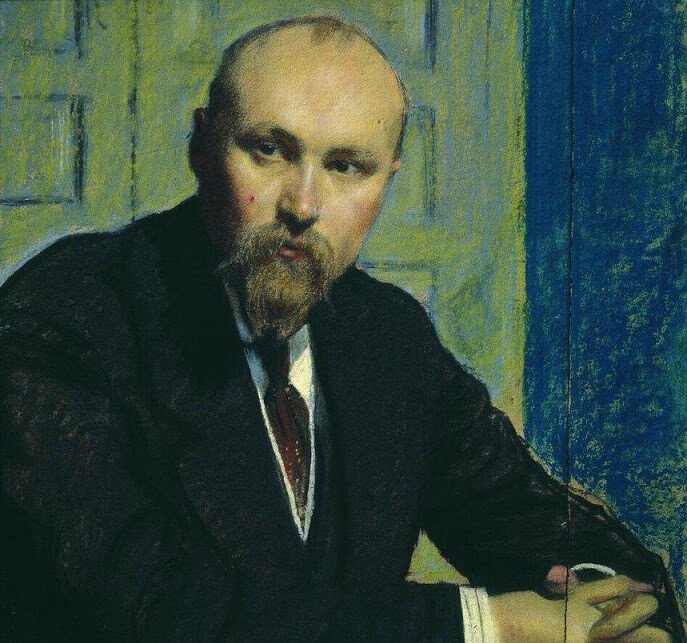
Nicholas Roerich Artist: Mastering Color and Myth in Art
Explore the profound impact of Nicholas Roerich’s artistry and innovative spirit, shaping culture and spirituality. Discover his legacy in our article.
Read more
One short e-mail when a new work arrives, a work comes back on sale or a result comes in. Unsubscribe any time. Create an account to follow with one click everywhere.
See it on your real wall in AR
Scan to open on your phone, then tap “View in AR”.
Be the first to know about new works by Nicholas Roerich.
Already have an account? Sign in and you’ll come straight back to this lot.
Create an account to place a pre-auction bid. We’ll email you a 6-digit code to confirm your address.
Confirm your bid of €10,000.
If you win at €10,000 you will pay ≈ €12,500 incl. 25% buyer's premium.
Withdraw your maximum bid of €0 on Lot 4? This cannot be undone.
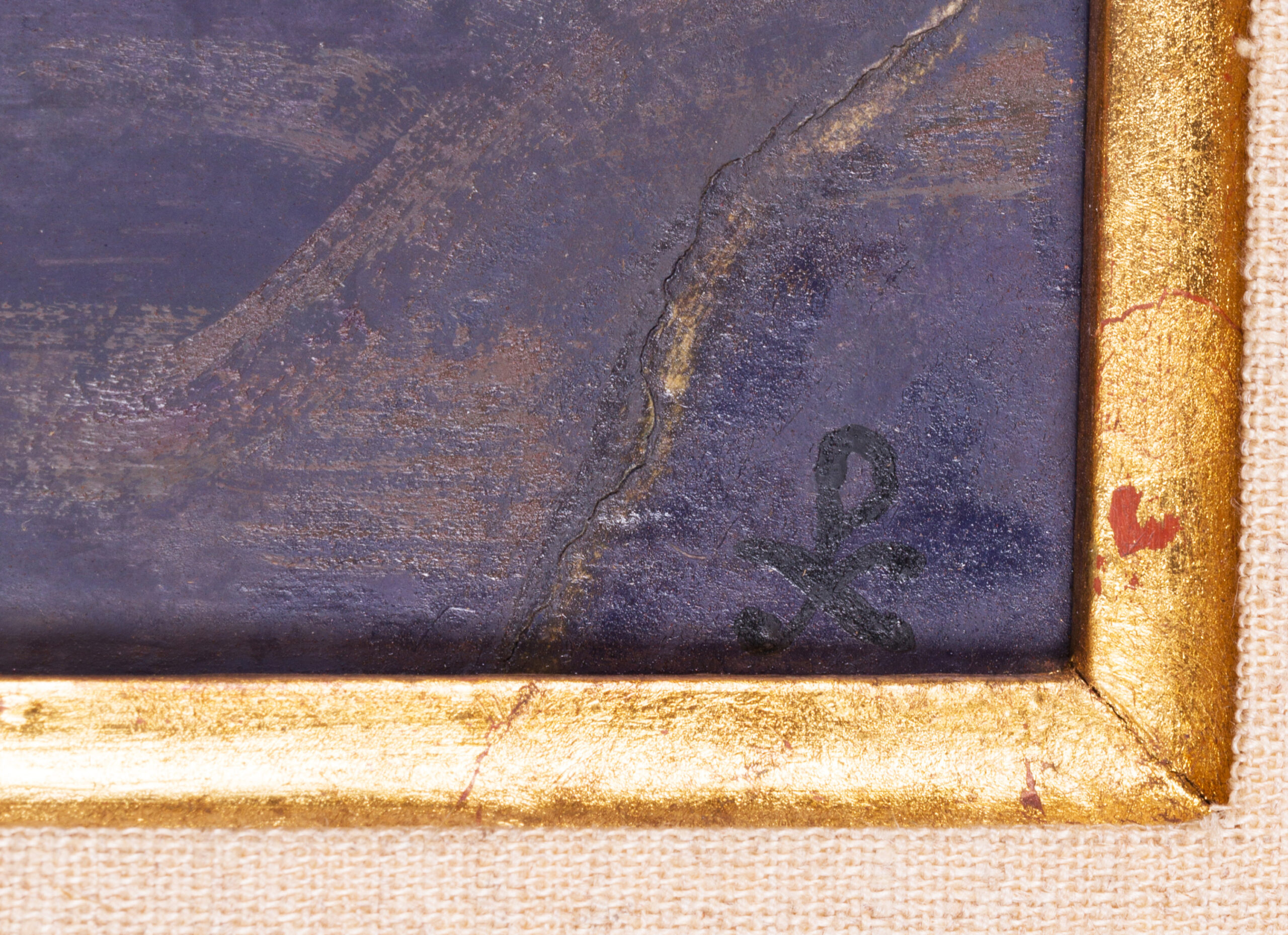
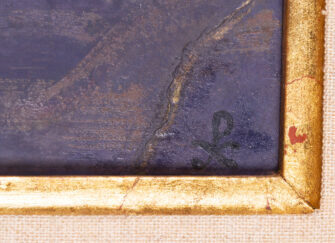
Signed with the artist’s monogram (lower right).
Sizes:
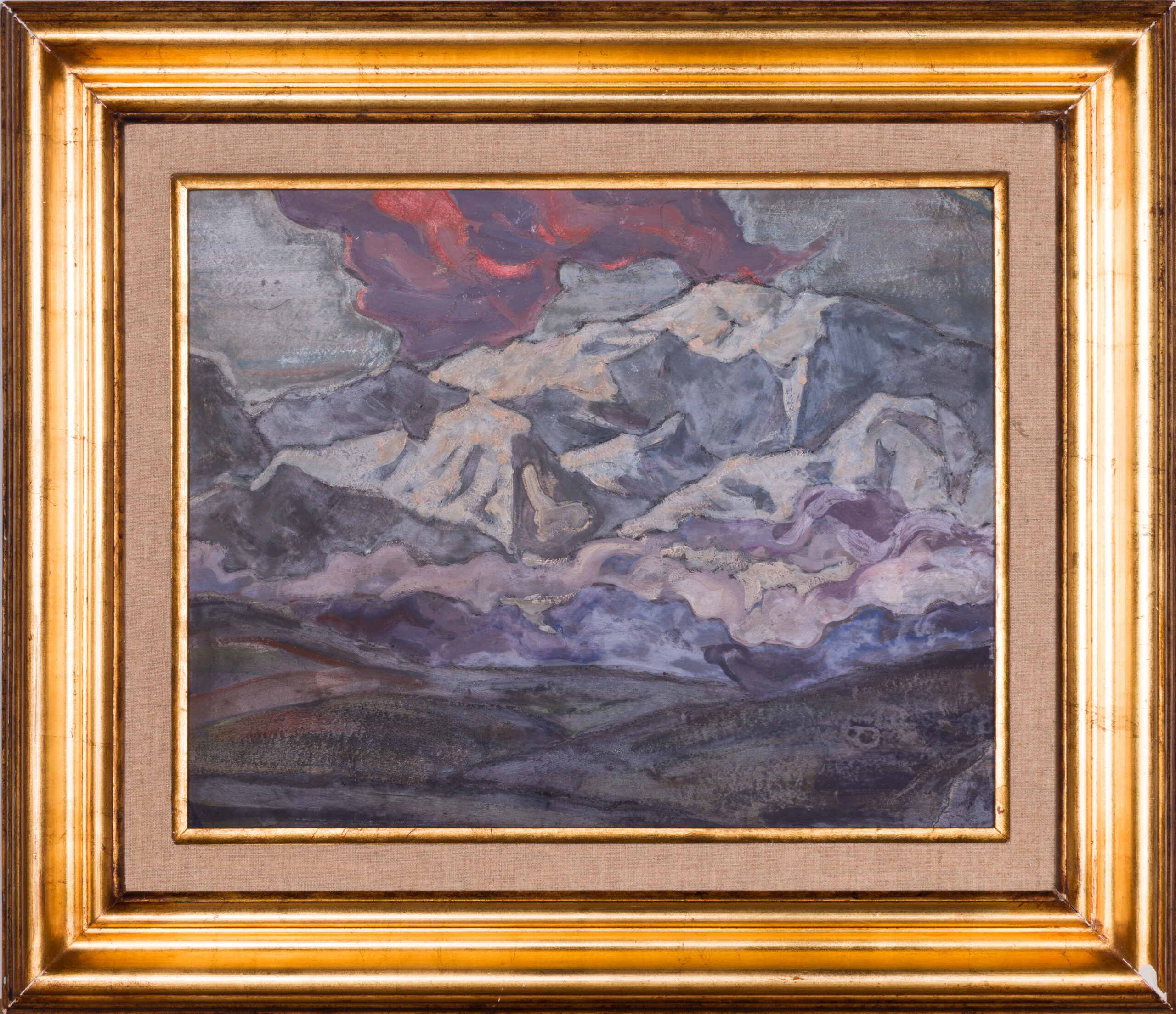
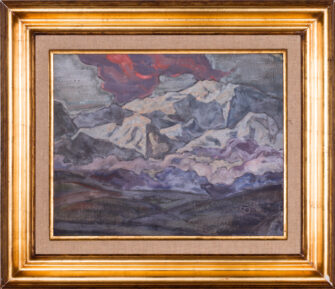
Frame: 50 x 57.5
Artwork: 33 × 40 cm | 13 × 15.7 in
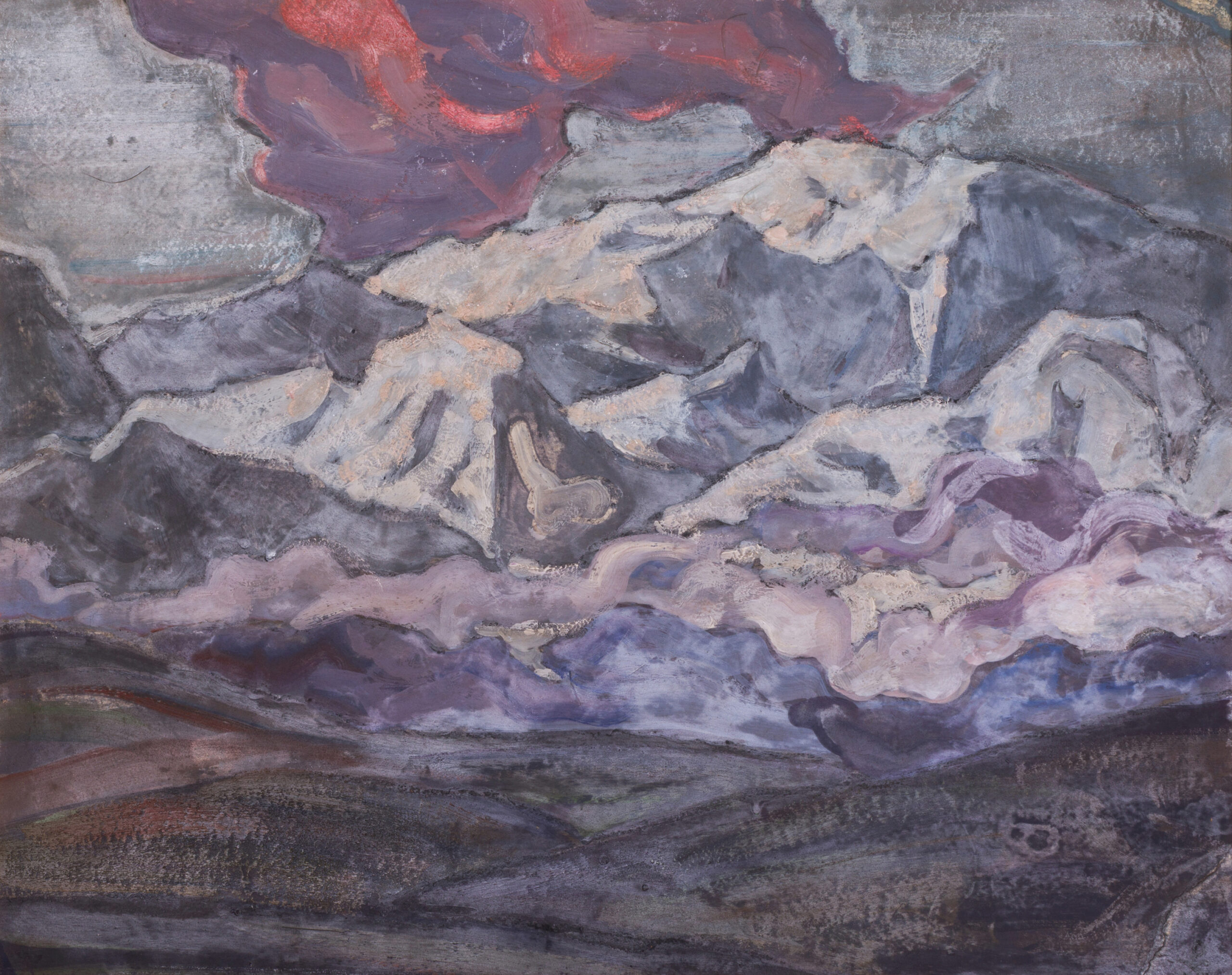
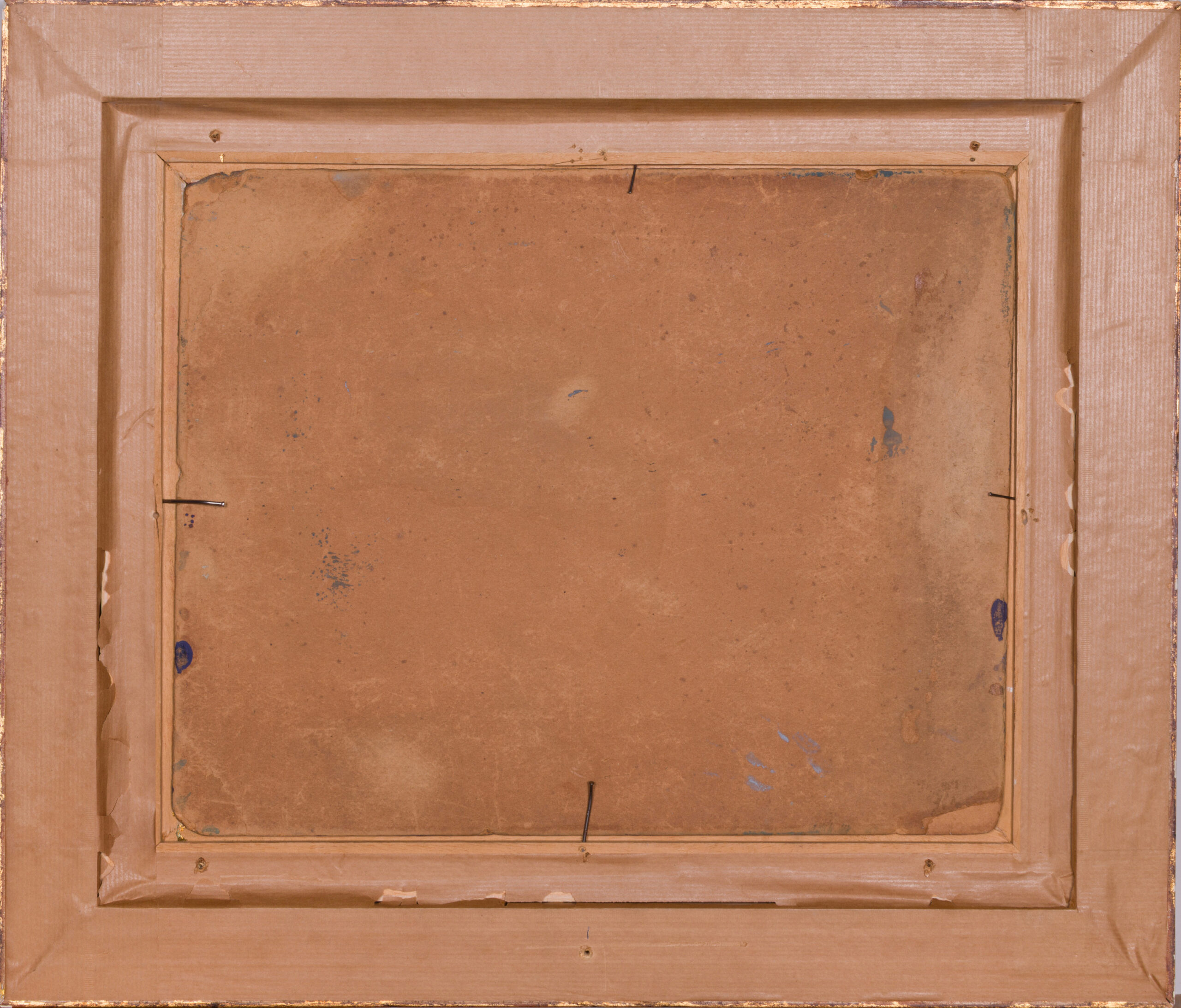
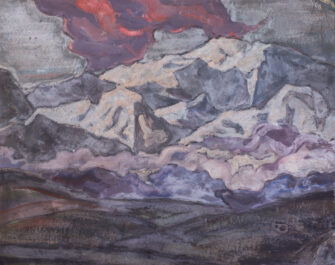
Snow peaks lit from below by crimson cloud, a violet ridge and the deep folds of a Himalayan valley: this small tempera belongs to the great series of mountain studies Nicholas Roerich painted after settling in the Kullu valley in 1928. Working on cardboard with the fast-drying, matte tempera he preferred, Roerich fixed the changing light of the high ranges in hundreds of such panels, which he regarded as complete works rather than sketches.
The handling is characteristic — the mountain forms built from flat, interlocking planes, the snow left as bare, chalky highlights, the sky an almost abstract band of colour — and so is the monogram in the lower right corner. Roerich’s Himalayan pictures were his personal answer to the questions that occupied him as painter, explorer and thinker: the mountains as a place where the spiritual becomes visible.
The provenance is of note. The work was formerly in the collection of Louis L. Horch, the New York financier who was Roerich’s principal patron and the builder of the Roerich Museum on Riverside Drive; it later passed through a private family collection in New York and a German private collection before reaching the present owner.
Formerly in the collection of Louis L. Horch, New York.
Private family collection, New York.
Private collection, Germany, since the 1990s.
Acquired from the above by the present owner in the 2010s.
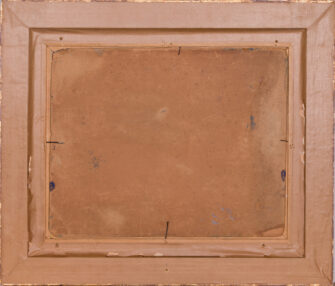
Tempera on cardboard, framed. The matte, granular tempera surface typical of Roerich is intact; slight abrasion in the upper left of the sky and light wear at the corners. The reverse shows old pinholes and small losses along the edges of the board. Please contact us to request a detailed Condition Report.
We coordinate packing and shipping on your behalf, with insurance available if you’d like it — or you’re welcome to arrange your own. Please see our Shipping Information page for full details before completing your purchase.
Aurora & Athena provides a Five-Year Authenticity Guarantee for qualifying catalogue attributions, in accordance with our Conditions of Sale.
Buyers should review the catalogue carefully and raise any questions before bidding; additional information is not ordinarily provided after the auction.
Every piece is backed by a written guarantee and a Certificate of Authenticity.
We coordinate professional, insured shipping worldwide, for auction and gallery purchases alike.
Every lot is reviewed and vetted by our specialists before it reaches a sale.
Pay by card for purchases up to €10,000, or by secure bank transfer for larger amounts.
Have a question about this work?
Fill out the form below and our team will get back to you shortly.

Nicholas Roerich was a Russian painter, writer, philosopher, and mystic, born in 1874 in Saint Petersburg. Celebrated for his visionary landscapes and symbolic works, Roerich combined artistic mastery with spiritual exploration, creating a unique body of work inspired by Russian folklore, Himalayan vistas, and Eastern philosophy. Trained at the Imperial Academy of Arts, he was also active in the cultural preservation movement and contributed significantly to the Roerich Pact for the protection of cultural heritage.
During the 1920s and 1930s, Roerich led scientific expeditions through Central Asia and settled in the Kullu Valley, India, where his art entered its most transcendent phase. His Himalayan paintings — glowing with mysticism and peace — became visual prayers for humanity. A figure revered both in Russia and abroad, Roerich left behind more than 7,000 works and an enduring legacy as a bridge between East and West, art and spirit.
Explore the profound impact of Nicholas Roerich’s artistry and innovative spirit, shaping culture and spirituality. Discover his legacy in our article.

Meet 3 timeless Russian painters – Roerich, Korovin, and Gorbatov – whose art defined an era and continues to attract collectors around the world.
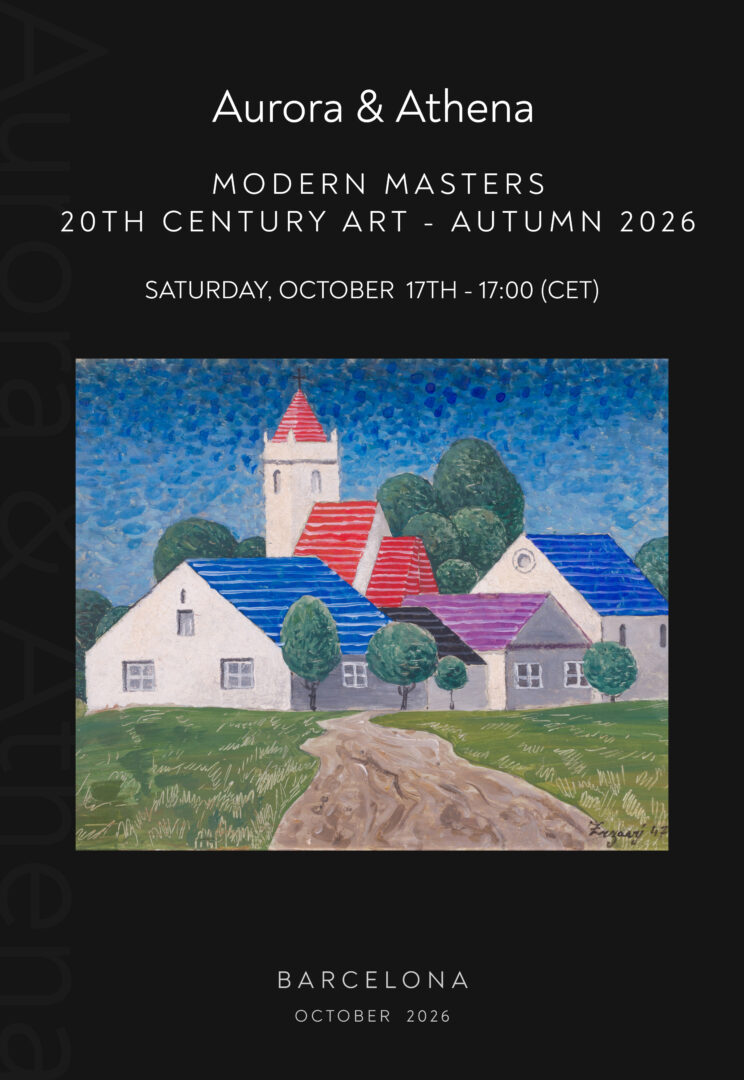
Highlights of the Aurora & Athena autumn sale on 17 October 2026: Bridget Tichenor, Nicholas Roerich, Konstantin Korovin, Gerard Sekoto, Jan Zrzavý, Pan Yuliang, a Miró lithograph and the painters of the École de Paris.
“The description and photos of the artwork were accurate, and I felt confident in my purchase from the beginning. The team was quick to answer my questions and kept me well informed throughout the process.”
“I had a really good experience after the sale — it was smooth, asked a question and got an answer right away. Their customer service is excellent and very fast. Definitely recommend them.”