
Lesser Known French Impressionist Painters: 4 Remarkable Finds
Henri Pierre Lejeune, Lucien Mainssieux, Pierre Eugène Duteurtre, and Guy Seradour worked in the French Impressionist tradition and today sell for a fraction of Monet-tier prices. Their biographies, market data, and the available paintings in Aurora & Athena's own collection.
Table of Contents
None of the four lesser known French Impressionist painters in this article are household names. Henri Pierre Lejeune, Lucien Mainssieux, Pierre Eugène Duteurtre and Guy Seradour worked in and around the French Impressionist and Post-Impressionist tradition across the first three quarters of the twentieth century, sold through real galleries and salons in their own lifetimes, and today trade at auction for a fraction of what a Monet or a Renoir commands — Lejeune’s paintings have sold at French auction for as little as €380, Mainssieux’s for as little as €120.
Aurora & Athena currently holds one available painting by each of these four artists. This article covers who they were, what they painted, and where their work sits in today’s market — including the specific pieces in our own collection.
Why Lesser-Known French Impressionists Are Worth Collecting
The core Impressionist movement is generally dated to the 1870s and 1880s — Monet, Renoir, Degas, Pissarro. But the visual language they invented — broken brushwork, natural light, everyday subject matter over historical or mythological scenes — didn’t stop being painted when the original group disbanded. It was carried forward for decades by painters who trained under, exhibited alongside, or simply worked in the tradition of the founders, well into the twentieth century. Lejeune was still painting Paris streetscapes in the 1950s; Mainssieux was showing work as late as 1958; Seradour’s career ran into the 2000s.
That longer tail of the movement is where the real market opportunity sits for collectors. A genuine, gallery-attributed painting by a name Christie’s or Sotheby’s would never headline a sale with can still be had for a few hundred to a few thousand euros — real oil on canvas, real exhibition history, real technique, at a fraction of the entry price a first-tier Impressionist name demands.
Henri Pierre Lejeune: Paris and the World in Oil
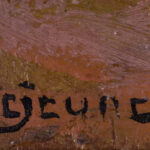
Henri Pierre Lejeune was born in Saint-Ouen, on the northern edge of Paris, on 27 June 1881, and began painting young. He started exhibiting in 1902 and, unusually for a French painter of his generation, spent five years painting his way across North America before returning to France. His submissions to the Salon des Indépendants drew real notice from 1910 onward, and in 1919 the City of Paris itself purchased one of his marine paintings, Côte sauvage à Quiberon, for its own collection — a meaningful mark of institutional recognition for a working painter of his time.
Lejeune organised his own subscription-funded study trips nearly every year, alternating between France and abroad, with the resulting paintings distributed among the private collectors who funded each trip — Italy and Tunisia in 1919 and 1922 among them. The range shows in his subject matter: Paris landmarks, North African light, Mediterranean coastline, all rendered in the loose, light-driven brushwork of the Impressionist tradition he’d absorbed. He died in 1961.
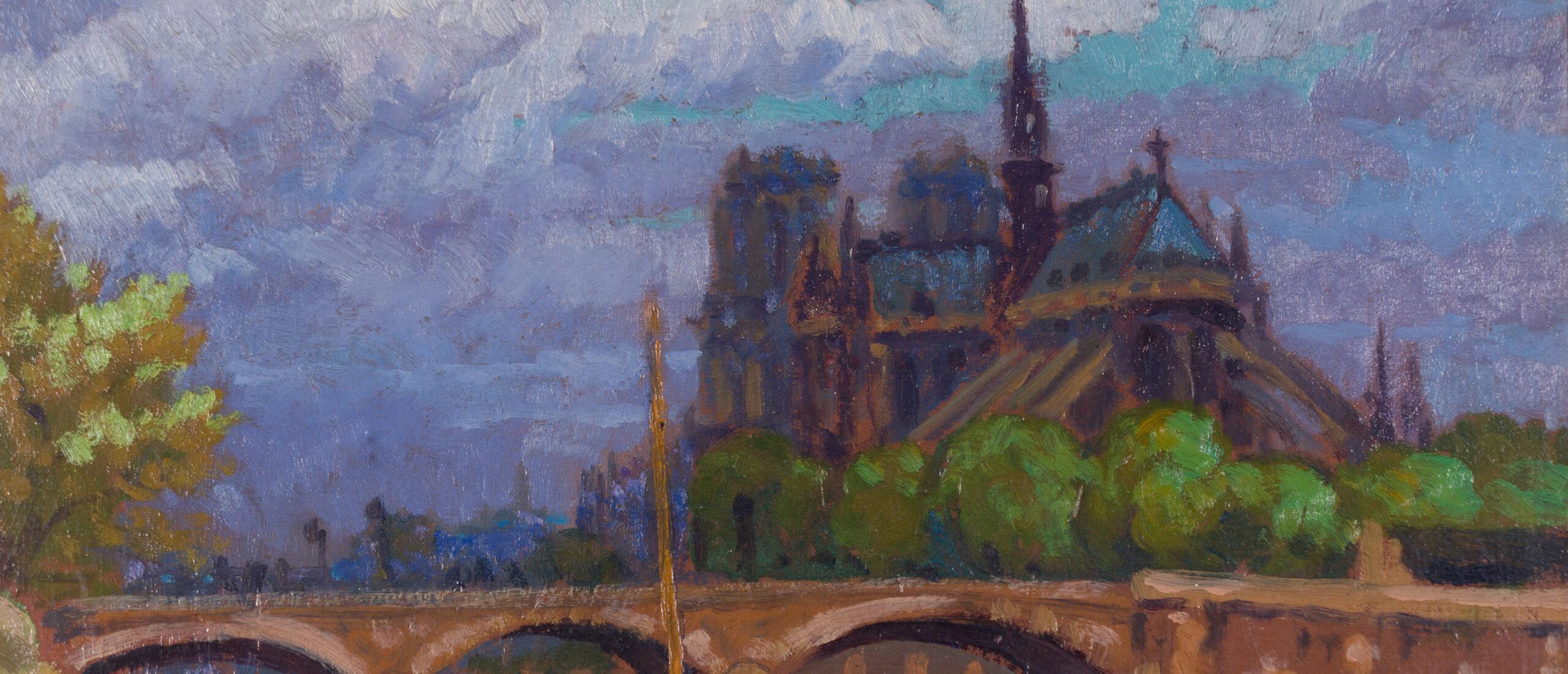
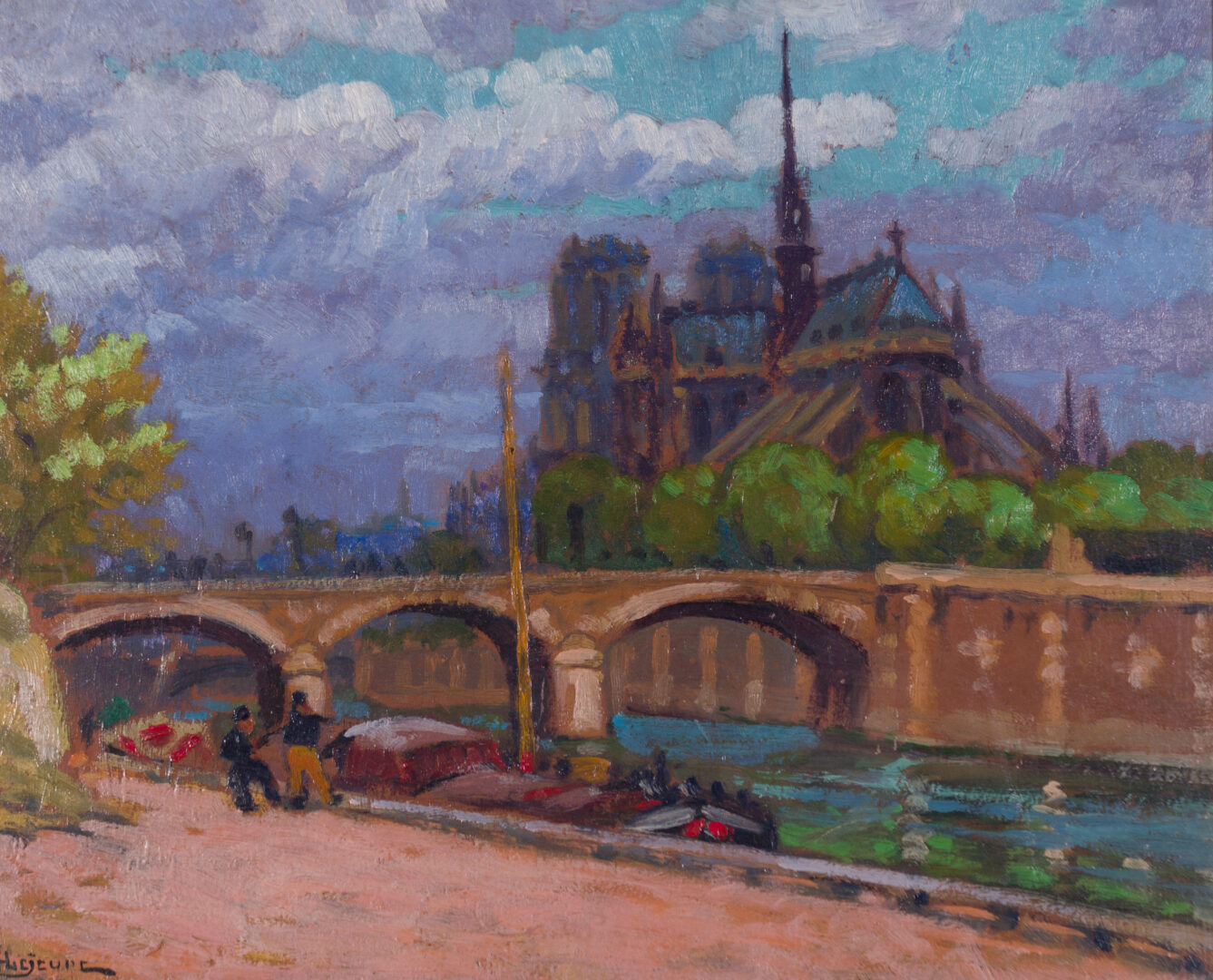
Aurora & Athena’s collection includes Lejeune’s Notre Dame de Paris, a view of the cathedral rendered in exactly the kind of natural, atmospheric light his North American and Mediterranean travels sharpened his eye for.
Lucien Mainssieux: A Painter Who Answered to No Movement
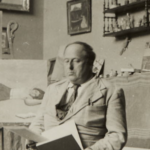
Lucien Mainssieux, born in Voiron on 4 August 1885, had an unlikely start for a painter: orphaned of his mother at nineteen months old, he spent his first twelve years largely bedridden with tuberculosis of the pelvic bones, and limped for the rest of his life. He trained under François-Joseph Girot and Jules Flandrin before arriving in Paris in 1905 — the year of the Fauves’ scandalous debut — to study further under Jean-Paul Laurens. He moved in genuinely avant-garde circles, counting Picasso and Stravinsky among his acquaintances and forming lasting friendships with André Dunoyer de Segonzac and Jacqueline Marval.
What makes Mainssieux distinctive is that he never fully committed to any one of the movements swirling around him in that period. He absorbed influences from each without adopting a single doctrine, staying an independent, if unclassifiable, painter throughout his career — alongside parallel work as a music critic and writer. He travelled constantly, through Italy and especially North Africa, visiting Morocco four times from 1929 onward; his final trip, in 1958, the year of his death, was again to Morocco. On his death he left his entire studio — over 1,000 paintings and 6,000 drawings — to the city of Voiron, which now houses the Musée Mainssieux.
Aurora & Athena holds Mainssieux’s Surroundings of Tipasa, a North African landscape from the region and travel pattern that shaped so much of his output.
Pierre Eugène Duteurtre: From Comic Strips to Canvas
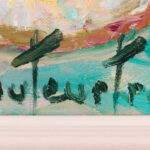
Pierre Eugène Duteurtre’s path to painting is the least conventional of the four. Born in Deuil-la-Barre on 10 July 1911, he spent the first four decades of his working life as a comic-strip artist and illustrator, signing his work “Dut.” From 1934 to 1939 he worked for the Parisian publishing house EPS, and from 1947 he had a long-running collaboration with the scenarist Marijac, co-creating titles including the western Sitting Bull, which ran from 1948 to 1952.
Duteurtre did not turn to painting full-time until 1968 — practically a second career, taken up in his fifties. What he produced in the two decades that followed, until his death in 1989, sits in the Post-Impressionist and figurative tradition: landscapes, genre scenes and figure studies built on decades of a working illustrator’s draughtsmanship. It’s an unusual biography for the category, and part of what makes his paintings worth a second look rather than a footnote.
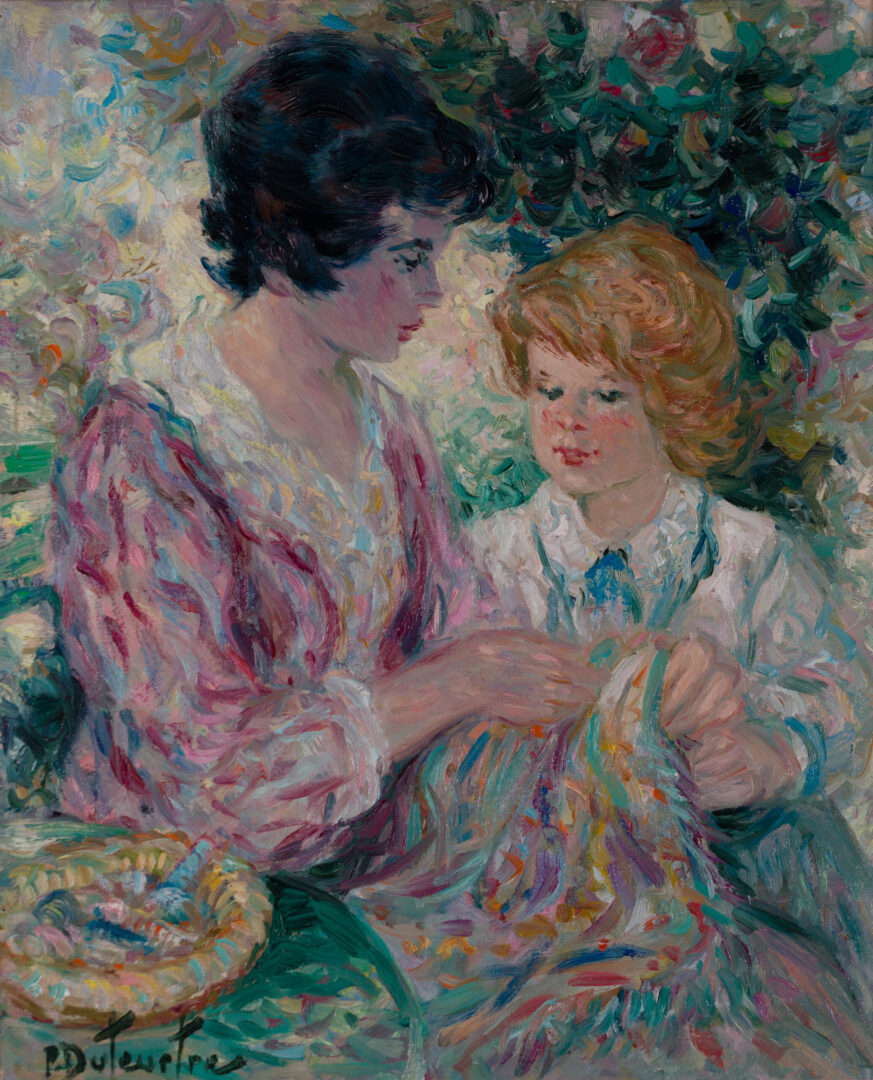
Aurora & Athena’s La Couture is a genre scene from that later painting career — decades of comic-strip figure work behind the brush.
Guy Seradour: The Painter of Light
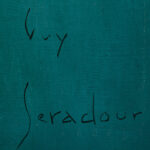
Guy Seradour was born in Étaples on 8 October 1922, the son of a Paris commodities broker, and educated at the Lycée Condorcet before entering the École des Beaux-Arts in 1939 — where he lasted only a single trimester before deciding to work independently instead. His first exhibition came the following year, at the Romanet Gallery in Algiers; Parisian critics took proper notice in 1955, when he showed at the Bernheim-Jeune gallery, a house with its own real history in the Impressionist market.
In 1977 Seradour won the international Gemmail prize in Lourdes, a recognition that cemented his reputation as, in the words used at the time, a “painter of light” — his figures, still lifes and landscapes built around an atmosphere of quietude and quiet mystery rather than documentary detail. France recognised him formally: he was made a Knight of the Legion of Honour and of the Order of Arts and Letters, and a Commander of the Order of Saint-Charles and of Cultural Merit. He died in Neuilly-sur-Seine on 2 November 2007.
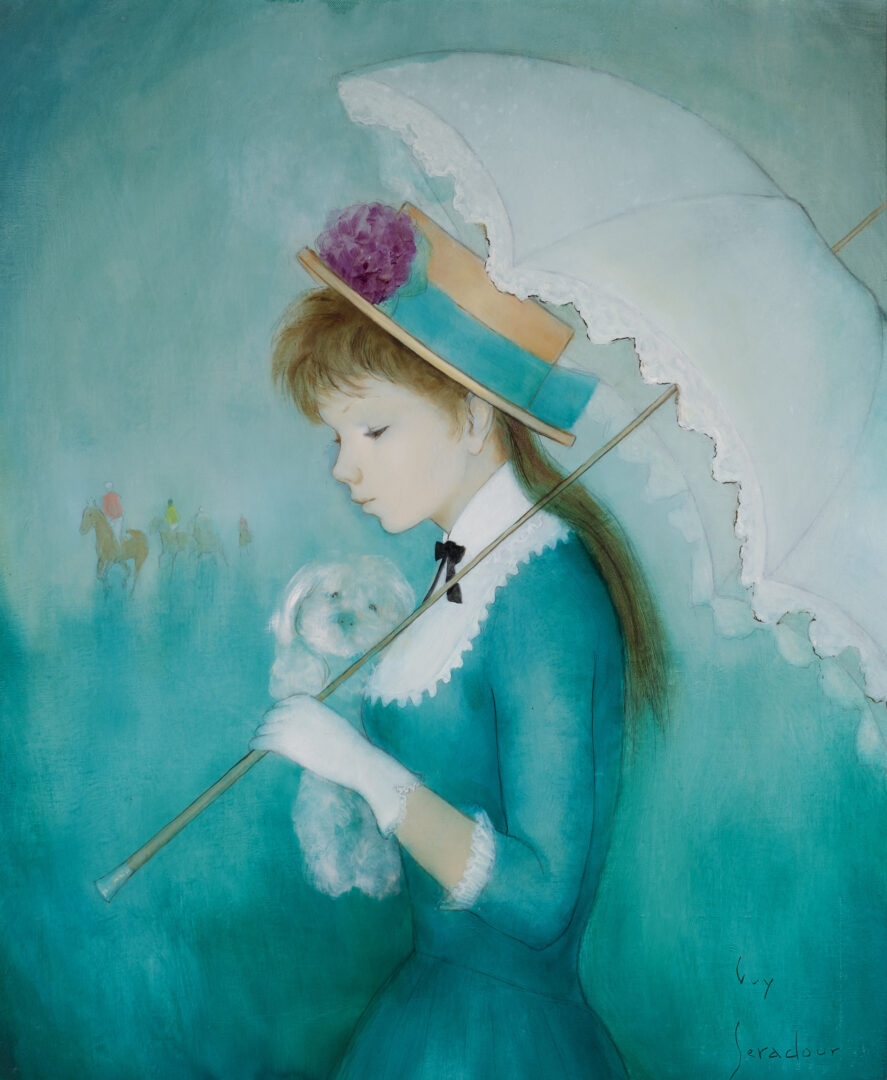
Aurora & Athena’s L’allée des Cavaliers is characteristic of that reputation — a scene built as much from atmosphere and light as from its literal subject.
What Drives Value in This Category
Documented auction results for this tier of painter are modest by design — that’s precisely what makes the category accessible. Lejeune’s paintings have sold at French auction for figures from roughly €380 to €1,900. Mainssieux’s work ranges more widely, from around €120 for a smaller piece up to €6,000 for a strong example, with most falling in the €200–€3,000 band. Neither figure competes with the seven- and eight-figure world of the core Impressionists — that’s the point, not a shortcoming.
Within that accessible range, the same fundamentals that drive any painting’s value still apply: subject matter (a recognisable Paris or North African scene generally outperforms a generic still life), condition, size, and — for painters like these, without a single dominant catalogue raisonné — provenance and exhibition history matter more than usual. A piece with a documented dealer history, like the ones in Aurora & Athena’s own collection, carries more confidence than one bought without any paper trail at all.
If you’re weighing a purchase in this category for the first time, our guide to how bidding works covers the practical side of buying at auction.
Frequently Asked Questions
Are lesser-known French Impressionist painters a good investment?
They offer a genuinely more accessible way to own real oil-on-canvas work in the Impressionist and Post-Impressionist tradition — auction results for painters like Lejeune and Mainssieux typically fall between a few hundred and a few thousand euros, against a seven-figure entry price for the core Impressionist names. As with any collectible, provenance, condition and subject matter matter more than the artist’s name recognition alone.
Who are Henri Pierre Lejeune, Lucien Mainssieux, Pierre Eugène Duteurtre and Guy Seradour?
All four were French painters working in and around the Impressionist and Post-Impressionist tradition across the twentieth century: Lejeune (1881–1961) painted Paris, North America and North Africa; Mainssieux (1885–1958) was an independent painter, critic and writer based in Voiron; Duteurtre (1911–1989) spent decades as a comic-strip artist before turning to painting full-time in 1968; Seradour (1922–2007) was a Paris-exhibited “painter of light” honoured with France’s Legion of Honour.
How much do paintings by these artists sell for at auction?
Documented results for Henri Pierre Lejeune range from roughly €380 to €1,900 at French auction houses. Lucien Mainssieux’s paintings have sold from around €120 for smaller works up to €6,000 for stronger examples, with most in the €200–€3,000 range. Both are modest figures compared to the core Impressionist market, which is exactly what makes this tier accessible to new collectors.
Where can I buy paintings by these artists?
Aurora & Athena currently holds one available painting by each of the four artists covered here — Lejeune’s Notre Dame de Paris, Mainssieux’s Surroundings of Tipasa, Duteurtre’s La Couture, and Seradour’s L’allée des Cavaliers. Beyond that, their work surfaces periodically at French regional auction houses and specialist dealers in twentieth-century French painting.
Available Now
Available at the gallery
Artists in this article
Considering Selling a Piece From Your Collection?
Aurora & Athena's specialists provide free valuations and can guide you through consignment to auction or private sale.
Get a Free Valuation