
Yvonne Canu: The Pointillist Who Painted Paris Long After Seurat
Yvonne Canu carried Neo-Impressionist pointillism into the late 20th century with luminous scenes of Paris and the Mediterranean coast. Here is what's documented about her life, her style, and her standing at auction today.
Table of Contents
Yvonne Canu spent most of the twentieth century doing something that had gone out of fashion decades before she started: painting in pointillism, the discipline of tiny, separated dabs of colour that Georges Seurat and Paul Signac had pioneered in the 1880s. Where her contemporaries moved through Cubism, Surrealism and abstraction, Canu built a five-decade career applying that older technique to a subject she returned to again and again — the bridges, quays and monuments of Paris, along with the light of the Mediterranean coast where she eventually settled.
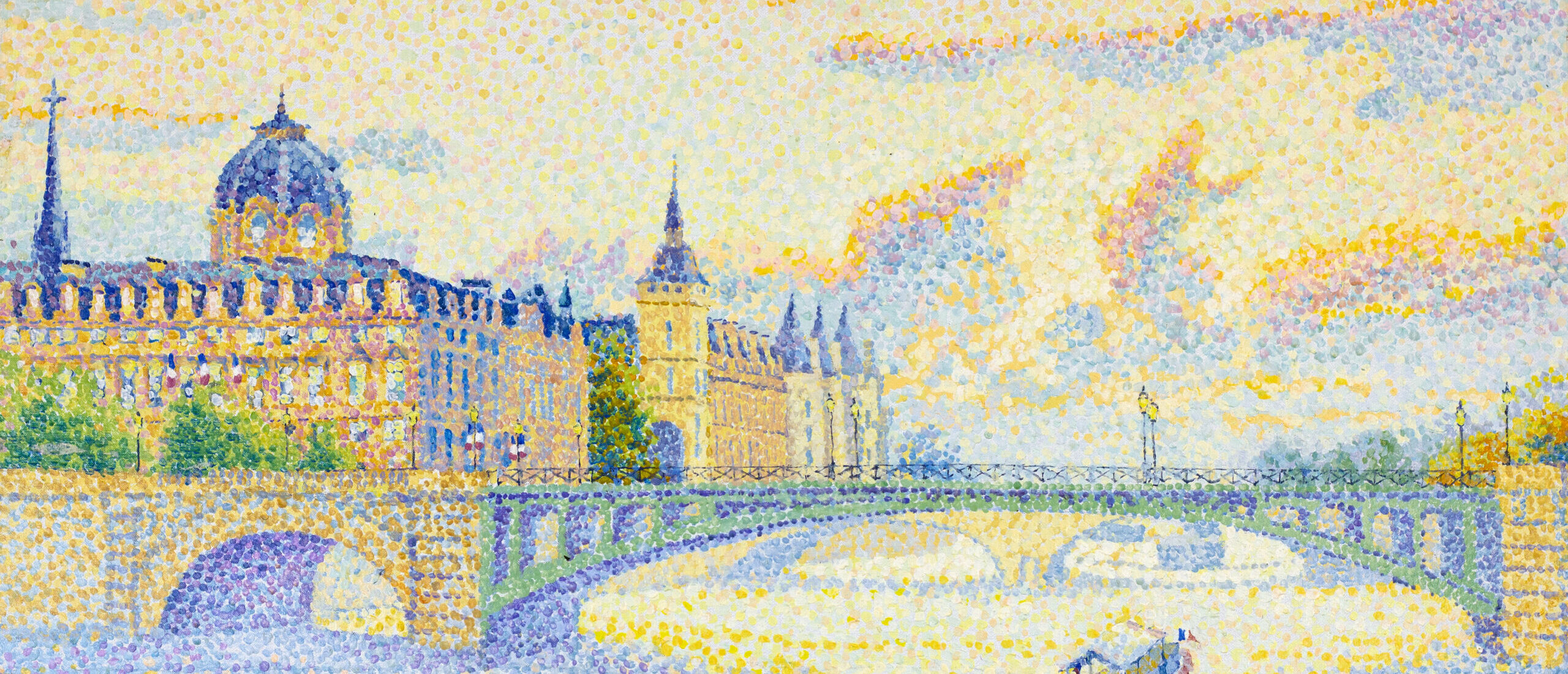
Aurora & Athena has handled Canu’s work at auction, including Paris, La Conciergerie, a Seine-side view of the medieval fortress-turned-courthouse rendered in her characteristic mosaic of colour. This article gathers what is documented about her life, training and artistic development, situates her within the wider tradition of French cityscape painting, and looks at where her work stands in the market today.
Who Was Yvonne Canu? A Painter Born Between Two Coasts
Yvonne Canu was born on 9 November 1921 in Meknes, in the French protectorate of Morocco, to French parents — a childhood spent partly under North African light that later biographers point to as a formative influence on her palette. Documented sources place her death in 2007, though a number of auction-house catalogues instead record 2008; the discrepancy has never been fully resolved in the public record, which is itself telling of how modest the paper trail is for an artist who worked steadily but never courted the spotlight, according to en.wikipedia.org.
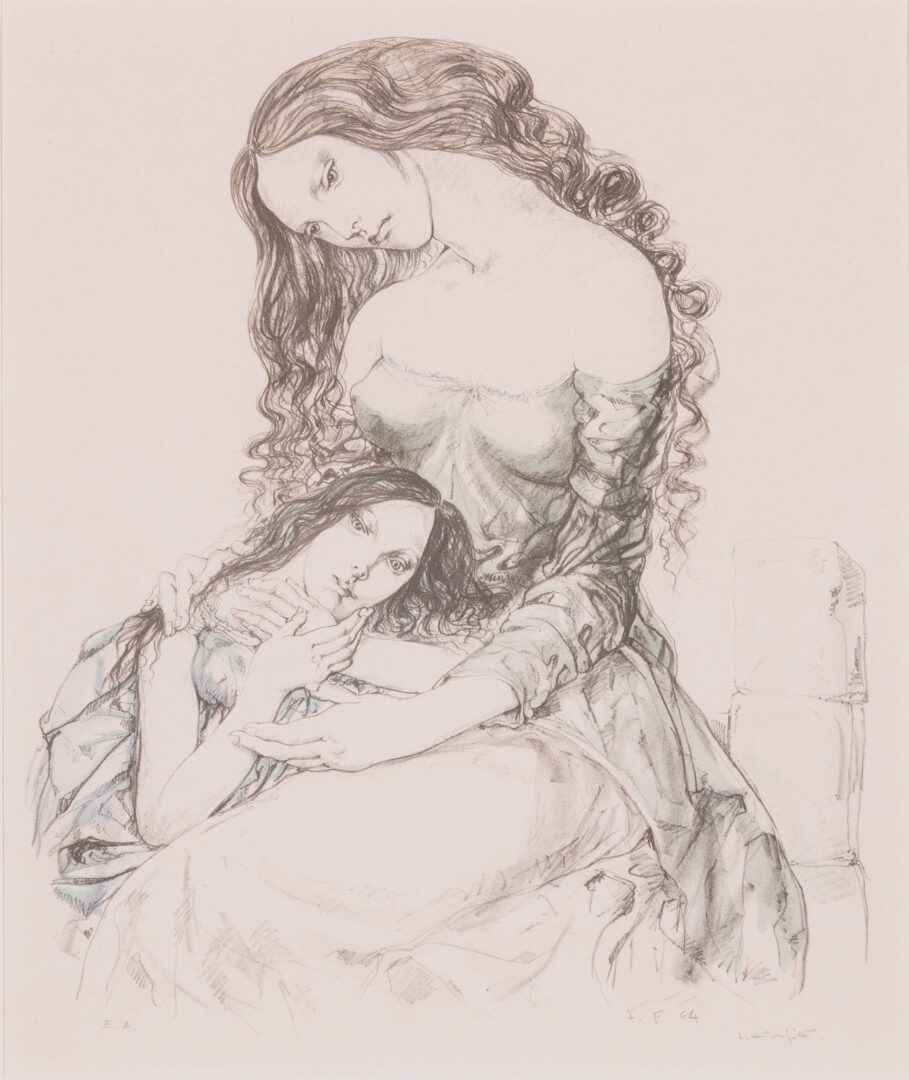
She began formal training at the École des Arts Décoratifs in Paris, but the outbreak of the Second World War interrupted her studies. In the postwar years she moved through Montmartre’s circle of working artists, where she is recorded as having crossed paths with the landscape painter Élisée Maclet and with Tsuguharu Foujita, both of whom pointed her toward plein-air landscape painting and Impressionist principles. She also spent time at the Académie de la Grande Chaumière, the storied Montparnasse studio-school, where her circle is said to have included the sculptor Ossip Zadkine.
The turning point came in 1955. Seeing Georges Seurat’s Un dimanche après-midi à l’Île de la Grande Jatte convinced Canu to commit to Neo-Impressionism and its pointillist method — applying colour in small, distinct touches that the eye blends at a distance rather than mixing pigment on the palette. She held to that discipline for the rest of her working life, decades after it had ceased to be a live movement for most other painters, which is precisely what a 2016 exhibition at Artrust in Melano, Switzerland, gestured at with its title: L’ultima dei puntinisti — “the last of the pointillists.”
Paris in Dots of Colour: Canu’s Cityscape Style
Canu’s mature paintings are built from short, separated strokes of unmixed colour — dabs of blue, ochre and rose laid side by side rather than blended — a method that gives her river views and quaysides a shimmer that changes with the viewer’s distance from the canvas. Her recurring subject, across hundreds of documented paintings, was Paris itself: the Seine and its bridges, the flower and book stalls along the quays, boats moored beneath stone embankments, and the city’s set-piece monuments rendered not as postcards but as studies in reflected light on water and worn stone.
Paris, La Conciergerie — the work in Aurora & Athena’s own catalogue — is characteristic of this approach. The Conciergerie, the medieval royal palace turned revolutionary prison on the Île de la Cité, is a subject with obvious historical weight, but Canu’s treatment favours atmosphere over narrative: its turrets and river-facing façade dissolve into a mosaic of small colour touches, with boats and reflected light doing as much compositional work as the architecture itself. It is a fair example of why collectors describe her paintings less as topographical records of Paris and more as studies of how light moves across the city at a given hour.
She did not confine herself to the capital. A significant share of her output depicts the ports and coastline of the French Mediterranean — Saint-Tropez harbour scenes with sailboats at anchor, views of Marseille, Provencçal bridges and villages — unsurprising given that she eventually settled in the south of France. But it is the Paris views, produced consistently across her career, that auction houses and dealers most associate with her name today.
Canu Among the Painters of Paris Streets
Canu belongs to a long line of twentieth-century painters who made Paris itself the subject rather than the backdrop — a tradition running from the Impressionists’ river and boulevard scenes through the Belle Époque street painters and into the postwar decades, when a whole generation of largely self-taught or academy-trained artists kept producing recognisably Parisian views for a steady market of collectors, tourists and expatriates.
What separates Canu from most of that generation is her fidelity to a specific inherited technique rather than a loose, generalised “Impressionist” brush: she is consistently described by dealers and auction houses as working in a genuine Neo-Impressionist idiom, tracing her method directly back to Seurat and Signac rather than to the softer, blended handling more common among mid-century Paris street painters.
That makes her something of an outlier within her own milieu: a painter who treated pointillism not as a period style to be revisited nostalgically but as a working method she practiced daily, for half a century, well after it had stopped being anyone’s idea of the avant-garde. Readers interested in how this generation of Paris street-scene and Belle Époque-adjacent painters fits together more broadly can explore more 20th-century paintings in our gallery, where Canu’s work sits alongside other artists working in and around the same tradition.
Yvonne Canu on the Market Today
Yvonne Canu occupies a solid, mid-market position in the French twentieth-century auction landscape rather than a headline one — which is itself a reasonably common position for a prolific, technically disciplined painter whose work was never scarce. Her paintings appear regularly at auction houses on both sides of the Atlantic, including Bonhams, Christie’s and a range of French regional houses, with hundreds of documented lot results across her working life.
Reported realised prices span a wide range, from modest sums for smaller or lesser works up to a recorded high of roughly $118,600 for a Paris view, Crépuscule sur Paris, sold at Christie’s New York; most of her paintings, however, trade well below that figure, in a range dealers generally describe as accessible relative to other Neo-Impressionist-adjacent painters of her generation, per auction data aggregated at bonhams.com.
Aurora & Athena’s own experience with the artist bears this out. Paris, La Conciergerie came to our March Fine Art Auction carrying a modest estimate and sold well above it — a result consistent with what we’ve generally seen for well-preserved, clearly attributed Canu paintings with strong Parisian subject matter: steady, engaged bidding rather than speculative spikes, from a collector base that values her as a genuine link to the pointillist technique rather than as a purely decorative Paris view. It is the kind of outcome that keeps her work a recurring, dependable presence in our sales rather than an occasional curiosity.
For collectors following this category, that combination — real technical pedigree, a large enough body of work to allow comparison, and prices that remain approachable outside the small number of record-setting Paris views — is part of the appeal. If you’re weighing whether to bid on a piece like this yourself, our guide to how bidding works is a good place to start before your next sale.
Frequently Asked Questions
Who was Yvonne Canu?
Yvonne Canu (1921–2007, per most reference sources, though some auction records give 2008) was a French painter born in Meknes, Morocco. Trained partly at the École des Arts Décoratifs in Paris, she became known from 1955 onward for working in the Neo-Impressionist pointillist technique pioneered by Georges Seurat, decades after that movement’s original heyday.
What did Yvonne Canu paint?
Canu painted primarily Paris cityscapes — the Seine, its bridges and quays, and monuments such as the Conciergerie — alongside Mediterranean coastal and harbour scenes, particularly around Saint-Tropez and Provence, all rendered in small, separated dabs of colour rather than blended brushwork.
Why is Yvonne Canu’s technique called pointillism?
Pointillism applies paint in small, distinct dots or dabs of pure colour, relying on the viewer’s eye to blend them optically at a distance rather than mixing pigment on the palette. Canu adopted the technique in 1955 after seeing Seurat’s Un dimanche après-midi à l’Île de la Grande Jatte and used it consistently for the rest of her career.
How much do Yvonne Canu paintings sell for at auction?
Most Yvonne Canu paintings sell in a moderate range at auction, with the recorded high around $118,600 for a Paris scene, Crépuscule sur Paris, at Christie’s New York. Typical results are considerably lower, and larger, well-preserved Paris views generally command more than smaller coastal scenes.
Where can I see or buy Yvonne Canu’s work today?
Her paintings surface regularly at major and regional auction houses in France, the UK and the US, and periodically through galleries specialising in twentieth-century French art. Aurora & Athena has sold her work at auction, including Paris, La Conciergerie; you can read more from our journal on the artists and movements represented in our sales.
Available Now
Available at the gallery
Artists in this article

Considering Selling a Piece From Your Collection?
Aurora & Athena's specialists provide free valuations and can guide you through consignment to auction or private sale.
Get a Free Valuation