
Helen Khal: The Painter Who Built Beirut’s First Modern Gallery
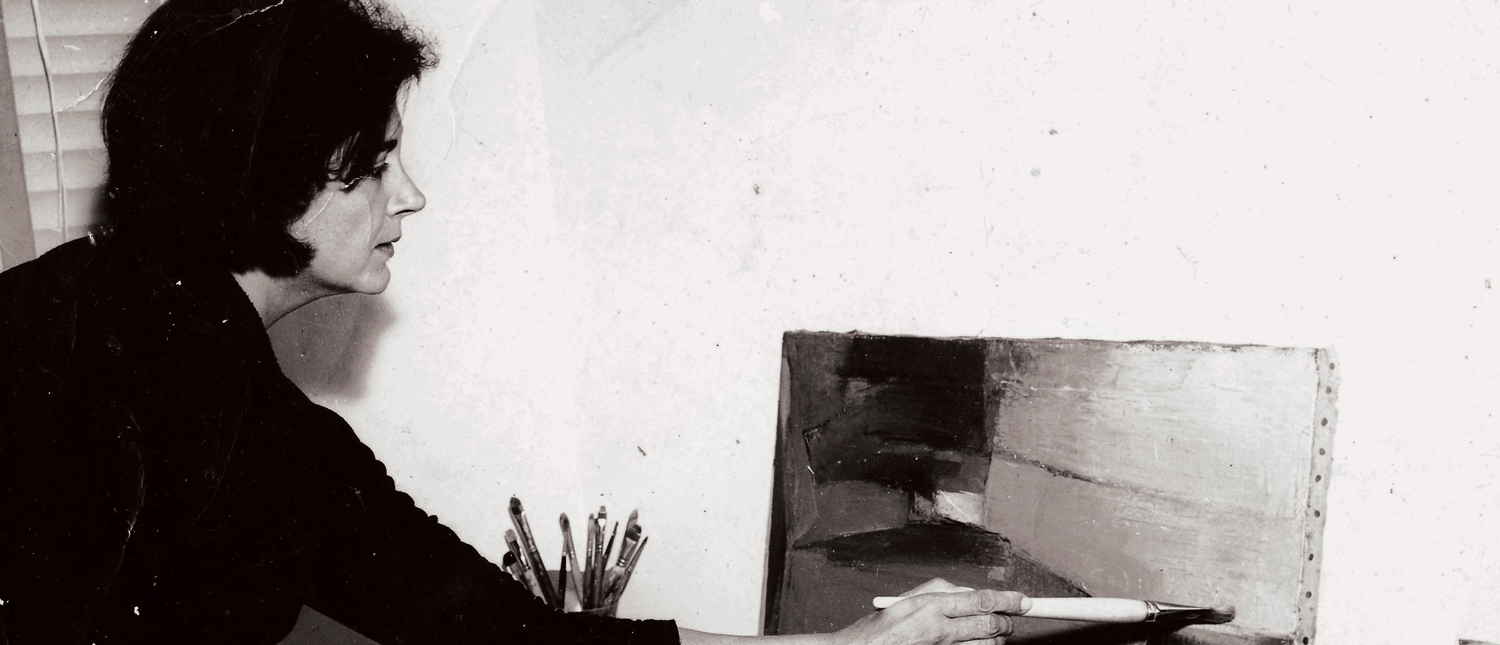
Helen Khal painted, wrote the first serious study of Arab women artists, and co-founded Beirut's first modern gallery in 1963 — three careers that shaped Lebanon's art scene at once.
Table of Contents
In 1963, a gallery opened in Beirut with no real precedent in the country: a commercial space dedicated entirely to modern and contemporary art, at a time when Lebanese collectors had nowhere else to see it. Helen Khal co-founded it. She was already a painter by then — but Gallery One is the reason her name sits at the center of Lebanon’s modern art history rather than at its edge.
Helen Khal (1923–2009) spent six decades moving between three roles that most artists keep separate: painter, gallerist, and critic. Each fed the others. What she wrote about shaped what she showed; what she showed shaped what she painted. It is a career that resists the usual one-line summary, and for a long time — as with several women of her generation working in the Arab world — it went comparatively under-documented. That has changed markedly in the past decade.
From Pennsylvania to a Lebanese Art School
Khal was born on February 9, 1923, in Allentown, Pennsylvania, to Lebanese immigrant parents, Thomas Joseph and Salma Sassine Chaiboub, according to en.wikipedia.org. She began painting only in her early twenties, during a period of illness that kept her confined and, by her own account, looking for something to do with her hands. In 1946 she left the United States for Lebanon, where she would spend the next twenty-five years.
She enrolled at the Académie Libanaise des Beaux-Arts (ALBA), studying under the Lebanese painter César Gemayel from 1946 to 1948 — formal training that gave her a technical foundation before her style moved toward abstraction. That same year she married the Syrian-Lebanese poet Yusuf al-Khal, a central figure in modern Arabic poetry and, in 1957, founder of the influential literary magazine Shi’r — Arabic for “Poetry”.
The marriage placed her inside Beirut’s modernist literary circles from the start — a milieu that also included the poet and painter Etel Adnan, another artist who moved fluently between writing and painting in the same Beirut scene. Khal held her first solo exhibition in 1960, at Galerie Alecco Saab.
Gallery One: Beirut’s First Modern Art Gallery
In 1963, Khal and al-Khal opened Gallery One in Beirut — by most accounts the first gallery in Lebanon built specifically around modern and contemporary art, rather than functioning as a general exhibition space. It gave Beirut’s emerging painters, several of them trained abroad and struggling to find a serious commercial home for their work at home, a real venue. The gallery became one of the fixed points of Beirut’s 1960s art scene, at a moment when the city was establishing itself as a genuine regional center for modern Arab art.
Running a gallery while painting and writing criticism gave Khal a vantage point almost no other artist of her generation had: she was simultaneously inside the market, inside the critical conversation, and inside the studio. It shows in how specifically she was able to write about her peers’ work later — she was not describing painting from the outside.
Painting in Light and Color
Khal’s own paintings moved steadily toward abstraction over her career, built around the handling of light and color rather than figuration or narrative subject matter. Her landscapes and abstractions frequently returned to the specific quality of light along the Lebanese coast and mountains — horizon lines, seascapes, fields of closely related color values worked against each other rather than sharp contrast.
Her work sits within a specific, still under-recognized strand of postwar abstraction: painters working through color-field and gestural abstraction outside the New York and Paris centers that dominate the standard art-historical account of the movement. That underrecognition is now being corrected in real time — Khal’s work was included in Women in Abstraction at the Centre Pompidou in 2021 and in Action, Gesture, Paint at London’s Whitechapel Gallery in 2023, both major surveys re-examining postwar abstraction through women artists working across multiple continents, not just Paris and New York.
The Critic Who Wrote Women Artists Into the Record
From 1966 to 1974, Khal wrote art criticism for Beirut’s Daily Star and for Monday Morning magazine — a sustained body of published art writing that is itself a primary source for historians of the period now. She also taught studio art at the American University of Beirut from 1967 to 1976, and later at the Lebanese American University.
In 1988 she published The Woman Artist in Lebanon, a collection of 22 lectures — the first serious, sustained study of women artists working in the country, at a time when almost no one else was writing that history down. It remains a foundational reference for anyone researching the period, cited far more often today than her own painting has been until recently.
Helen Khal at Auction Today
Khal’s paintings have moved through Christie’s, Sotheby’s, and Bonhams in their Middle Eastern Modern and Contemporary Art sales in recent years — Bonhams alone has offered works including Blue Horizon (1979) and Seascape. Her market, like much of the wider reassessment of Arab women modernists currently underway, is still building relative to her documented historical importance — which for a collector generally means one thing: entry points remain more accessible than the comparable market for her better-known male contemporaries from the same Beirut scene.
Aurora & Athena has offered Helen Khal’s work in our own auction catalogs, part of a broader focus on 20th-century modernism from outside the traditional Western canon — the same lens through which we cover artists like Etel Adnan and painters working across the wider modern Arab and Mediterranean art world. Browse current 20th-century paintings in our gallery, or see our guide to bidding for future lots.
Frequently Asked Questions
Who was Helen Khal?
Helen Khal (1923–2009) was a Lebanese-American painter, art critic, and educator, and co-founder of Gallery One, Beirut’s first gallery dedicated to modern and contemporary art.
What was Gallery One in Beirut?
Gallery One, opened in 1963 by Helen Khal and her husband, poet Yusuf al-Khal, was the first commercial gallery in Lebanon focused specifically on modern and contemporary art, and a central venue for Beirut’s 1960s art scene.
What style did Helen Khal paint in?
Her mature work moved toward abstraction built primarily around light and color, often drawing on Lebanese coastal and mountain landscapes rendered through closely related color fields rather than figuration.
What did Helen Khal write?
She wrote art criticism for Beirut’s Daily Star and Monday Morning magazine through the late 1960s and early 1970s, and in 1988 published The Woman Artist in Lebanon, the first sustained study of women artists working in the country.
How much do Helen Khal paintings sell for at auction?
Her work has been offered through Christie’s, Sotheby’s, and Bonhams in their Middle Eastern Modern & Contemporary Art sales in recent years. As with much of the current reassessment of women modernists from the Arab world, her market is still developing relative to her documented historical role.
Artist in this article
Own a Work by Helen Khal?
Aurora & Athena's specialists provide free valuations and can guide you through consignment to auction or private sale.
Get a Free Valuation