Jan Zrzavý: the Painter Who Gave Czech Art Its Dream
Jan Zrzavý (1890–1977), founder of Czech modern art: his highland little towns, Breton boats and luminous tempera technique, and the signed 1947 Městečko offered at Aurora & Athena.
One short e-mail when a new work arrives, a work comes back on sale or a result comes in. Unsubscribe any time. Create an account to follow with one click everywhere.
See it on your real wall in AR
Scan to open on your phone, then tap “View in AR”.
Be the first to know about new works by Jan Zrzavý.
Already have an account? Sign in and you’ll come straight back to this lot.
Create an account to place a pre-auction bid. We’ll email you a 6-digit code to confirm your address.
Confirm your bid of €10,000.
If you win at €10,000 you will pay ≈ €12,500 incl. 25% buyer's premium.
Withdraw your maximum bid of €0 on Lot 8? This cannot be undone.
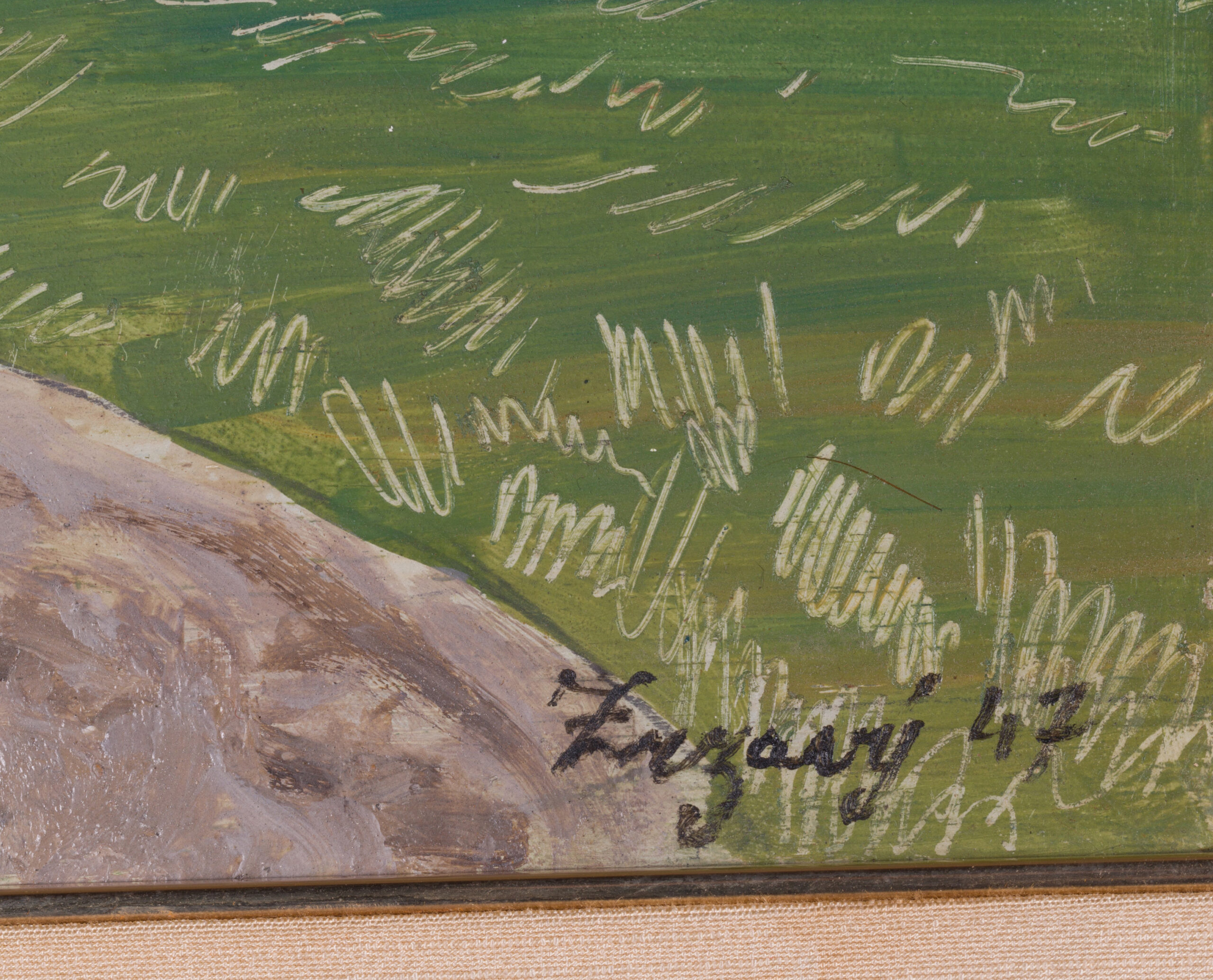
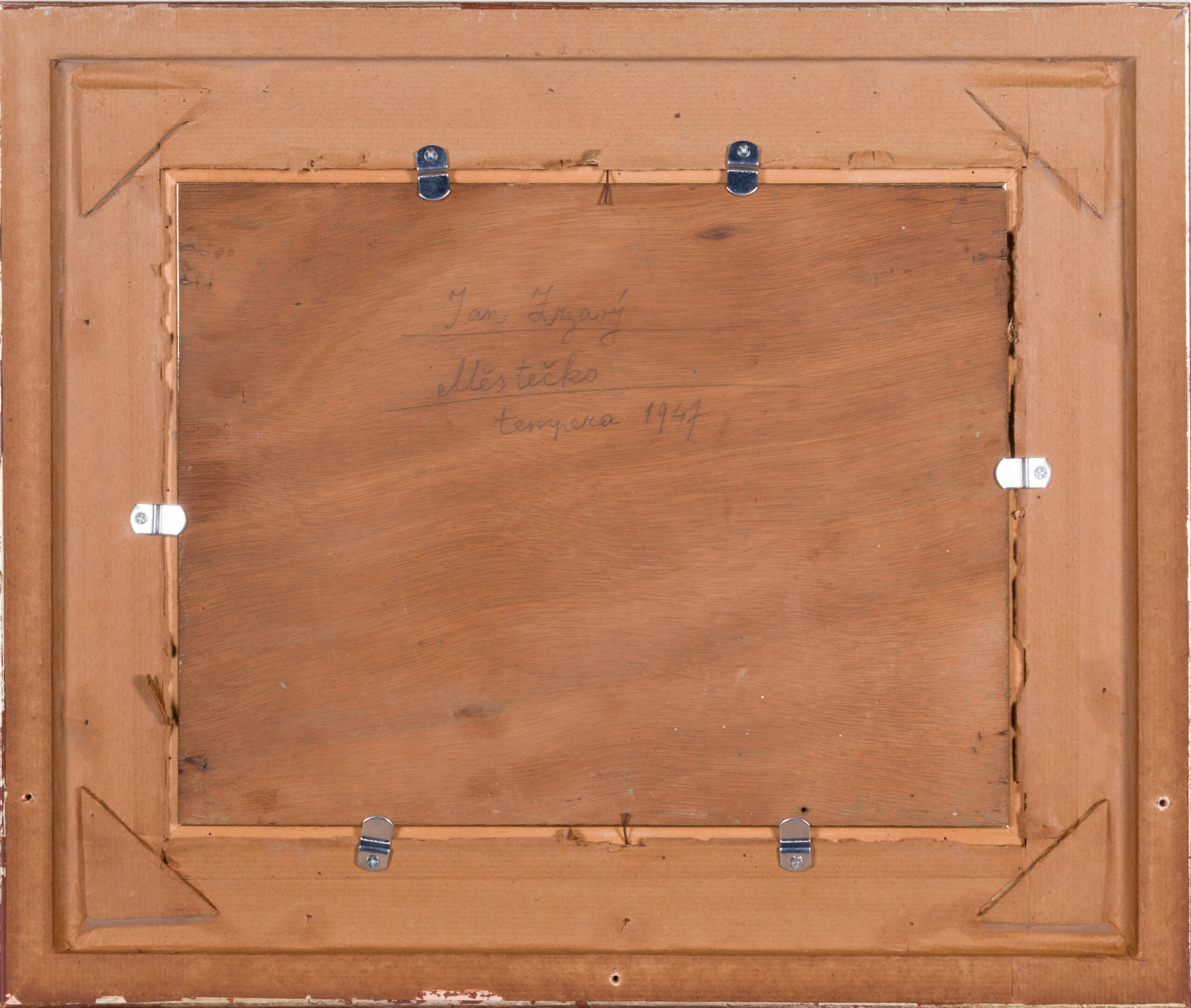
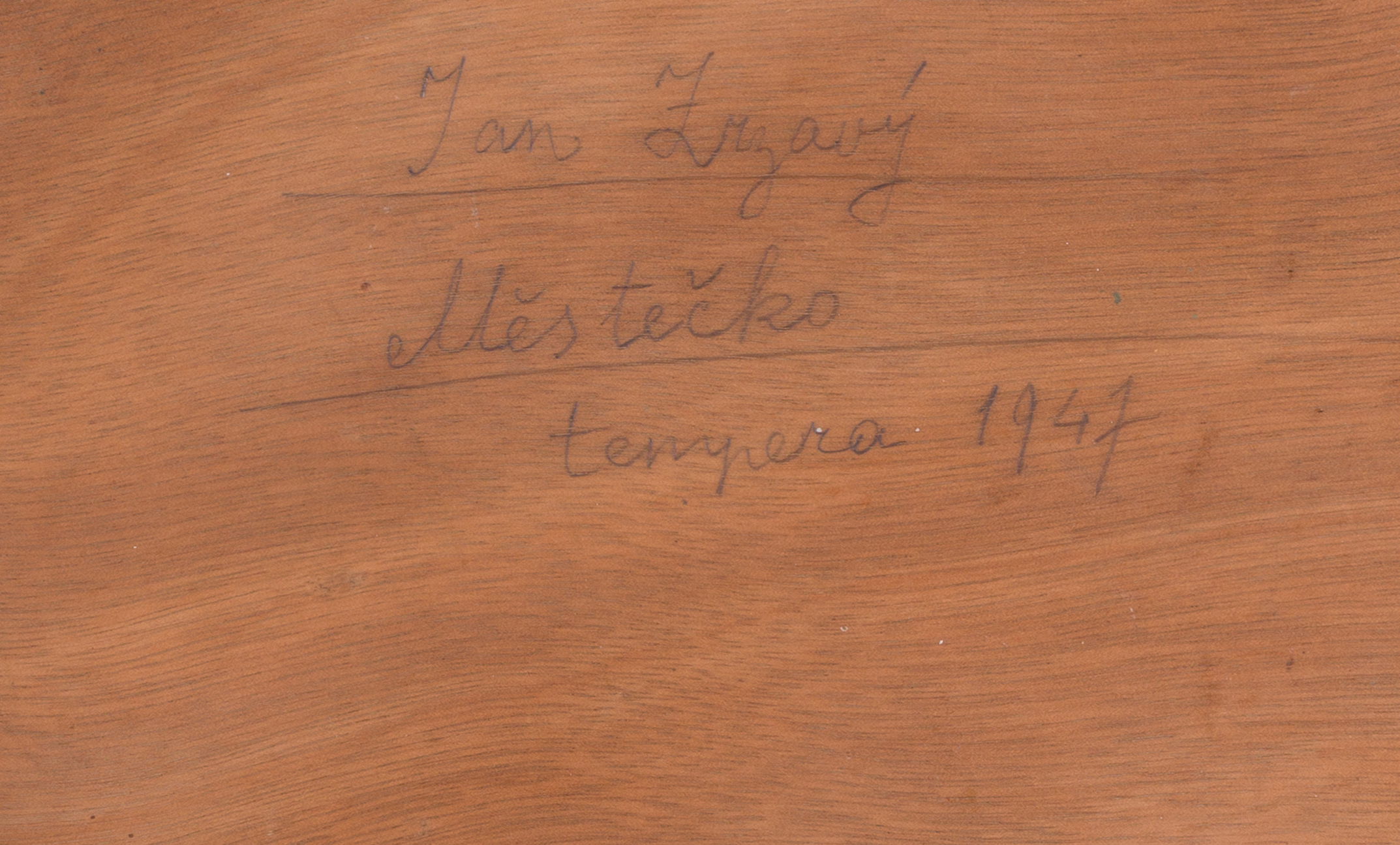
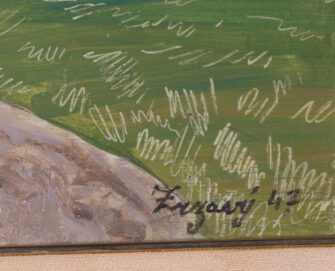
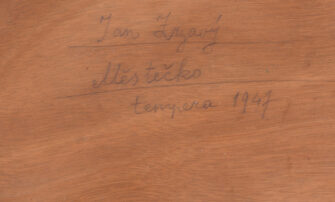
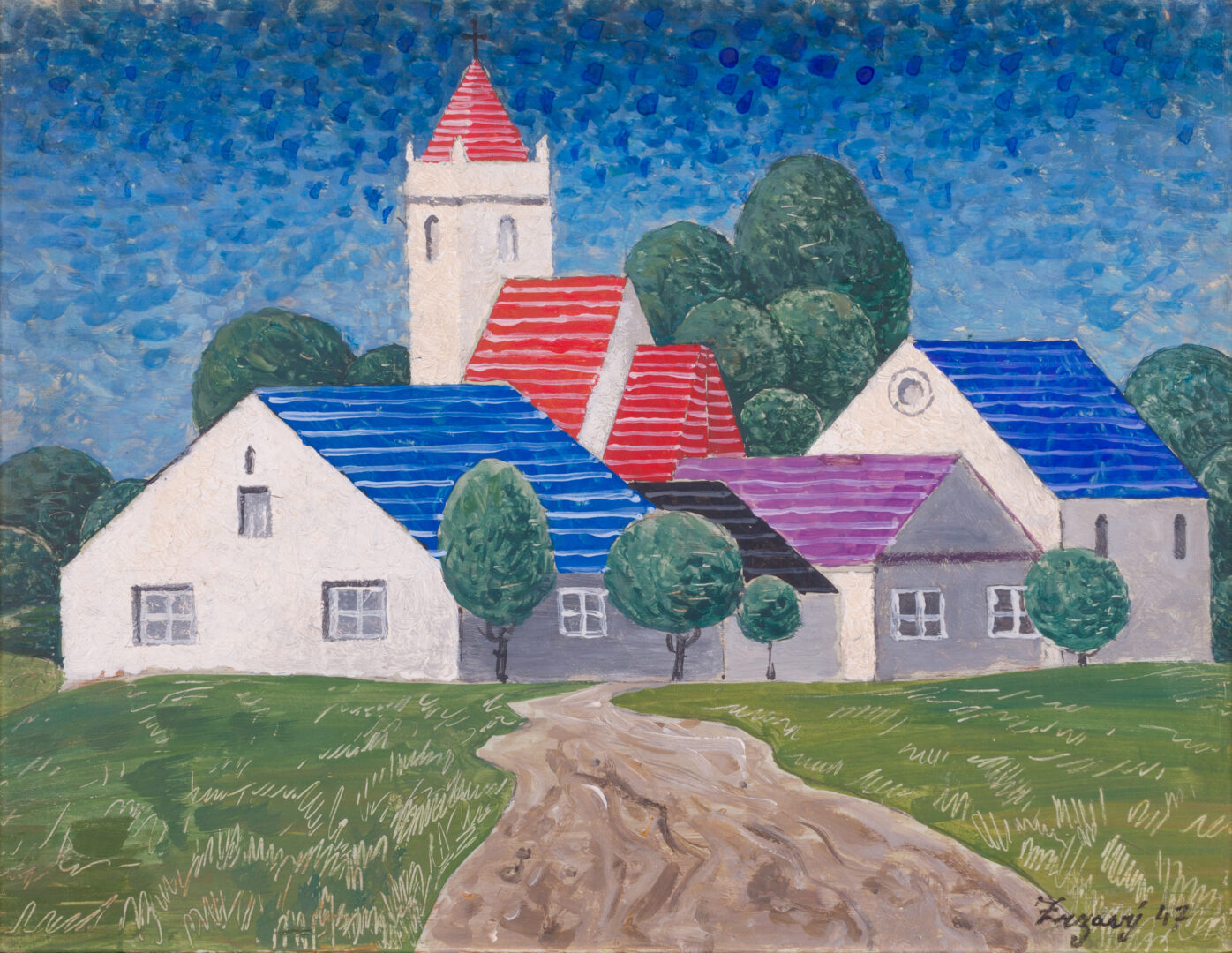
Signed and dated ‘Zrzavý 47’ (lower right); signed, titled and dated ‘Jan Zrzavý / Městečko / tempera 1947’ (on the reverse).
Sizes:
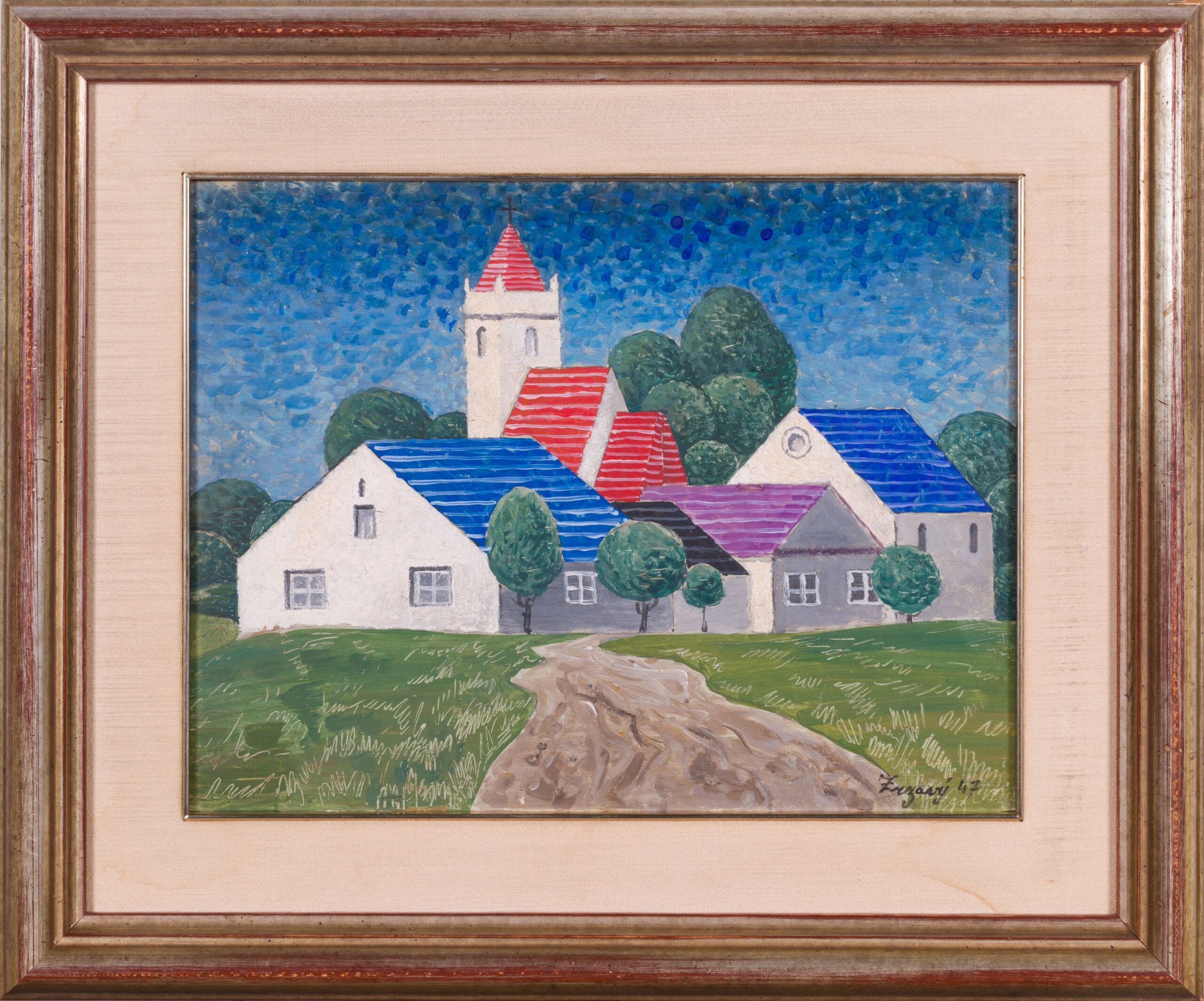
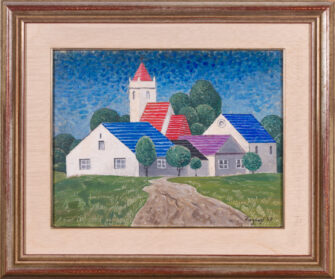
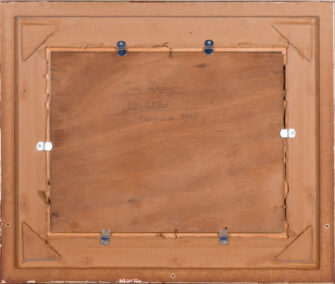
Frame: 43 × 51 cm | 16.9 × 20.1 in
Artwork: 27 × 35 cm | 10.6 × 13.8 in
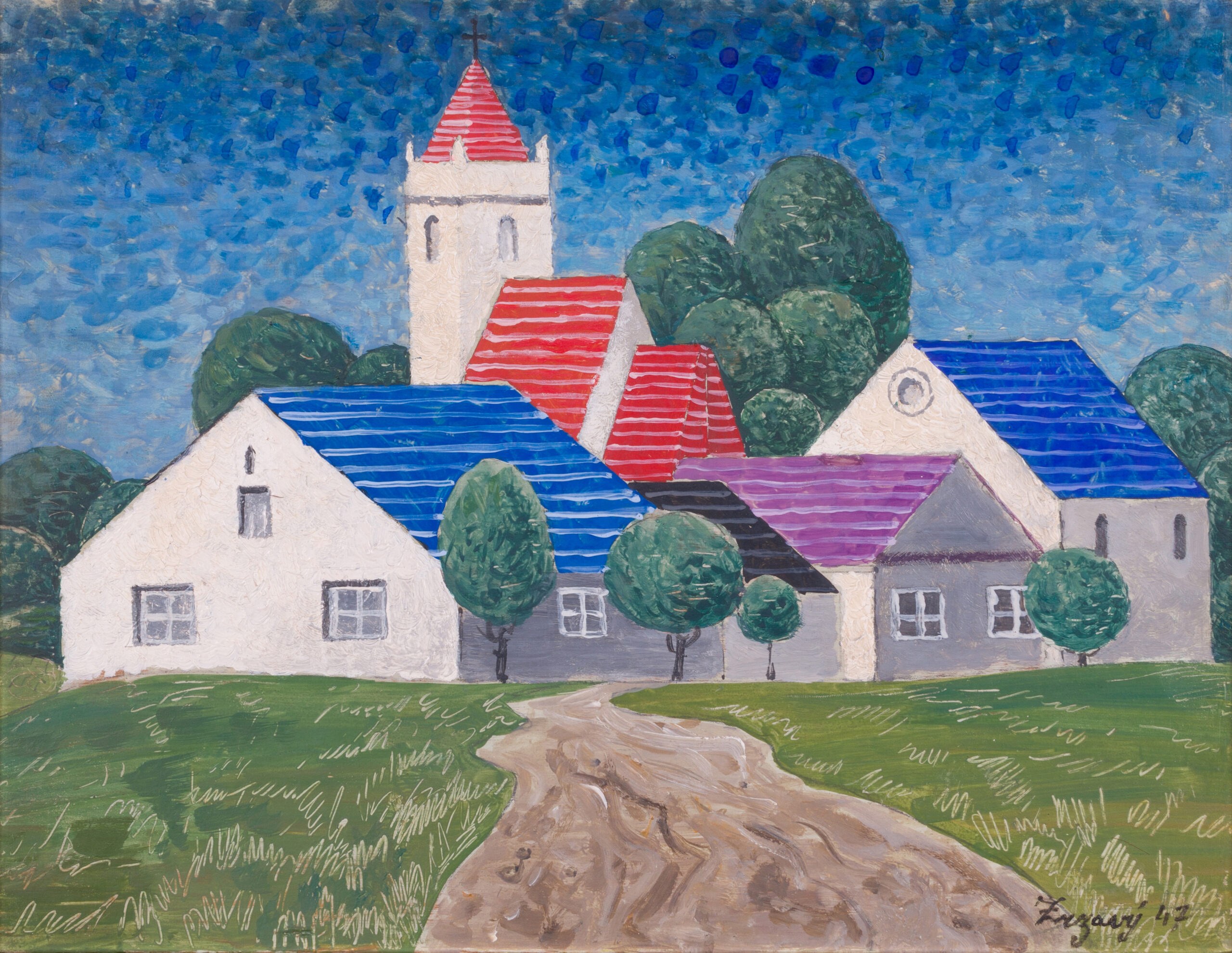
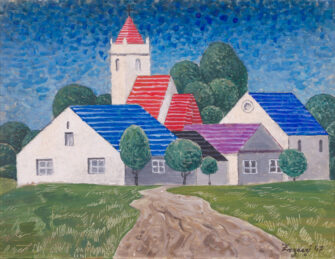
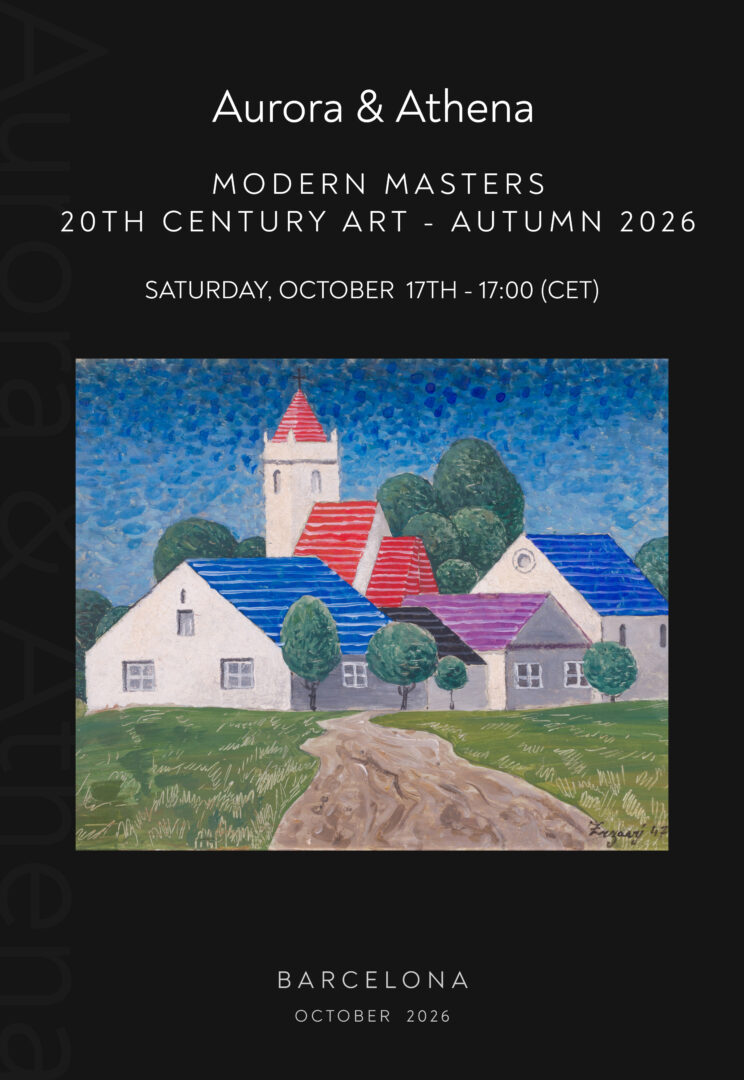
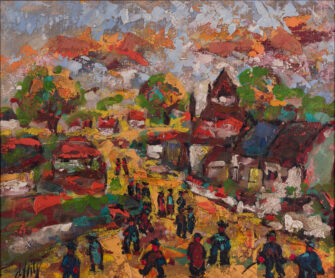
White houses with roofs of red, blue and violet gather around a church with a pointed red spire; a road winds up through green grass scratched into the paint stroke by stroke, and the sky is a field of blue dots. ‘Městečko’ — the little town — is a distilled, almost toy-like vision of a Czech village, painted in tempera in 1947 by Jan Zrzavý, one of the founding figures of Czech modern art.
Zrzavý (1890–1977) belonged to the generation of the Osma and Tvrdošíjní groups, but his art stands apart: a dreamlike, simplified world in which houses, trees and hills are reduced to their essential shapes and lit by an inner light. From the 1930s he painted the Bohemian-Moravian highlands around Okrouhlice and Krucemburk, and small towns like this one became a favourite theme. The sgraffito grass and the dotted sky are hallmarks of his tempera technique.
The work is signed and dated ’47’ on the front and inscribed with the title, medium and date on the reverse. It was acquired in Prague by the family of the present owner in 2018.
Acquired in Prague by the family of the present owner in 2018.
thence by descent to the present owner.
Tempera on board, framed. The paint layer is stable and the scratched (sgraffito) grass texture fully intact; minor wear at the extreme edges under the frame rebate. The reverse is clean and carries the artist’s inscription. Please contact us to request a detailed Condition Report.
We coordinate packing and shipping on your behalf, with insurance available if you’d like it — or you’re welcome to arrange your own. Please see our Shipping Information page for full details before completing your purchase.
Aurora & Athena provides a Five-Year Authenticity Guarantee for qualifying catalogue attributions, in accordance with our Conditions of Sale.
Buyers should review the catalogue carefully and raise any questions before bidding; additional information is not ordinarily provided after the auction.
Every piece is backed by a written guarantee and a Certificate of Authenticity.
We coordinate professional, insured shipping worldwide, for auction and gallery purchases alike.
Every lot is reviewed and vetted by our specialists before it reaches a sale.
Pay by card for purchases up to €10,000, or by secure bank transfer for larger amounts.
Have a question about this work?
Fill out the form below and our team will get back to you shortly.
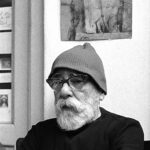
Jan Zrzavý was born in 1890 in Okrouhlice, in the Bohemian-Moravian highlands, the son of a village schoolmaster. Largely self-taught after a brief spell at the Prague School of Applied Arts, he found his direction early: by 1910 he had joined the artists’ group Sursum and was painting the visionary, simplified pictures — ‘Cleopatra’, ‘Vale of Sorrow’ — that made him, with Kubišta and Filla, one of the founders of Czech modern art.
Zrzavý absorbed Cubism and the Italian primitives, Leonardo and Giotto, and fused them into a personal language of pure, rounded forms and luminous colour. He was a member of the Tvrdošíjní (‘The Stubborn Ones’) group after the First World War and later of the Mánes Union of Fine Arts.
From the 1920s he divided his time between Prague, Brittany — whose boats and coast he painted for decades — and Venice, and after 1935 the highland villages of Krucemburk and Okrouhlice, which became the setting for his ‘little towns’ and ‘Bohemian-Moravian’ landscapes: white houses, red church spires, scratched fields of grass under dotted skies.
Named National Artist in 1966, Zrzavý is represented in the National Gallery in Prague, which devoted a major retrospective to him in 2015, and in Czech regional museums; a permanent exhibition of his work is at Krucemburk, where he is buried. He died in Prague in 1977.

“The description and photos of the artwork were accurate, and I felt confident in my purchase from the beginning. The team was quick to answer my questions and kept me well informed throughout the process.”
“I had a really good experience after the sale — it was smooth, asked a question and got an answer right away. Their customer service is excellent and very fast. Definitely recommend them.”