
Paris Street Scenes and École de Paris Paintings Under 5,000 €: Five Works for Sale
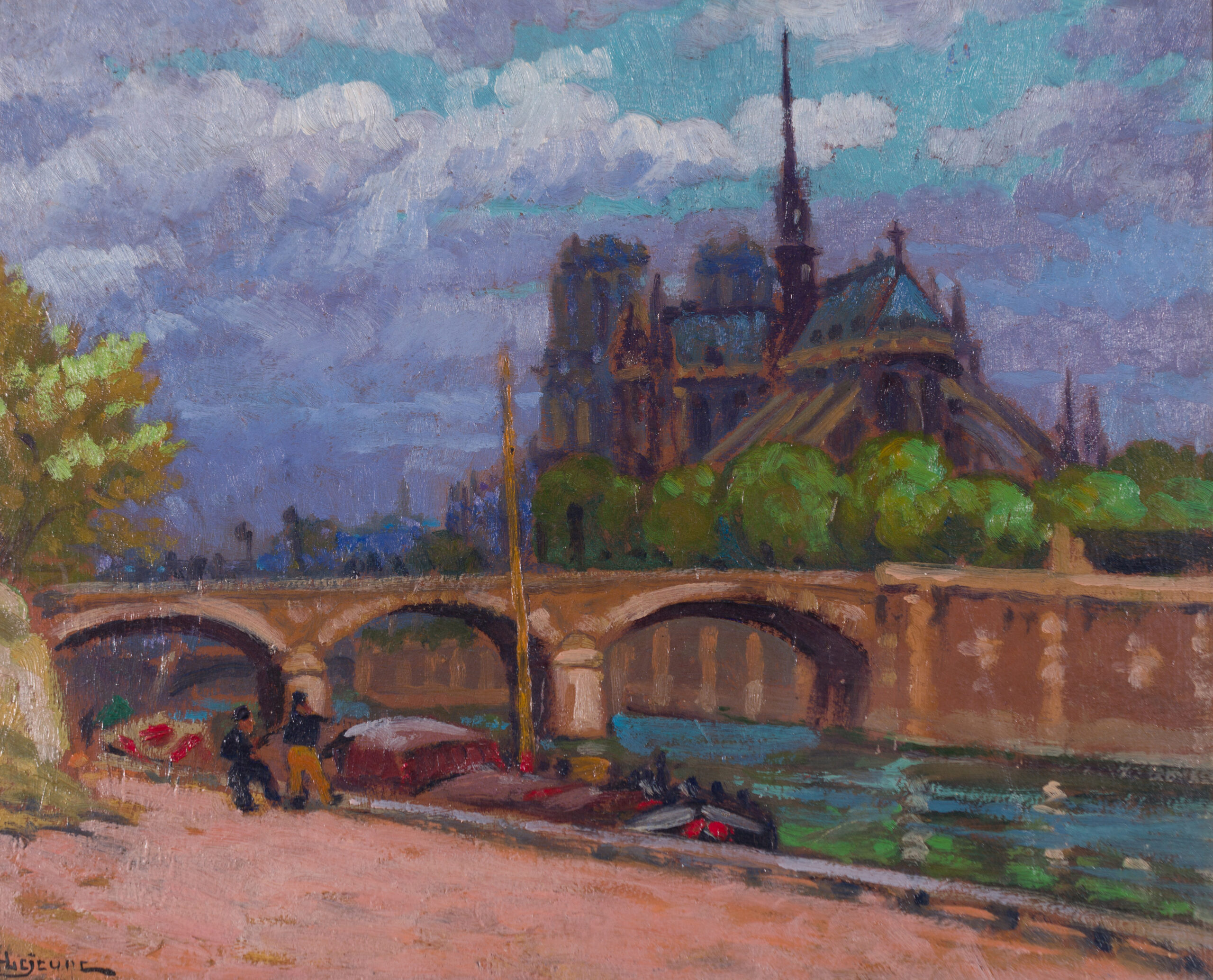
Notre-Dame from the quays, snow on the Marne, a Montparnasse interior, the Allée des Cavaliers and a Foujita proof: five Paris pictures under 5,000 €.
Notre-Dame from the quays under a purple sky, 2,100 €. Snow on the Marne at Joinville, with the artist’s own Salon label still on the stretcher, 4,200 €. A mother and daughter sewing in a Montparnasse studio that once belonged to Picasso, 1,900 €. A woman with a parasol and a white dog on the Allée des Cavaliers, 1,950 €. And a Foujita Madonna, an artist’s proof from 1964, 1,200 €. Five Paris pictures, all under 5,000 €, all in our gallery now. Here is who painted them, why they cost what they cost, and how to buy one.
What “École de Paris” means when the price is under 5,000 €
The École de Paris was never a school. The critic André Warnod coined the label in 1925 for the foreign and French painters working side by side in Montmartre and Montparnasse between the wars; Picasso, Modigliani, Chagall, Soutine, Pascin and Foujita are the names the market attaches to it, and we covered two of them in École de Paris Painters: 2 Names Worth Discovering. Around those names worked hundreds of painters who showed at the Salon des Indépendants and the Salon d’Automne every year, sold through the Right Bank galleries, and painted the city itself: the Seine, the bridges, the markets, the parks. Their pictures are what “a Paris painting” means to most buyers, and they are the part of the École de Paris a collector can still afford.
The reference point is Antoine Blanchard, whose Belle Époque street scenes we have sold and whose name is searched more than any other in this category. A good Blanchard now costs a multiple of any work below. The five painters here were his contemporaries or near-contemporaries, exhibited at the same Salons, and are priced by the trade as what they are: documented, signed, often labelled on the reverse, and not yet fashionable.
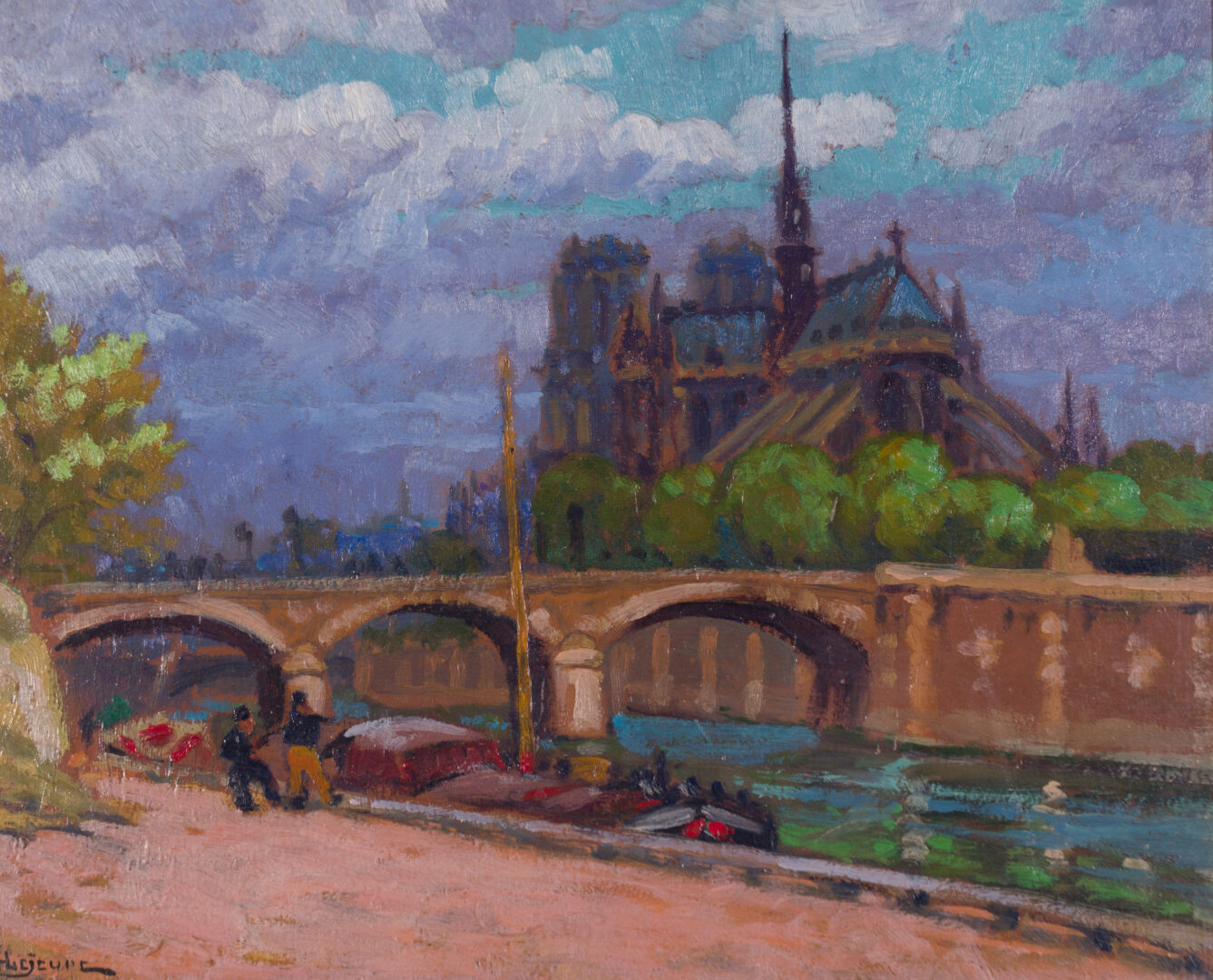
Henri Pierre Lejeune, Notre Dame de Paris, 2,100 €
Henri Pierre Lejeune (1881–1961) exhibited from 1902, spent five years in North America, and from about 1910 showed regularly at the Salon des Indépendants. He financed his painting trips to Italy and Tunisia in 1919 and 1922 by subscription: collectors paid in advance and received the studies he brought back. The City of Paris and the museums of Vannes and Montmorillon acquired his work, and he taught at the École des Beaux-Arts in Poitiers. Notre Dame de Paris is oil on panel, 32.5 × 40.5 cm, framed to 47 × 55 cm, signed H. Lejeune lower left, with two period labels on the reverse giving his address at 54 rue Lamartine and the title. Barges, quays, the arched bridge in sunlight and the cathedral under a moving sky: the view every painter of the quays attempted, done by one who did it for a living.
Claude Boussier, La Neige de Noël à Joinville, 4,200 €
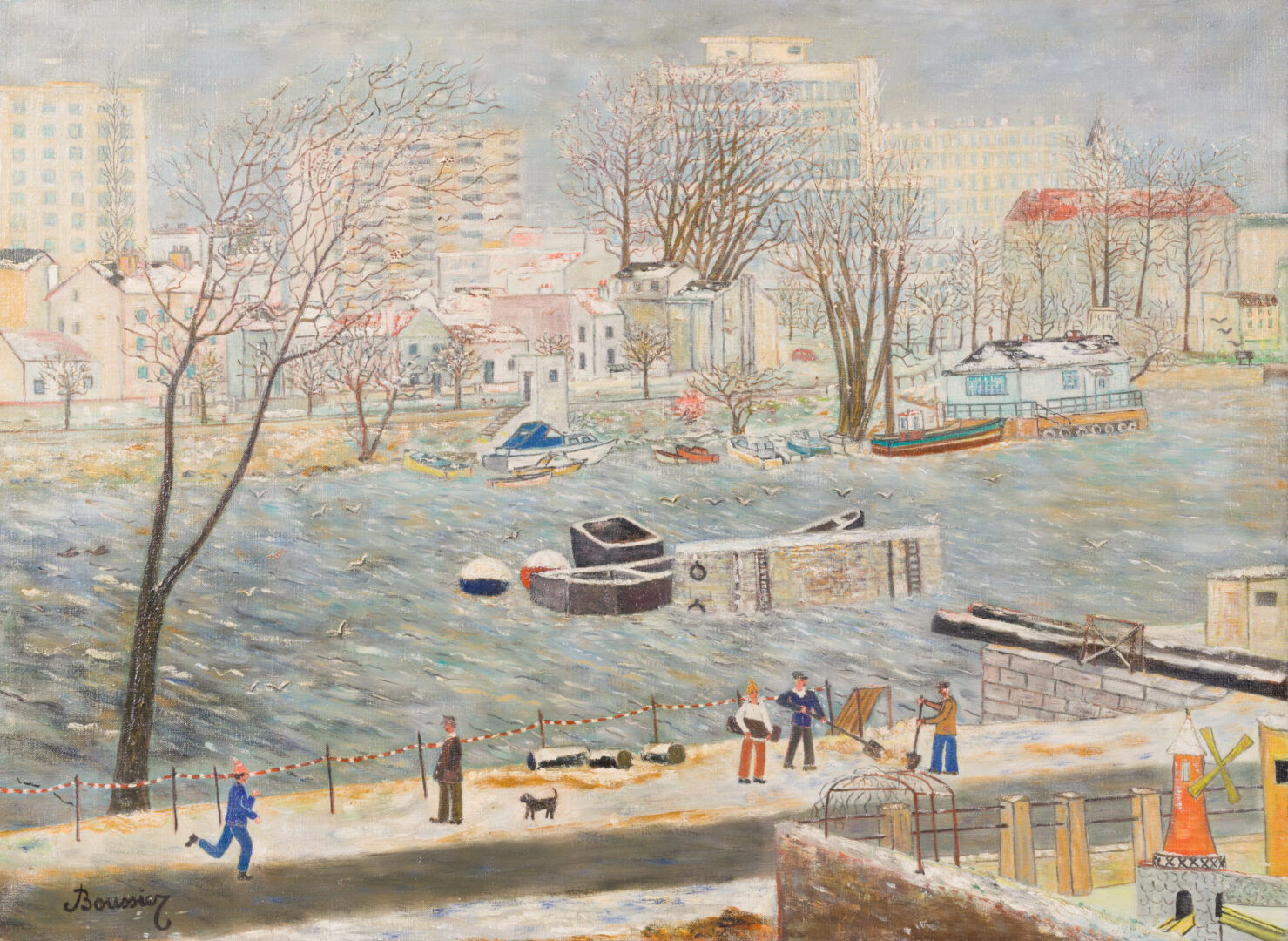
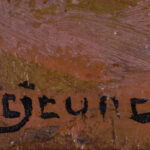
Claude Boussier (1925–2014) lived and painted at the quai Périer in Joinville-le-Pont, on the Marne just south-east of Paris, served on the committee and jury of the Salon d’Automne at the Grand Palais, and showed at the Salon des Indépendants. This is the biggest picture of the five and the one with the best paper trail: it comes from the artist’s studio, and his own handwritten exhibitor’s label with the exact title and his Joinville address is still fixed to the stretcher next to the Salon’s printed Réalistes tab from the 1977 Indépendants. Moored boats and houseboats on a snowed-over quay, workers and a dog on the towpath, the town behind. Oil on canvas, 60 × 81 cm, framed to 70 × 91.5 cm, signed lower right.
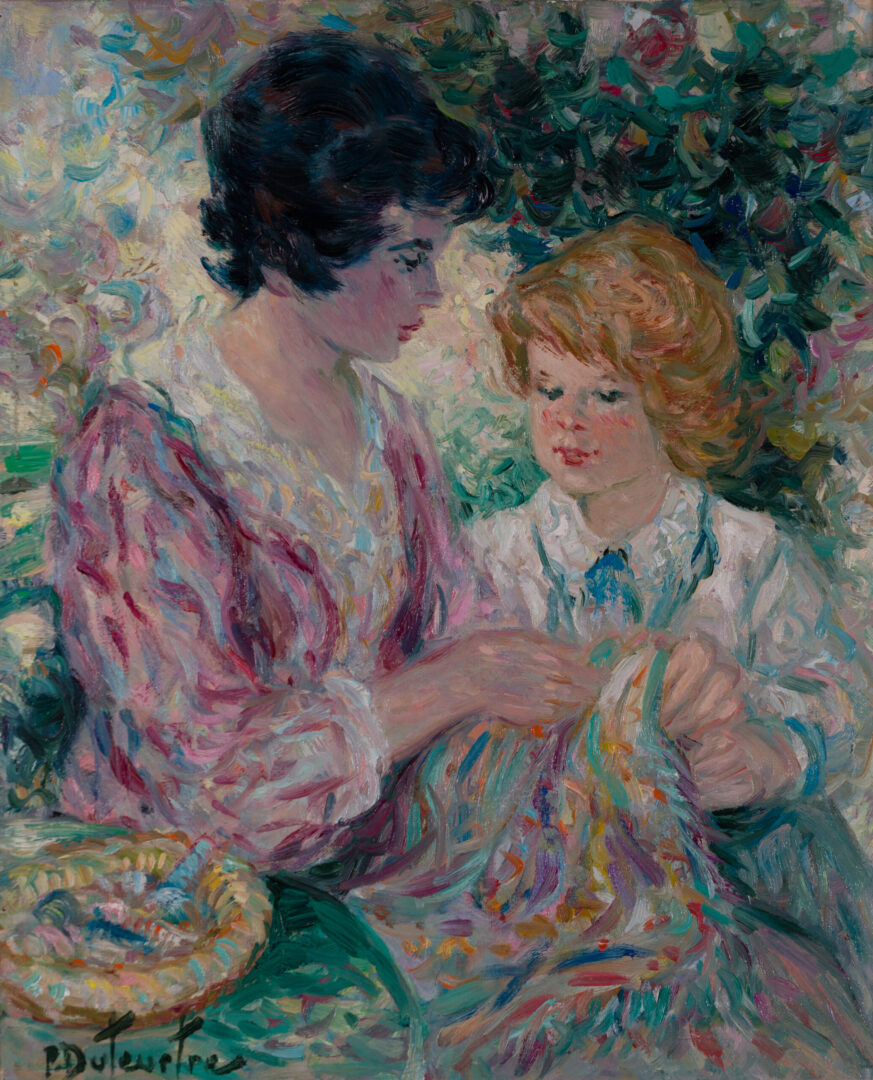
Pierre Eugène Duteurtre, La Couture, 1,900 €
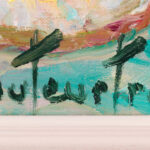
Pierre Eugène Duteurtre (1911–1989) had a whole first career as “Dut”, one of the best-known French comic-strip artists of the 1930s and 40s, drawing Sitting Bull and La Guerre de la Terre with the writer Marijac for Coq Hardi. He taught at the Beaux-Arts in Rouen after the war and in 1968 gave up illustration altogether, moving into a former studio of Picasso in Paris to paint. La Couture, oil on canvas, 55 × 45.5 cm, framed to 73 × 64 cm, is one of the domestic interiors he became known for: a mother and child bent over their sewing, pinks and greens laid on fast. Signed on the front, and on the reverse signed again, titled, and stamped with the authentication stamp used for his originals.
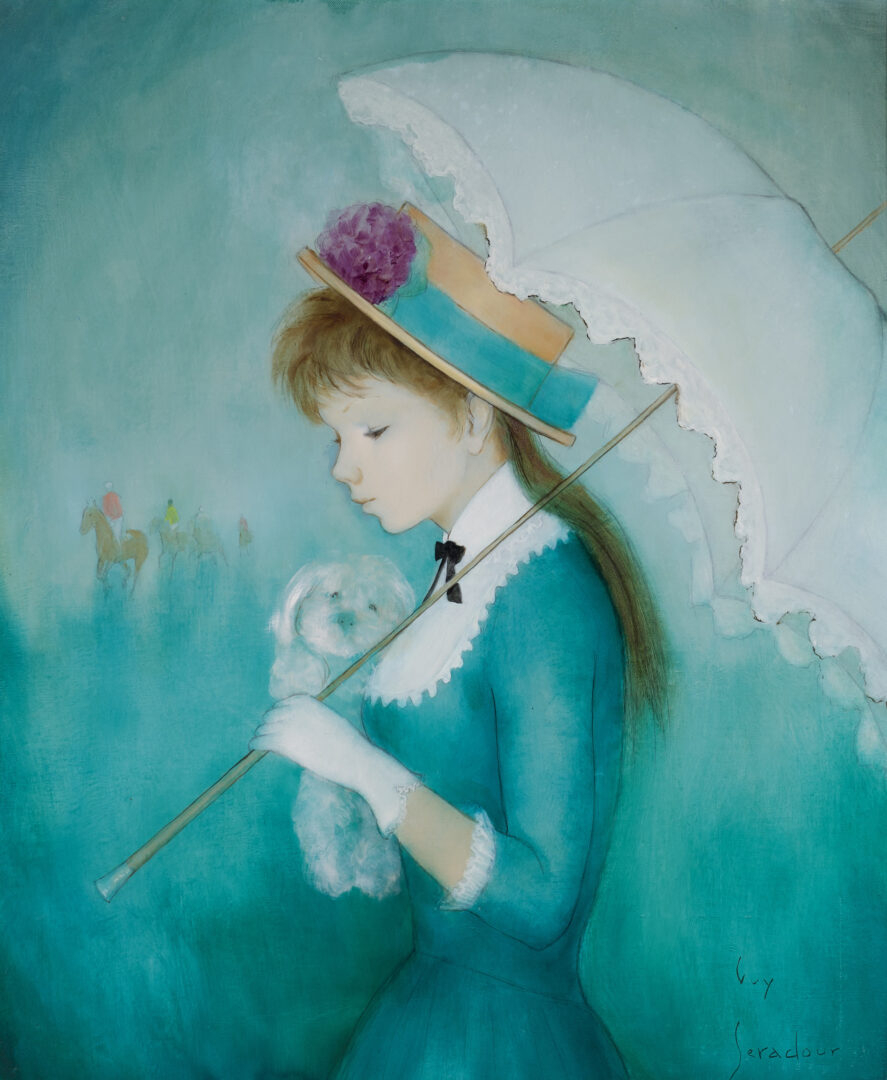
Guy Seradour, L’allée des Cavaliers, 1,950 €
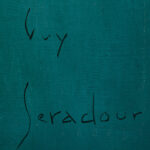
Guy Seradour (1922–2007), born in Paris, painted the theatre, the ballet and elegant women in a soft, deliberately nostalgic register and exhibited across Europe and the United States. L’allée des Cavaliers, oil on canvas, 73.5 × 60 cm, framed to 90 × 77 cm, puts a young woman in a teal dress with a parasol and a white dog in profile against the riders of the Bois de Boulogne dissolving in mist. If you want the Paris of hats and horses rather than barges, this is the one.
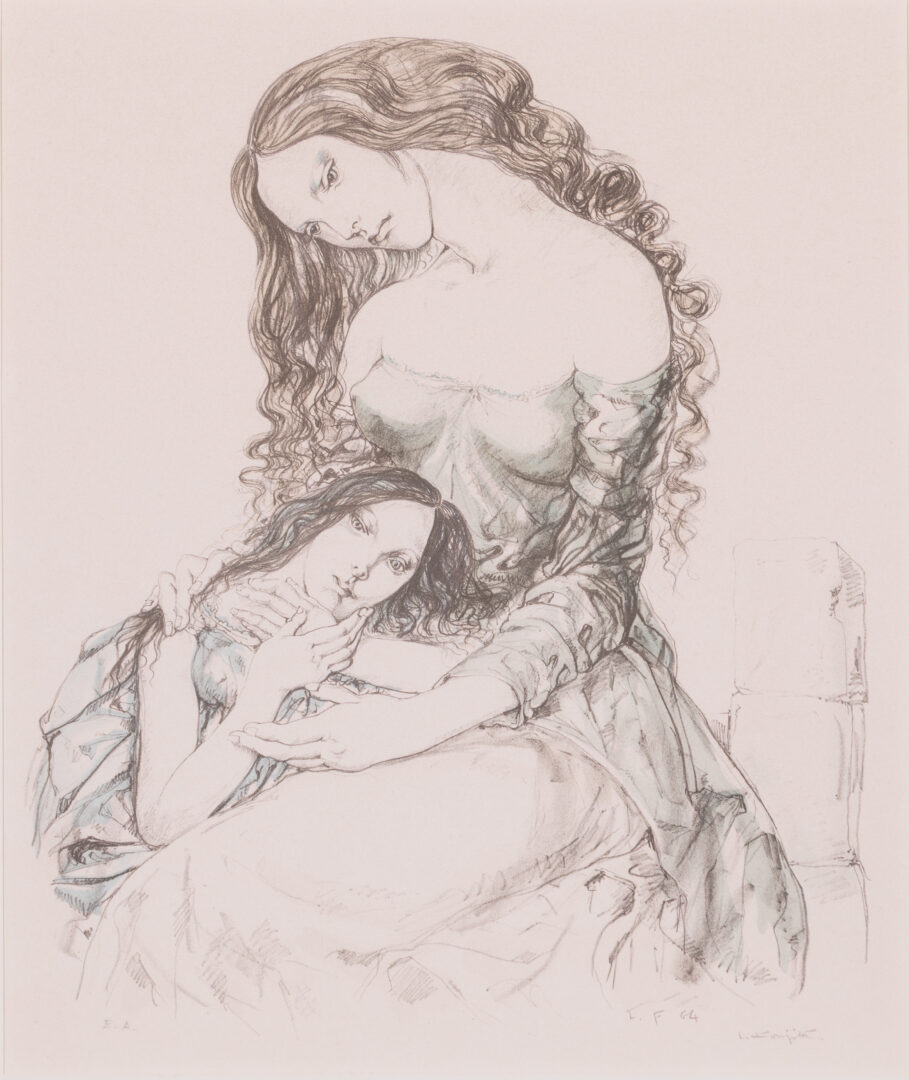
Tsuguharu Foujita, Mother and Child, 1,200 €
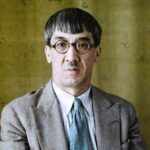
The one blue-chip name on the list, at the lowest price, because it is a print. Foujita (1886–1968) came from Tokyo to Montparnasse in 1913, sold out his first Paris show, and became the most famous Japanese painter in the West; a painting of his has made $9.4 million at auction. Mother and Child is a lithograph of 1964, signed in the plate “L. F. 1964”, inscribed E.A. (artist’s proof) lower left, 69.5 × 52 cm, framed to 88.8 × 71.7 cm in a dark marbled frame with a green mat. It is recorded in Sylvie Buisson’s catalogue raisonné as no. 64.287, and came to us from a Paris auction in January 2026. The late Madonnas, drawn with the thin line he kept from his Japanese training, are the Foujita most collectors start with.
How buying from the gallery works
The price on the work’s page is what you pay; gallery sales carry no buyer’s premium. Buy now reserves the work for 48 hours while you pay by bank transfer or card. Shipping is quoted on top: each page shows an estimate for your country, and the painting travels framed, packed by our shipping partner in Barcelona and insured for its price. Every work here is catalogued under the artist’s name without qualification and is covered by our five-year guarantee of authorship. Viewing in Barcelona is by appointment, and we send photographs of the reverse, labels and signatures on request.
Frequently Asked Questions
What is an École de Paris painting?
A painting by one of the French or foreign artists who worked in Paris between the wars and in the decades after, from Picasso and Foujita down to the Salon painters of the quays and markets. The label describes a place and a period, not a style.
How much does an original Paris street scene cost?
Signed oils by documented Salon painters of the twentieth century cost between about 1,500 and 5,000 € at Aurora & Athena; the famous names, Blanchard, Cortès, Utrillo, cost many times that. Size, condition, provenance and labels on the reverse move the price within the band.
Is a Foujita lithograph a real Foujita?
An original lithograph is a print the artist made and signed, not a reproduction. Ours is an artist’s proof listed in the Buisson catalogue raisonné, which is the reference for Foujita’s work.
Available Now
Available at the gallery
Artists in this article
Considering Selling a Piece From Your Collection?
Aurora & Athena's specialists provide free valuations and can guide you through consignment to auction or private sale.
Get a Free Valuation